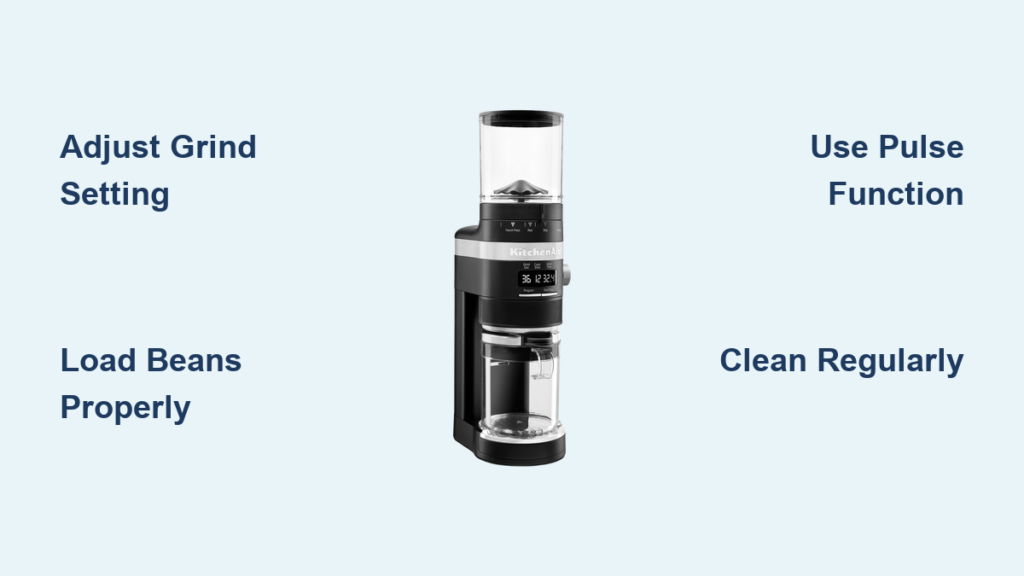
Freshly ground coffee transforms an ordinary morning brew into a rich, aromatic experience that pre-ground coffee simply can’t match. Learning how to use KitchenAid coffee grinder properly unlocks the full flavor potential of your beans while ensuring years of reliable service from your appliance. Whether you’re a coffee novice with a new KitchenAid grinder or an experienced user looking to optimize your technique, understanding the precise operation, settings, and maintenance requirements makes all the difference in your daily cup. This guide delivers everything you need to know to operate your KitchenAid coffee grinder like a pro, from first-time setup to advanced troubleshooting—so you can consistently enjoy café-quality coffee in your own kitchen.
Positioning Your KitchenAid Grinder for Optimal Performance
Place your KitchenAid coffee grinder on a stable, non-slip surface with at least six inches of clearance on all sides to ensure proper ventilation during operation. Avoid positioning near heat sources like stovetops or dishwashers that could affect bean temperature or damage internal components over time. The ideal location sits within easy reach of both your coffee beans storage and brewing equipment to create an efficient workflow.
Always verify the power cord has ample slack without stretching or creating a tripping hazard, and plug directly into a grounded outlet—never use an extension cord that could cause voltage fluctuations. Before first use, remove all packaging materials including any protective films on the hopper or grinding chamber, then wipe all removable parts with a dry microfiber cloth to eliminate manufacturing residues that could affect your coffee’s flavor.
Selecting the Perfect Grind Setting for Your Brewing Method

KitchenAid coffee grinders feature adjustable settings that dramatically impact extraction quality, with each setting corresponding to specific brewing techniques. For espresso preparation requiring fine powder consistency, rotate the adjustment dial to positions 1-3 where particles resemble powdered sugar. This setting creates the necessary resistance for proper espresso extraction under high pressure.
Pour-over methods like Chemex or V60 achieve optimal results at medium-fine settings (positions 4-6), producing particles slightly larger than table salt that allow controlled water flow for balanced flavor development. Standard drip coffee makers perform best with medium settings (positions 7-9), where uniform granule size prevents both under-extraction (sour flavors) and over-extraction (bitter notes).
French press and cold brew enthusiasts should select coarse settings (positions 10-12) where visible bean fragments create ideal surface area for extended steeping without excessive bitterness. Always test your grind by brewing a small batch and adjusting one setting at a time until you achieve your preferred flavor profile.
How to Adjust Settings Without Damaging Your Grinder
Turn the adjustment dial slowly while the grinder operates empty for 3-5 seconds to clear previous grounds before changing settings. Never force the dial beyond its natural resistance points, as this can damage internal mechanisms. After adjusting, run a small amount of stale beans through the grinder to verify the new setting before using your premium coffee beans.
Loading Beans Correctly to Prevent Jams and Damage
Measure whole beans using the provided scoop or a kitchen scale, following the golden ratio of 55-60 grams of coffee per liter of water for balanced extraction. Visually inspect beans for defects like broken pieces, chaff, or foreign objects that could damage the grinding mechanism before pouring them into the hopper.
Fill the hopper to no more than ¾ capacity, leaving space for beans to move freely during grinding—overfilling causes jams that strain the motor. For models with a bean hopper lid, secure it firmly before operation to prevent beans from escaping during high-speed grinding. Never insert utensils or fingers into the hopper while the grinder is plugged in, even when empty.
Common Bean Loading Mistakes to Avoid
-
Mistake: Using stale or improperly stored beans that crumble during grinding
Solution: Store beans in an airtight container away from light, heat, and moisture -
Mistake: Grinding oily beans that create residue buildup
Solution: Use freshly roasted beans that haven’t developed excessive surface oil -
Mistake: Pouring beans directly from storage without measuring
Solution: Measure beans before transferring to prevent overfilling the hopper
Operating Your Grinder for Consistent, High-Quality Results
Position your grounds container securely under the chute, ensuring it clicks into place on models with a dedicated holder. For precise control over grind quantity, use the pulse function by pressing and holding the start button rather than continuous operation. Pulse in one-second intervals for espresso (15-20 pulses), two-second intervals for pour-over (10-15 pulses), and three-second intervals for French press (5-10 pulses).
Listen for the consistent humming sound that indicates proper operation—grinding should produce a steady tone without sudden changes in pitch that signal bean jams. If the motor strains or stops, immediately unplug the unit and clear any blockages before resuming. Never leave the grinder running unattended, as this can lead to overheating or accidental spills.
Troubleshooting Grinding Issues During Operation
-
Problem: Grinder stops mid-operation
Fix: Unplug unit, wait 15 minutes for thermal reset, then clear any bean jams before restarting -
Problem: Uneven particle size in grounds
Fix: Adjust grind setting one level finer or coarser and test with a small batch -
Problem: Excessive noise during grinding
Fix: Check for foreign objects in hopper and ensure all components are properly seated
Daily Cleaning Procedures That Extend Your Grinder’s Life
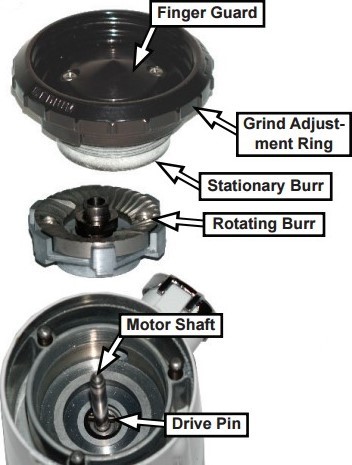
After each use, unplug the grinder and remove the grounds container, tapping it firmly to dislodge residual grounds into your coffee maker. Use the included cleaning brush (or a dedicated soft-bristle brush) to sweep grounds from the chute and grinding chamber, working from the inside out to avoid pushing debris deeper.
Disassemble removable parts according to your model’s instructions, typically including the hopper, lid, and grounds container. Wipe these components with a dry cloth—never immerse electrical parts in water or use liquid cleaners that could damage seals and electrical components. For stubborn residue, use a dry paper towel folded into a narrow strip to reach into crevices.
Monthly Deep Cleaning for Optimal Performance
- Unplug the unit and remove all accessible components
- Prepare a cleaning mixture of equal parts uncooked rice and dried citrus zest
- Grind this mixture on the finest setting to absorb oils and residues
- Repeat with plain rice until the output appears clean
- Wipe all surfaces with a dry microfiber cloth
- Allow components to air-dry completely before reassembly
When to Seek Professional Service for Your KitchenAid Grinder
Persistent grinding inconsistencies despite proper cleaning and adjustment often indicate worn burrs that require professional replacement. If the motor runs but produces no grounds, internal components may have become disconnected and need factory service. Unusual burning smells during operation signal electrical issues that warrant immediate discontinuation of use and professional assessment.
KitchenAid grinders with non-removable burrs or sealed motor housings should never be disassembled by users, as this voids warranty coverage and creates safety hazards. Contact KitchenAid customer service with your model and serial number for authorized repair options when basic troubleshooting fails to resolve performance issues.
Maximizing Flavor Through Proper Coffee Storage and Grinding Habits
Store whole beans in an opaque, airtight container at room temperature—never in the refrigerator where moisture and odors can compromise flavor. Grind only what you’ll brew immediately, as ground coffee loses 60% of its aromatic compounds within 15 minutes of exposure to air. For best results, brew within 45 seconds of grinding to capture the full spectrum of volatile flavor compounds.
Experiment with bean varieties and grind settings to develop your personal preference profile, noting your successful combinations in a coffee journal. Darker roasts typically require slightly coarser settings than lighter roasts to prevent over-extraction, while single-origin beans often reveal nuanced flavors with precise grind adjustments.
Final Note: Your KitchenAid coffee grinder represents a significant investment in daily coffee enjoyment, and proper operation ensures years of reliable service. While specific features vary across KitchenAid models, these fundamental principles apply to all their coffee grinding appliances. Always consult your model-specific manual for exact specifications and safety instructions, and remember that freshly ground coffee transforms good coffee into extraordinary coffee—one perfect grind at a time.