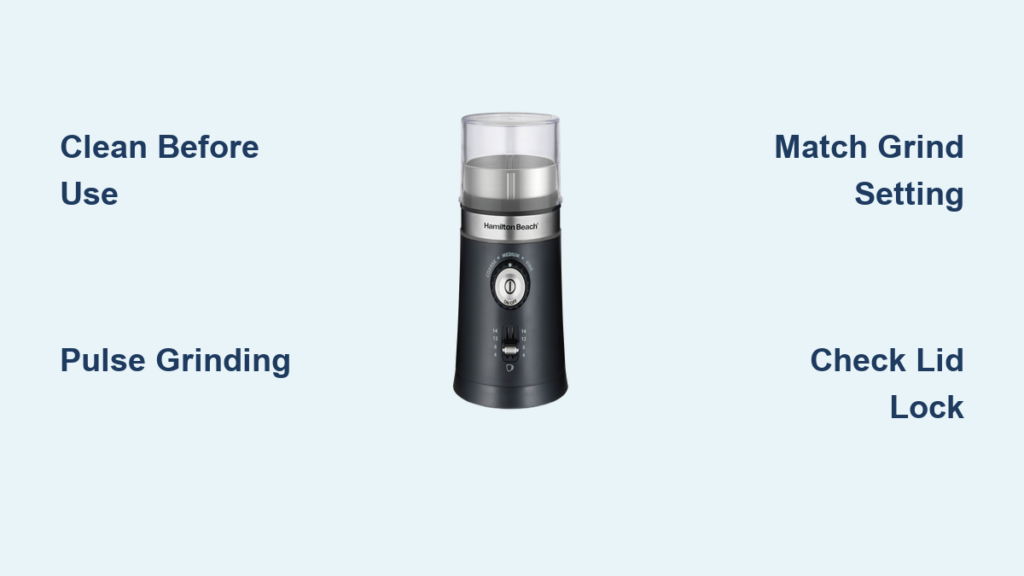
Nothing beats the aroma of freshly ground coffee beans to start your day right. Learning how to use Hamilton Beach coffee grinder properly transforms your morning ritual by delivering consistent, café-quality grounds every time. These electric grinders feature 18 adjustable settings that cater to every brewing preference—from coarse French press grounds to fine espresso powder. Whether you’ve just unboxed your first grinder or want to improve your technique, mastering a few fundamental skills ensures optimal flavor extraction and extends your appliance’s lifespan. This guide walks you through everything from initial setup to advanced troubleshooting, helping you achieve professional results in your own kitchen.
Identify Critical Grinder Components Before Operation
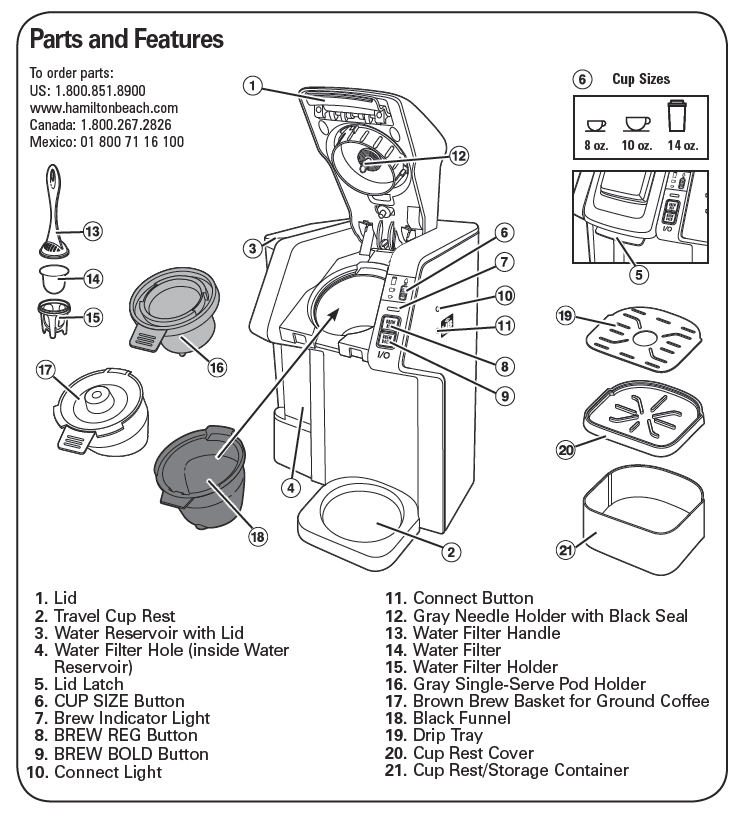
Knowing each part of your Hamilton Beach coffee grinder prevents accidents and ensures you get the most from your machine. These components work together to transform whole beans into perfectly sized particles for your preferred brewing method.
Grinding Chamber and Blade Assembly
The stainless steel blades inside the grinding chamber cut your coffee beans into precise particles based on your selected setting. This central component connects directly to the motor assembly below, rotating at high speed when activated. Always verify this chamber is clean and dry before adding beans, as moisture affects grind consistency and could damage the motor over time. Never insert fingers or utensils while the unit is plugged in—the blades remain extremely sharp even when not operating.
Hopper and Lid Safety Mechanism
The hopper serves as your bean reservoir, with most Hamilton Beach models featuring a clear maximum capacity line you must respect. Overfilling causes uneven grinding and strains the motor unnecessarily. The lid contains a critical safety interlock that prevents operation unless properly secured—this essential feature protects you from accidental contact with the blades. Make sure this lid clicks firmly into place before pressing the activation button, as the grinder won’t operate without this safety confirmation.
Control Settings and Activation Method
Your Hamilton Beach coffee grinder’s 18 settings allow precise adjustment from coarse to fine textures. Lower numbers produce sea salt-sized particles perfect for French press, while higher numbers create flour-like powder for espresso. The activation button operates on a simple press-and-hold mechanism, giving you direct control over grinding duration. For the most consistent results, pulse the grinder in short bursts rather than running it continuously—this technique prevents heat buildup that degrades coffee flavor.
Prepare Your Grinder for Optimal First Use
Proper preparation before your first grinding session ensures peak performance and removes manufacturing residues that could affect your coffee’s flavor.
Initial Cleaning Protocol
Before your first use, unplug the unit and disassemble all removable parts including the lid, hopper, and grinding chamber. Wash these components with warm, soapy water, rinse thoroughly, and dry completely before reassembly. Wipe the base exterior with a damp cloth to remove dust or packaging materials, but never submerge the base unit in water—it contains electrical components that could be damaged. Some users recommend grinding a tablespoon of raw rice through a new grinder to capture any metallic particles from manufacturing, then discarding that initial batch.
Strategic Placement for Safety and Performance
Position your Hamilton Beach coffee grinder on a flat, stable surface away from heat sources like stovetops or direct sunlight. Ensure adequate clearance above the unit for the lid and hopper during operation—typically 6-8 inches. Place the grinder near an outlet without creating tension on the power cord, as this could cause accidental unplugging during use. The surface must be dry and vibration-free to prevent movement during operation, which affects grind consistency and creates safety hazards.
Load Beans Correctly for Consistent Results
How you add beans to your Hamilton Beach coffee grinder directly impacts grind uniformity and flavor preservation.
Precise Bean Measurement Technique
Remove the lid and hopper, then add whole coffee beans to the grinding chamber while respecting the maximum capacity line—most models handle 2-4 tablespoons comfortably. Overfilling forces beans into the blade area unevenly, producing inconsistent particle sizes and potentially overheating the motor. For maximum flavor, grind only what you’ll use immediately since ground coffee begins losing aromatic compounds within minutes. Use a dry measuring spoon to ensure consistent quantities for repeatable results.
Select Quality Beans for Superior Flavor
Your coffee’s final quality depends on the beans you start with, regardless of technique. Choose whole beans roasted within the past two to four weeks, checking the roast date rather than the “best by” date. Store unused beans in an airtight container away from light, heat, and moisture—never refrigerate or freeze daily-use coffee. Avoid grinding stale, expired, or moisture-damaged beans, as these produce flat, unpleasant flavors even when you use Hamilton Beach coffee grinder correctly.
Choose the Perfect Grind Setting for Your Brew Method

Selecting the right setting bridges the gap between acceptable coffee and exceptional coffee. The 18-setting system accommodates virtually every brewing technique.
Settings Dial Decoded
The numbered settings progress from coarse to fine, with each increment representing a subtle adjustment in particle size. Lower numbers (1-4) produce coarse grinds resembling sea salt, while higher numbers (11-18) create fine powder similar to flour. The incremental nature means you can fine-tune beyond simple coarse/medium/fine categories. If your coffee tastes bitter or astringent, try a coarser setting. If it tastes weak or sour, grind finer—your taste buds provide the best feedback.
Brewing Method-Specific Recommendations
French press and cold brew require coarse settings (1-4), where large particles prevent over-extraction during extended steeping. Standard drip coffee makers work best with medium settings (5-10), creating particles like table salt that allow proper water flow. Espresso and Moka pots demand fine settings (11-18), providing increased surface area for rapid extraction under pressure. Start with these general recommendations, then adjust based on your specific beans and taste preferences—your perfect setting may differ from standard guidelines.
Execute Proper Grinding Technique for Uniform Results
Developing proper grinding technique ensures consistent particle size and protects your Hamilton Beach coffee grinder from unnecessary wear.
Pulse Grinding for Optimal Consistency
Press and hold the activation button in short pulses of two to three seconds rather than running continuously. Release, gently shake the unit to redistribute beans, then pulse again. This approach prevents motor overheating that degrades both the appliance and coffee’s delicate flavor compounds. Continuous grinding generates heat that partially “cooks” the beans, robbing them of nuanced aromatics. Most batches require 15-30 seconds of total grinding time divided into pulses.
Monitor Progress with Multiple Senses
Listen for changes in grinding sound—the noise shifts in pitch and intensity as beans transform from whole particles to powder. Stop periodically to examine a small sample; uniform particle size produces balanced extraction while mixed sizes create uneven flavors. If you notice many large chunks, continue pulsing briefly. Always unplug the unit and wait for blades to stop completely before checking grind consistency—safety first when you use Hamilton Beach coffee grinder.
Clean and Maintain for Long-Term Performance
Consistent maintenance keeps your Hamilton Beach coffee grinder performing optimally and prevents flavor contamination between different bean types.
After-Each-Use Cleaning Routine
Allow the unit to cool for a few minutes after grinding, then remove the lid and tap out remaining grounds. Use a soft brush or dry cloth to wipe the grinding chamber walls and blade area—never use abrasive materials that could damage surfaces. Remove the hopper and lid for washing if beans were particularly oily. Wipe the exterior with a damp cloth to remove coffee dust or oils, then ensure all parts dry completely before reassembly.
Weekly Deep Cleaning Protocol
Disassemble all removable components and wash them thoroughly with warm, soapy water. For stubborn oil buildup, grind a tablespoon of uncooked rice through the grinder—this acts as a mild abrasive and absorbent. To address persistent residue, soak components in water and mild dish soap for 15-30 minutes before gentle scrubbing. Keep ventilation slots clear by brushing away dust with a soft brush, as blocked vents cause overheating that shortens motor life.
Troubleshoot Common Grinding Problems Effectively

When your Hamilton Beach coffee grinder doesn’t perform as expected, these solutions address the most frequent issues.
Fix Inconsistent Grind Size Immediately
Varying results often stem from inconsistent bean quantity or condition. Check that you’re not overfilling the chamber, as this causes beans to jam and process unevenly. Ensure beans are similar in age and origin—older beans produce more brittle particles that grind differently than fresh beans. Inspect the blade assembly for damage, dullness, or accumulated debris that could affect performance. If the settings mechanism feels loose, it may require recalibration.
Resolve Motor Problems and Overheating
A motor that fails to start typically indicates the lid isn’t properly secured—the safety interlock prevents operation otherwise. Confirm the power cord is connected and the outlet functions correctly. Overheating from extended use triggers thermal protection that temporarily disables the motor—allow 30-60 minutes cooling time before retrying. If the motor runs weakly or makes straining sounds, the unit may be overfilled or the blades may be obstructed.
Achieve Perfect Coffee Results Consistently
Mastering how to use Hamilton Beach coffee grinder consistently produces superior coffee when you apply these final refinements.
Experiment and Document Your Process
Record which settings produce your preferred results with specific beans and brewing methods. Note how different roast levels affect grinding behavior—darker roasts tend to be oilier and may clump more, requiring coarser settings. Lighter roasts are harder and often produce more consistent results at finer settings. Your perfect settings may differ from general recommendations based on your specific beans, water, and taste preferences.
Final Tips for Daily Excellence
Grind beans immediately before brewing for maximum flavor retention. Match your grind size precisely to your brewing method—mismatched settings ruin otherwise perfect coffee. Clean your grinder regularly to prevent oil buildup that creates rancid flavors. Never force the unit or override safety mechanisms. With proper technique and consistent maintenance, your Hamilton Beach coffee grinder delivers fresh, flavorful coffee that rivals any café, transforming your daily ritual into something genuinely special.