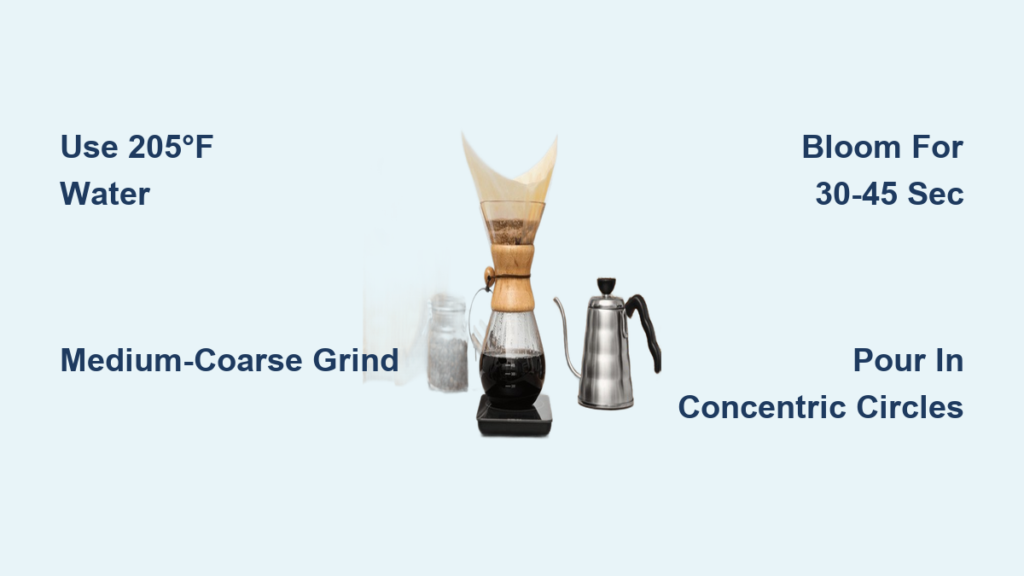
Your morning coffee ritual deserves precision and elegance. When your Chemex sits on the counter promising a clean, flavorful cup but delivers bitterness or weak coffee instead, frustration sets in. Many coffee lovers struggle with this iconic pour-over system, not realizing that small technique adjustments can transform their daily brew. This guide reveals the exact steps to consistently create cafe-quality coffee with your Chemex, whether you’re using the classic 6-cup model or the smaller 3-cup version. You’ll discover why water temperature matters more than you think, how grind size makes or breaks extraction, and the precise pouring technique that separates good coffee from exceptional coffee.
Why Your Chemex Coffee Tastes Bitter or Weak
The most common Chemex frustrations stem from three critical factors working together: water temperature, coffee-to-water ratio, and pouring technique. When water exceeds 205°F, it scalds delicate coffee compounds, creating harsh bitterness. Too fine a grind causes over-extraction as water moves too slowly through the grounds. Most beginners pour too aggressively, disrupting the coffee bed and creating uneven extraction channels. The Chemex’s thick filters remove oily compounds that contribute to bitterness in other brewing methods, but only when used correctly. Understanding these dynamics transforms your brewing from hit-or-miss to consistently excellent.
Essential Equipment for Perfect Chemex Brewing

Selecting the Right Chemex Model and Accessories
Choose between the classic hourglass 6-cup (serves 6 standard 5oz cups) or compact 3-cup model based on your household size. The glass vessel must come with its signature bonded paper filters – never substitute standard cone filters. You’ll need a gooseneck kettle for precise water control, a digital scale accurate to 0.1g, and a timer. Medium-coarse coffee grounds resembling sea salt provide optimal extraction. Preheat your Chemex by rinsing filters with hot water before brewing – this removes paper taste and stabilizes brewing temperature.
Why Water Quality Determines Your Coffee Flavor
Tap water with high mineral content creates harsh, unbalanced coffee by over-extracting certain compounds. Use filtered water with balanced mineral content (150 ppm total dissolved solids) for clean, nuanced flavor. Boil water to 205°F (just below boiling), then let it rest 30 seconds before brewing. Water that’s too hot scalds coffee, while water below 195°F under-extracts, yielding sour, weak coffee. Measure water temperature with a thermometer if your kettle lacks temperature control.
Step-by-Step Chemex Brewing Process
Preparing Your Coffee and Equipment
Measure 30g freshly ground coffee (medium-coarse) for 500g water – the ideal 1:16.67 ratio for balanced extraction. Place the folded Chemex filter in the brewer with the triple-fold side aligned with the spout. Pre-wet the filter thoroughly with hot water, then discard the rinse water. Add coffee grounds and gently shake to create an even bed. Start your timer as you begin pouring – timing is critical for proper extraction.
Executing the Perfect Bloom Phase
Pour 60g water evenly over grounds to saturate completely (twice the coffee weight). Wait 30-45 seconds for coffee to degas – you’ll see bubbles forming as CO2 releases. This bloom phase prevents uneven extraction caused by trapped gas. If your coffee doesn’t bloom significantly, your beans may be too stale. Fresh beans (roasted within past 2-4 weeks) produce vigorous blooming. Don’t skip this step – it’s essential for clean flavor development.
Perfecting the Pour-Over Technique
Begin pouring in slow, concentric circles starting from the center, moving outward without touching the filter walls. Maintain water level 1-1.5cm above grounds throughout brewing. Pour in pulses: 100g increments followed by 15-second pauses to control extraction rate. Total brew time should be 3:30-4:00 minutes. Stop pouring when you’ve reached 500g total water weight. The final drawdown should finish around 4:30. If brewing finishes too quickly, your grind is too coarse; too slowly means it’s too fine.
Troubleshooting Common Chemex Problems
Fixing Bitter or Over-Extracted Coffee
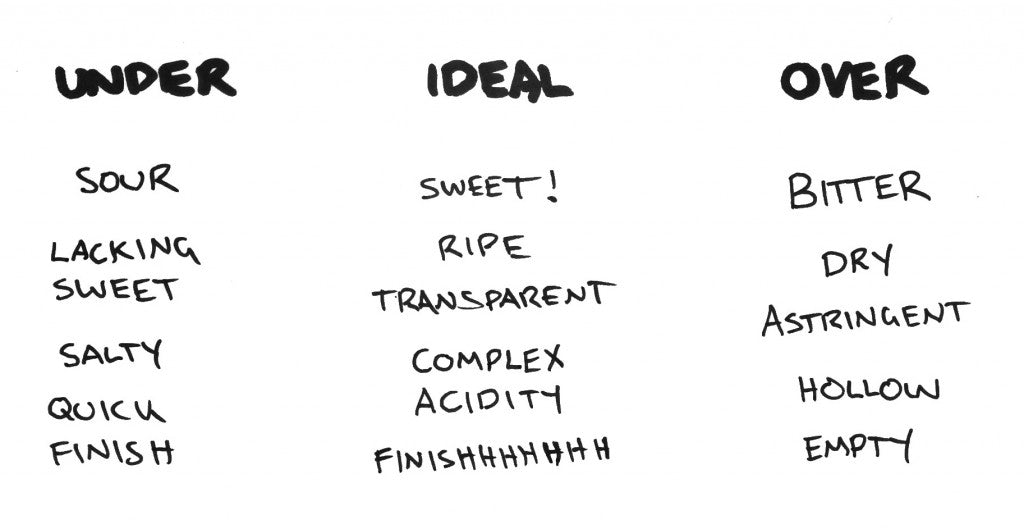
Bitter coffee typically results from water that’s too hot, brewing time that’s too long, or coffee grounds that are too fine. Lower water temperature to 200°F and ensure total brew time stays under 4:30. Adjust grind size one notch coarser on your grinder. Reduce coffee-to-water ratio slightly to 1:17 (29g coffee for 500g water). Check that you’re not pouring too aggressively, which can disturb the coffee bed and cause channeling. Always use fresh, high-quality beans – stale coffee often tastes bitter regardless of technique.
Solving Weak or Under-Extracted Coffee Issues
Weak coffee usually indicates insufficient extraction caused by water that’s too cool, grind size too coarse, or rushed pouring. Increase water temperature to 205°F and extend total brew time to 4:00-4:30. Adjust grind size one notch finer. Increase coffee-to-water ratio slightly to 1:16 (31g coffee for 500g water). Ensure your bloom phase lasts the full 45 seconds before continuing to pour. Verify you’re using the correct medium-coarse grind – grounds should feel like rough sand, not powder.
Advanced Chemex Techniques for Coffee Enthusiasts
Temperature-Profiling for Flavor Enhancement
Experiment with temperature adjustments during different brewing phases. Start with 205°F water for the bloom, then reduce to 200°F for main pour to highlight delicate floral notes. For darker roasts, maintain 205°F throughout to extract deeper chocolatey notes. Some specialty coffee shops use a “temperature ramp” technique – starting hot and gradually cooling water during pour to balance extraction. Keep detailed notes of your temperature experiments to identify your personal preference.
Customizing Ratios for Different Coffee Origins
Adjust your coffee-to-water ratio based on bean origin and roast profile. Lighter roasts from Ethiopia or Kenya often shine at 1:15 (33g coffee for 500g water) to intensify floral and citrus notes. Brazilian or Sumatran medium-dark roasts typically perform best at 1:17 (29g coffee) to highlight chocolate and nutty characteristics. Always adjust ratio in 1g increments and taste carefully – small changes create significant flavor differences. Record your adjustments to build a personalized brewing guide for each coffee you try.
Cleaning and Maintaining Your Chemex System
Daily Cleaning Routine for Optimal Performance
Rinse the Chemex immediately after use with warm water before coffee oils harden. Use a soft sponge to remove any residue – never abrasive cleaners that scratch glass. Replace filters after each use; never reuse paper filters. Wash the wooden collar and leather tie separately with damp cloth – never submerge in water. Dry all components thoroughly before storage to prevent mold growth in the wooden collar’s crevices. Proper daily cleaning prevents coffee buildup that affects future brews’ flavor.
Long-Term Care for Your Chemex Investment
Hand-wash your Chemex monthly with mild dish soap and soft sponge – avoid dishwashers which can cause thermal shock. Check the wooden collar annually for cracks or warping; replace if damaged to maintain proper seal. Store your Chemex upside down on its wooden collar to prevent dust accumulation. Keep spare filters in an airtight container away from light to preserve freshness. With proper care, a Chemex can last decades while maintaining its iconic brewing performance.
Seasonal Adjustments for Year-Round Perfect Coffee
Adapting Your Brew to Summer Humidity
High humidity causes coffee grounds to absorb moisture, slowing extraction. Compensate by grinding slightly finer or increasing water temperature by 2°F. Reduce bloom time to 30 seconds as humid conditions accelerate degassing. Brew in an air-conditioned space when possible to maintain consistent conditions. Pre-grind coffee immediately before brewing during humid months to prevent moisture absorption. Store beans in an airtight container with a silica gel pack to maintain optimal moisture content.
Winter Brewing Modifications for Cold Weather
Cold ambient temperatures cause faster heat loss during brewing. Preheat your Chemex with boiling water for 60 seconds instead of 30. Increase starting water temperature to 207°F to compensate for heat loss. Brew in a warmer room away from drafty windows. Use a thermal sleeve around your Chemex to maintain temperature stability. Consider reducing bloom time by 5-10 seconds as colder conditions slow degassing. These small adjustments maintain consistent extraction despite seasonal temperature fluctuations.
Final Tip: Consistency is key to mastering your Chemex. Keep a brewing journal tracking coffee origin, grind size, water temperature, and ratios to identify your perfect recipe. The Chemex rewards attention to detail with remarkably clean, nuanced coffee that showcases your beans’ true character. Start with these fundamental techniques, then experiment with variables to create your signature morning ritual. Remember that fresh beans, precise measurements, and controlled pouring transform this elegant device from novelty to your daily coffee essential.