There’s nothing quite like the rich, intense aroma of freshly brewed coffee filling your kitchen in the morning. If you’ve recently purchased a Bialetti coffee maker—often called a Moka pot—you’re holding one of the most reliable and traditional methods for brewing espresso-style coffee at home. Yet many new owners struggle to get that perfect cup, ending up with bitter, weak, or even burnt coffee. The truth is that mastering your Bialetti requires understanding its unique brewing process, which differs significantly from modern drip machines or pod systems. In this guide, you’ll discover the precise steps to consistently brew rich, flavorful coffee with your Bialetti, avoid common pitfalls that ruin the taste, and extend the lifespan of your cherished Italian coffee maker. Whether you’re a first-time user or looking to refine your technique, these actionable methods will transform your morning routine.
Choose the Right Stovetop Size

Selecting the appropriate Bialetti size for your stovetop burner prevents uneven heating and potential damage to both your cooktop and coffee maker. A mismatched size causes the flame to extend beyond the base, creating hot spots that can warp the aluminum construction over time. For optimal performance, your Bialetti should sit squarely on the burner with the flame contained within the diameter of the base.
Match Burner to Moka Pot Capacity
Use a burner that corresponds to your Moka pot’s capacity—typically measured in “cups” where one cup equals approximately 1.25 ounces (40ml) of espresso. A 3-cup Bialetti works best on a small burner, while 6-cup and larger models require medium to large burners. When the flame licks up the sides of the pot, you risk overheating the upper chamber before proper pressure builds, resulting in bitter, over-extracted coffee.
Electric vs. Gas Stove Considerations
Gas stoves offer better temperature control for Bialetti brewing since you can instantly adjust the flame. If using an electric coil stove, select a burner slightly smaller than the Moka pot base to prevent direct contact with the heating element. Induction cooktops require special induction-compatible Bialetti models with magnetic bases—standard aluminum versions won’t work. Never use a Bialetti on glass-top stoves without checking manufacturer specifications, as thermal shock can crack the surface.
Measure Coffee Correctly
The perfect Bialetti brew depends on precise coffee measurement and proper filling technique. Unlike drip coffee makers, Moka pots require finely ground coffee but never packed tightly into the filter basket. The standard ratio is one level scoop of coffee per “cup” indicated on your Bialetti, without tamping.
Select the Right Grind Size
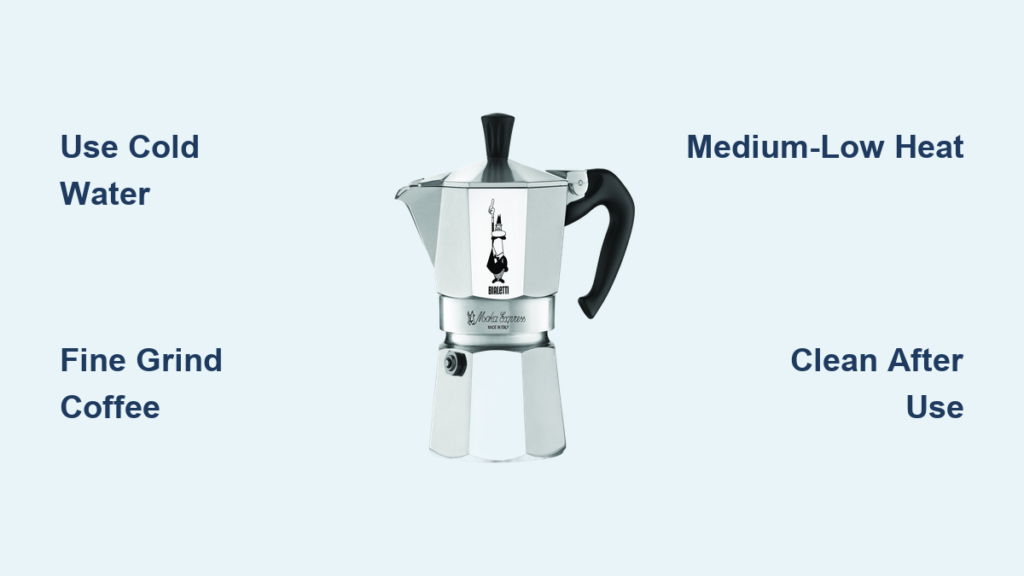
Use a fine to medium-fine grind—similar to table salt but coarser than espresso powder. Too fine causes clogging and dangerous pressure buildup; too coarse yields weak, watery coffee. Invest in a burr grinder for consistency, as blade grinders create uneven particles that lead to bitter and sour notes in the same cup. Freshly ground beans within 15 minutes of brewing preserves volatile aromatic compounds that create complex flavor.
Proper Filling Technique
Fill the filter basket without tamping or shaking—simply pour grounds in and level with a finger. Overfilling or compressing the coffee restricts water flow, causing excessive pressure that may trigger the safety valve or produce burnt flavors. The coffee should sit loosely in the basket, allowing steam to penetrate evenly. For best results, use medium-roast Arabica beans with low acidity to prevent bitterness during the high-pressure brewing process.
Assemble Your Moka Pot
Proper assembly prevents leaks, ensures correct pressure buildup, and extends your Bialetti’s lifespan. Many users skip crucial alignment steps, leading to coffee spraying from the safety valve or weak extraction. The key is clean, dry components and precise alignment of the three chambers.
Check Gasket and Filter Integrity
Before assembly, inspect the rubber gasket for cracks or hardening—replace annually for optimal performance. Ensure the metal filter screen is clean and properly seated in the funnel-shaped basket. A compromised gasket allows steam to escape, preventing proper pressure buildup and resulting in weak coffee that never reaches the upper chamber.
Tighten Without Over-Tightening
Screw the upper and lower chambers together by hand only—never use tools. Over-tightening warps the aluminum threads and damages the gasket, creating leaks. The chambers should meet with firm hand pressure but still allow for slight movement. Listen for a slight hissing sound when brewing begins, indicating proper pressure seal. If coffee leaks from the seam during brewing, disassemble, cool completely, and reassemble with cleaner, drier components.
Heat at Proper Temperature

Controlling heat is the most critical factor in Bialetti brewing success. Too high causes burnt, bitter coffee; too low yields weak, under-extracted results. The ideal process involves gradual heating to build proper pressure without scorching the coffee.
Optimal Heating Sequence
Start with medium-low heat until you hear gurgling, then reduce to low. Never leave your Moka pot unattended during brewing. The entire process should take 4-6 minutes depending on size—rushing with high heat creates excessive pressure that forces water through coffee too quickly. When the upper chamber fills to the safety valve level (about ⅔ full), immediately remove from heat to prevent burning the coffee residue in the lower chamber.
Recognize Perfect Brewing Completion
Stop heating when you hear the characteristic gurgle that signals the lower chamber is nearly empty. Continuing to heat after this point causes the remaining water to boil dry, burning coffee sediments and creating acrid flavors that contaminate your brew. The coffee should flow steadily in a rich, honey-colored stream—if it spurts violently, the heat was too high; if it drips slowly, the grind may be too fine or heat too low.
Clean After Each Use
Proper cleaning preserves your Bialetti’s aluminum integrity and prevents flavor contamination. Never use soap or dishwasher—residual detergent affects taste and damages the natural patina that develops over time. The aluminum construction reacts negatively to alkaline substances, altering coffee flavor.
Immediate Post-Brewing Routine
Disassemble while still warm (not hot) and rinse components under lukewarm water. Use a soft brush to remove coffee grounds from the filter basket and upper chamber. Shake out the lower chamber to remove sediment, but don’t scrub the interior—this preserves the seasoning that improves flavor over time. Dry all parts thoroughly before reassembly to prevent water spots and mineral deposits.
Deep Cleaning Schedule
Perform a vinegar solution treatment (1 part white vinegar to 4 parts water) monthly to remove mineral buildup. Fill the lower chamber, bring to a simmer, then discard. Follow with two plain water brew cycles before making coffee. Never immerse the entire assembled pot in water, as this damages the gasket and creates hard-to-remove water spots on the aluminum finish.
Common Mistakes to Avoid
Even experienced users make critical errors that compromise Bialetti coffee quality. These seemingly minor oversights dramatically affect flavor extraction and equipment longevity.
Water Temperature Errors
Never use hot water in the lower chamber—always start with cold, filtered water. Hot water accelerates the brewing process, preventing proper pressure buildup and creating uneven extraction. Fill to just below the safety valve, never above, as excessive water creates dangerous pressure levels that could trigger the safety release mechanism.
Coffee Storage Issues
Storing coffee in the filter basket between uses causes oxidation and moisture absorption, leading to stale flavors. Always empty and dry the basket after each use. Keep your Bialetti disassembled when not in use to prevent musty odors from developing in the gasket and upper chamber. Never store your Moka pot with the chambers screwed together—this traps moisture and accelerates gasket deterioration.
Extend Your Moka Pot Lifespan

With proper care, a Bialetti can last decades, improving in performance as the aluminum seasons. Strategic maintenance prevents premature wear and preserves that distinctive rich flavor profile.
Regular Component Replacement
Replace the rubber gasket annually, or immediately if you notice leaks or difficulty building pressure. Check the safety valve monthly by pressing the pin—it should spring back freely. Clean the valve channel with a toothpick if it sticks. Aluminum models develop a natural patina that enhances flavor, but stainless steel versions require different care—never season stainless steel with oil as you would cast iron.
Proper Storage Conditions
Store your Bialetti disassembled in a dry location away from humidity. Never stack other cookware inside it, as this can dent the delicate aluminum. If you won’t use it for several weeks, apply a thin coat of food-grade mineral oil to the gasket to prevent drying and cracking. The distinctive “Bialetti aroma” that develops over time comes from this seasoning process—don’t try to eliminate it with harsh cleaning.
Mastering your Bialetti coffee maker transforms your daily ritual into a consistently delightful experience. By following these precise techniques for assembly, heating, and maintenance, you’ll extract the full flavor potential from your coffee beans while preserving your Moka pot for years to come. Remember that perfect Bialetti coffee requires patience—rushing the process with high heat or improper measurements only compromises quality. Start each morning with cold water, freshly ground beans, and medium-low heat for that rich, velvety espresso-style coffee Italians have perfected. Your perfect cup awaits with just a little practice and attention to these essential details.