There’s nothing quite like the ritual of grinding coffee beans by hand—the gentle rotation, the aromatic release, the satisfaction of crafting your morning cup with precision. A hand coffee grinder puts you in complete control of one of the most critical steps in coffee preparation, allowing you to extract nuanced flavors that electric grinders often sacrifice to speed and convenience. Unlike their motorized counterparts that generate heat and inconsistent particle sizes, manual grinders preserve delicate coffee oils while delivering uniform grounds essential for optimal extraction. This simple tool transforms ordinary coffee into extraordinary brews, whether you’re camping in the mountains or perfecting your pour-over technique in a tiny apartment kitchen.
Mastering how to use a hand coffee grinder takes just a few sessions but pays dividends in flavor quality for years to come. The process connects you to coffee in a way automated machines never can, making you an active participant rather than a passive observer in your morning ritual. In this guide, you’ll discover the exact techniques professionals use to achieve café-quality results at home, troubleshooting tips for common issues, and maintenance practices that keep your grinder performing like new. Forget generic instructions—this is your roadmap to consistently delicious coffee through proper hand grinding technique.
Prepare Your Workspace for Efficient Grinding
Before touching your grinder, create an environment that supports smooth, efficient operation. Position your hand coffee grinder on a stable surface away from edges where it might tip during use—your kitchen counter works perfectly if you place a non-slip mat underneath. Ensure adequate lighting so you can clearly see the grind adjustment dial and monitor your grounds’ texture. Keep your coffee beans, a scale for precise measurement, and your brewing device within arm’s reach to minimize movement during the process.
Measure Beans Before Grinding
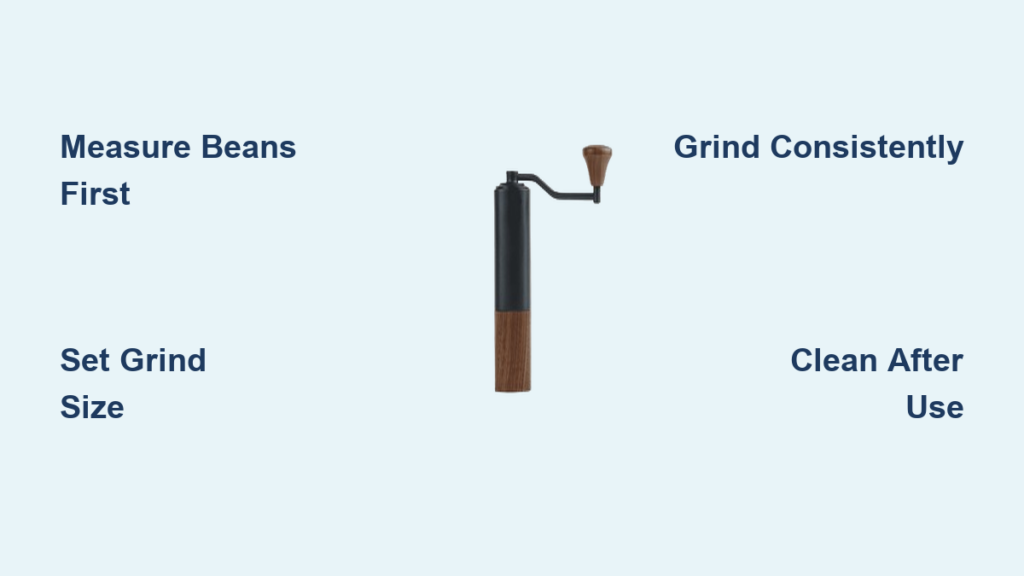
Accuracy starts with proper bean measurement—never eyeball your coffee. Use a digital scale to weigh beans before grinding, as volume measurements vary significantly based on bean density and roast level. For most single-cup brewing methods, 15-20 grams provides optimal results, while larger French presses may require 30-40 grams. Place your scale next to the grinder with your empty portafilter or container on it, tare the weight, then add beans directly to avoid unnecessary transfers that waste precious aromatics.
Set Your Grind Size First
Always adjust your grinder’s setting before adding beans to prevent wasted coffee and inconsistent results. Turn the adjustment dial to your desired setting while the hopper is empty—different brewing methods require specific particle sizes that we’ll detail later. Listen for the burrs clicking as they make contact at the finest settings, then back off slightly to your target grind. This “zero point” calibration ensures precision and prevents accidental over-fining that leads to bitter coffee.
Load Beans Properly to Prevent Wasted Coffee
The way you introduce beans to your grinder significantly impacts consistency and efficiency. Fill the top chamber with measured beans, but stop when they reach approximately ¾ full—overfilling causes beans to spill during grinding and creates uneven pressure on the burrs. Gently tap the side of the hopper to settle the beans and eliminate air pockets that disrupt the grinding flow. If your grinder has a lid, secure it firmly but avoid overtightening, which can strain the mechanism during rotation.
Avoid Common Loading Mistakes
Many beginners make critical errors when loading beans that compromise their final brew. Never force beans into an already full hopper, as this creates excessive pressure that damages delicate grinds. Similarly, avoid grinding stale beans—coffee loses 60% of its volatile aromatics within 15 minutes of grinding, so always work with freshly roasted beans stored in an airtight container. If you notice beans getting stuck in the hopper, gently shake the grinder side-to-side to encourage movement rather than forcing the crank.
Execute the Perfect Grinding Motion
Your technique during the grinding process determines whether you’ll achieve uniform particles or a mix of fines and boulders that ruin extraction. Hold the top crank firmly with your dominant hand while stabilizing the grinder body with your other hand—this prevents the entire unit from rotating with the mechanism. Begin with slow, deliberate rotations at approximately one full turn per second, gradually building a consistent rhythm as you become comfortable with the resistance.
Find Your Optimal Speed and Pressure
Grinding too quickly generates heat that damages delicate coffee oils, while grinding too slowly creates unnecessary hand fatigue. The sweet spot lies in maintaining steady, moderate pressure throughout each rotation—not pushing harder at certain points but applying consistent force from start to finish. Imagine stirring a thick soup rather than cranking a handle; your motion should originate from the shoulder, not just the wrist, to distribute effort across larger muscle groups. After 30 seconds of continuous grinding, pause briefly to let your hand rest if needed—short breaks prevent fatigue without compromising grind consistency.
Match Grind Size to Your Brewing Method

Achieve French Press Perfection
For French press brewing, set your grinder to a coarse setting resembling sea salt crystals—large enough that particles won’t slip through the metal filter but small enough to extract fully during the 4-minute steep. This setting typically corresponds to positions 15-20 on most numbered dials. To verify, pinch a small amount of grounds between your fingers; they should feel gritty but not powdery, with visible individual particles clearly distinguishable from one another.
Perfect Pour-Over Precision
Pour-over methods like Chemex or V60 require medium-fine grounds similar to granulated sugar. Particles should pass easily through paper filters without creating sludge at the bottom of your cup. On most grinders, this translates to settings between 8-12. A simple test: when you pour hot water over the grounds, they should bloom evenly without excessive bubbling or channeling. If your coffee tastes sour, go slightly finer; if bitter, adjust coarser and retest.
Prevent Hand Fatigue During Extended Grinding

Grinding larger batches can strain your wrist if you don’t employ proper technique. Alternate hands every 30 seconds to distribute the workload, or use a tabletop clamp if your grinder model supports it. Take 10-second breaks every minute to shake out tension in your hand—these brief pauses actually improve consistency by preventing erratic motion from fatigue. For regular multiple-cup brewing, consider upgrading to a grinder with a larger crank diameter, which reduces the force needed per rotation through improved mechanical advantage.
Clean Your Grinder After Every Use
Residual coffee oils quickly turn rancid, contaminating future batches with stale flavors. After grinding, disassemble your grinder according to the manufacturer’s instructions and brush out all coffee particles using the included cleaning brush. Pay special attention to the burrs, where oils accumulate fastest. Never use water unless absolutely necessary, as moisture causes rust in metal components and warping in wooden bodies. Store your grinder with the adjustment dial set to medium-coarse to relieve spring tension on the mechanism.
Troubleshoot Common Grinding Problems

Fix Uneven Particle Distribution
If your grounds contain both fine powder and large chunks, several factors could be responsible. First, check that your beans aren’t excessively dry or stale—fresh beans within two weeks of roasting produce the most uniform results. Next, verify your grind setting hasn’t shifted during operation; some grinders require occasional recalibration as internal components settle. Finally, ensure you’re maintaining consistent rotation speed—varying your pace creates different particle sizes as beans pass through the burrs at inconsistent rates.
Eliminate Grinder Jamming
When your grinder suddenly stops turning, immediately stop applying force to prevent damaging the mechanism. Most jams occur from overfilling the hopper or using beans that are too oily. Carefully disassemble the grinder and remove any obstructing beans, then wipe the burrs with a dry cloth before reassembling. For persistent jamming with dark roast beans, consider running a few grams of plain rice through the grinder to absorb excess oils—a controversial but effective technique among coffee enthusiasts.
Store Grounds Properly for Maximum Freshness
Once ground, coffee begins deteriorating immediately as increased surface area accelerates oxidation. Transfer your freshly ground coffee directly to your brewing device without delay—never store pre-ground coffee from a hand grinder for later use. If you must pause between grinding and brewing, cover the grounds with a small plate to minimize air exposure. For optimal flavor, brew within 60 seconds of grinding, when volatile compounds responsible for aroma and complexity remain most vibrant.
Optimize Your Hand Grinding Routine
Develop a consistent workflow that minimizes wasted motion and maximizes freshness. Start by measuring beans, then adjust your grinder, followed immediately by grinding and brewing. Keep all components organized in the order of use to create an efficient assembly line. Time yourself to identify bottlenecks—most experienced users grind 20 grams in 60-90 seconds with proper technique. As you gain experience, you’ll develop a personal rhythm that makes the process meditative rather than tedious, transforming a necessary step into the highlight of your morning routine.
Mastering how to use a hand coffee grinder elevates your coffee from ordinary to extraordinary through precise control and mindful preparation. This seemingly simple tool connects you to the coffee-making process in a way automated machines never can, rewarding your attention to detail with nuanced flavors and aromatic complexity. By implementing these techniques consistently, you’ll transform your daily coffee ritual into a reliable source of pleasure that starts the moment you begin grinding and continues through every satisfying sip. Remember that perfect coffee isn’t about expensive equipment—it’s about understanding and mastering the fundamentals, one carefully ground batch at a time.