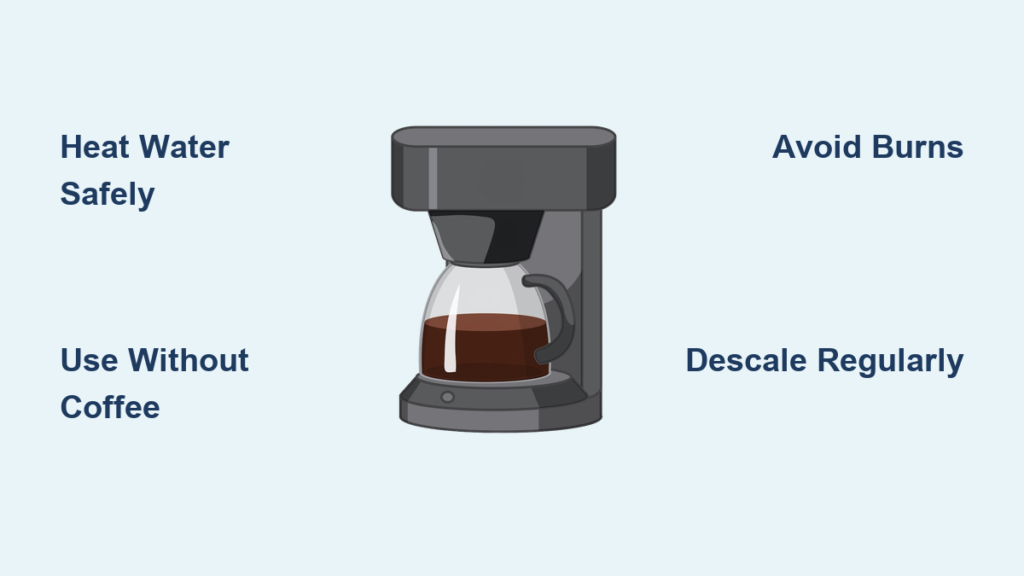
Your coffee maker can heat water to nearly boiling temperatures when you need hot water for tea, instant meals, or other kitchen tasks. While most standard drip coffee makers don’t reach a full rolling boil (212°F), they typically heat water to 195-205°F—perfect for most hot water needs. Learning how to use a coffee maker to boil water safely and effectively gives you a versatile kitchen tool when your electric kettle isn’t available.
This method works because coffee makers contain heating elements designed to bring water to optimal brewing temperatures. Whether you’re preparing a quick cup of tea, rehydrating instant soup, or need warm water for cooking, your coffee maker offers a convenient solution. In this guide, you’ll discover the exact steps to safely extract hot water from your coffee maker, avoid common mistakes, and maximize this often-overlooked functionality.
Why Your Coffee Maker Heats Water Below True Boiling Point
Coffee makers operate within specific temperature ranges optimized for coffee extraction, not full boiling. The heating elements in most drip coffee machines raise water to 195-205°F—the sweet spot for dissolving coffee compounds without burning them. This temperature is hot enough to kill most bacteria and prepare virtually any hot beverage except those requiring a vigorous boil.
How Coffee Maker Heating Elements Work
Your coffee maker’s heating element sits beneath the water reservoir, warming water as it passes through internal tubing. Unlike electric kettles that continue heating until water reaches 212°F and bubbles vigorously, coffee makers stop at lower temperatures to preserve coffee flavor. This design means you’ll get steaming hot water, but not the bubbling boil you’d see in a saucepan.
When Coffee Maker Water Temperatures Suffice
For most everyday needs, coffee maker-heated water performs admirably:
– Tea preparation: Black, green, and herbal teas extract well at 195-205°F
– Instant foods: Oatmeal, ramen, and instant mashed potatoes rehydrate completely
– Beverages: Hot chocolate, instant coffee, and broth-based drinks dissolve properly
– Cleaning: Hot water effectively loosens grease and food residue
Pro tip: If you need water closer to boiling for sterilization purposes, let the coffee maker run multiple cycles back-to-back—the cumulative heat may push temperatures slightly higher.
Prepare Your Coffee Maker for Hot Water Dispensing
Before extracting hot water, proper preparation prevents accidents and ensures clean results. Start with a thorough inspection of your machine to identify potential issues that could affect water temperature or safety.
Remove All Coffee Residue Completely
Empty the filter basket and discard any lingering coffee grounds—even small amounts will flavor your hot water. Wash the carafe, filter basket, and lid with warm soapy water to eliminate coffee oils that have built up over time. For stubborn residue, run a cleaning cycle with a 50/50 vinegar-water solution followed by two plain water cycles.
Verify Water Reservoir Capacity and Cleanliness
Check your water reservoir for mineral deposits or mold growth, especially if the machine hasn’t been used recently. Fill the reservoir with fresh cold water up to your desired level, using the measurement markers as your guide. Critical warning: Never operate your coffee maker without water in the reservoir—this can permanently damage the heating element.
Position Heat-Safe Containers Correctly
Place a microwave-safe glass or ceramic container under the dispenser spout. Avoid plastic containers unless labeled heat-resistant, as coffee maker water can exceed 200°F. For best results, pre-warm your container with a small amount of hot tap water to maintain temperature when dispensing.
Dispense Hot Water Without Brewing Coffee

Getting hot water from your coffee maker requires bypassing the normal brewing process while maintaining safety. The method varies slightly depending on your machine’s design, but these universal steps work for most standard drip models.
Standard Drip Coffee Maker Method
- Fill the water reservoir with cold water to your desired level (use measurement lines)
- Place an empty filter in the basket (paper filters prevent sediment)
- Position your heat-safe container on the warming plate
- Start a normal brew cycle without adding coffee grounds
- Monitor water flow and stop the cycle once you have enough hot water
Time estimate: Most machines dispense one cup of hot water per minute. For 4 cups, expect a 4-5 minute cycle. The water will be hottest during the first few minutes of dispensing.
Machines With Dedicated Hot Water Dispensers
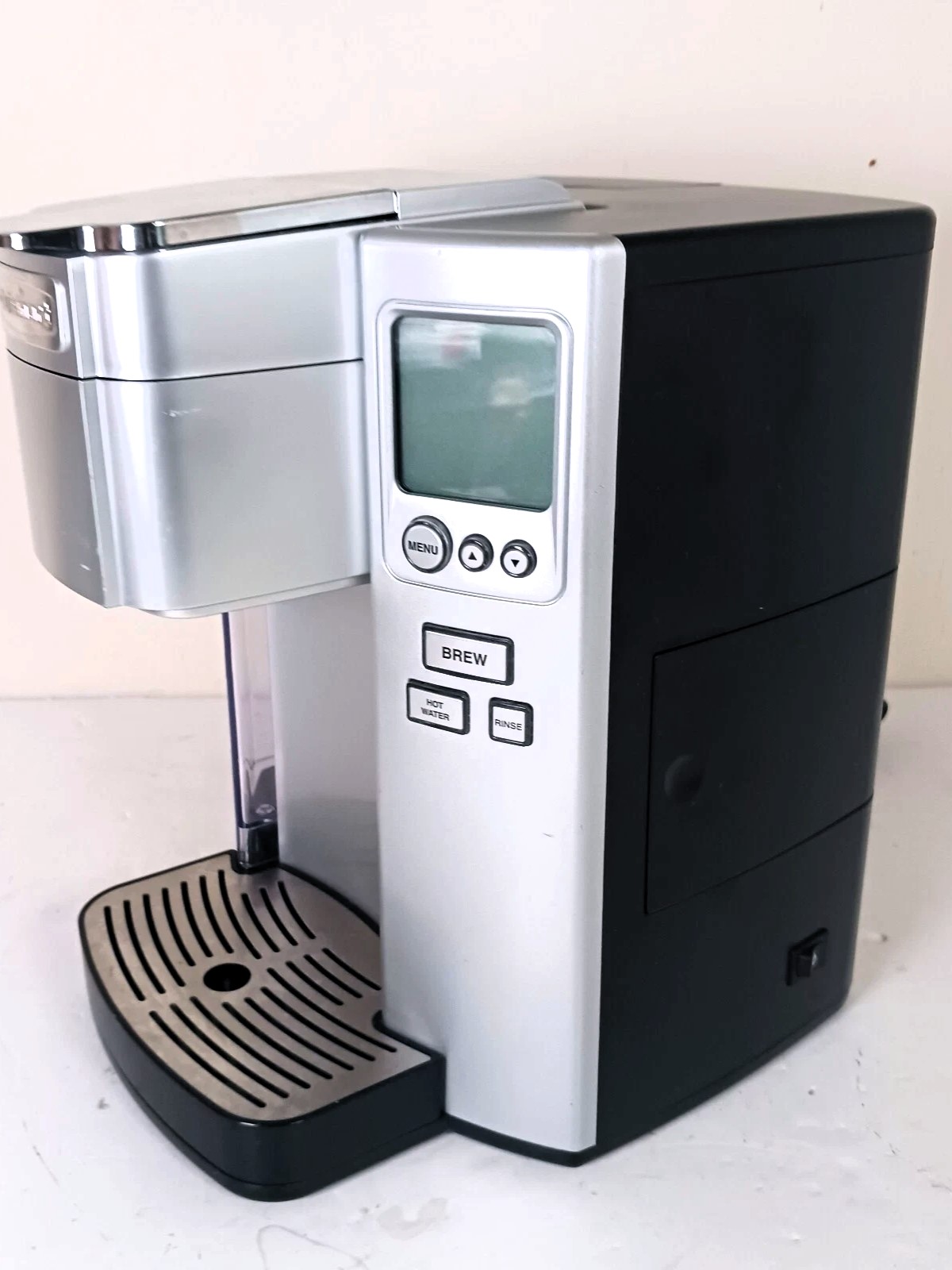
Some newer models feature a “hot water on demand” button specifically for dispensing hot water without brewing coffee. If your machine has this feature:
– Press the hot water button (usually marked with a tea cup icon)
– Place your container under the dedicated hot water spout
– Allow 30-60 seconds for the water to heat before dispensing
– Stop the flow when you have sufficient water
Common mistake: Forgetting to remove coffee grounds from the reservoir compartment in single-serve pod machines. Always eject any used pods before dispensing plain hot water.
Critical Safety Measures When Using Coffee Maker for Hot Water
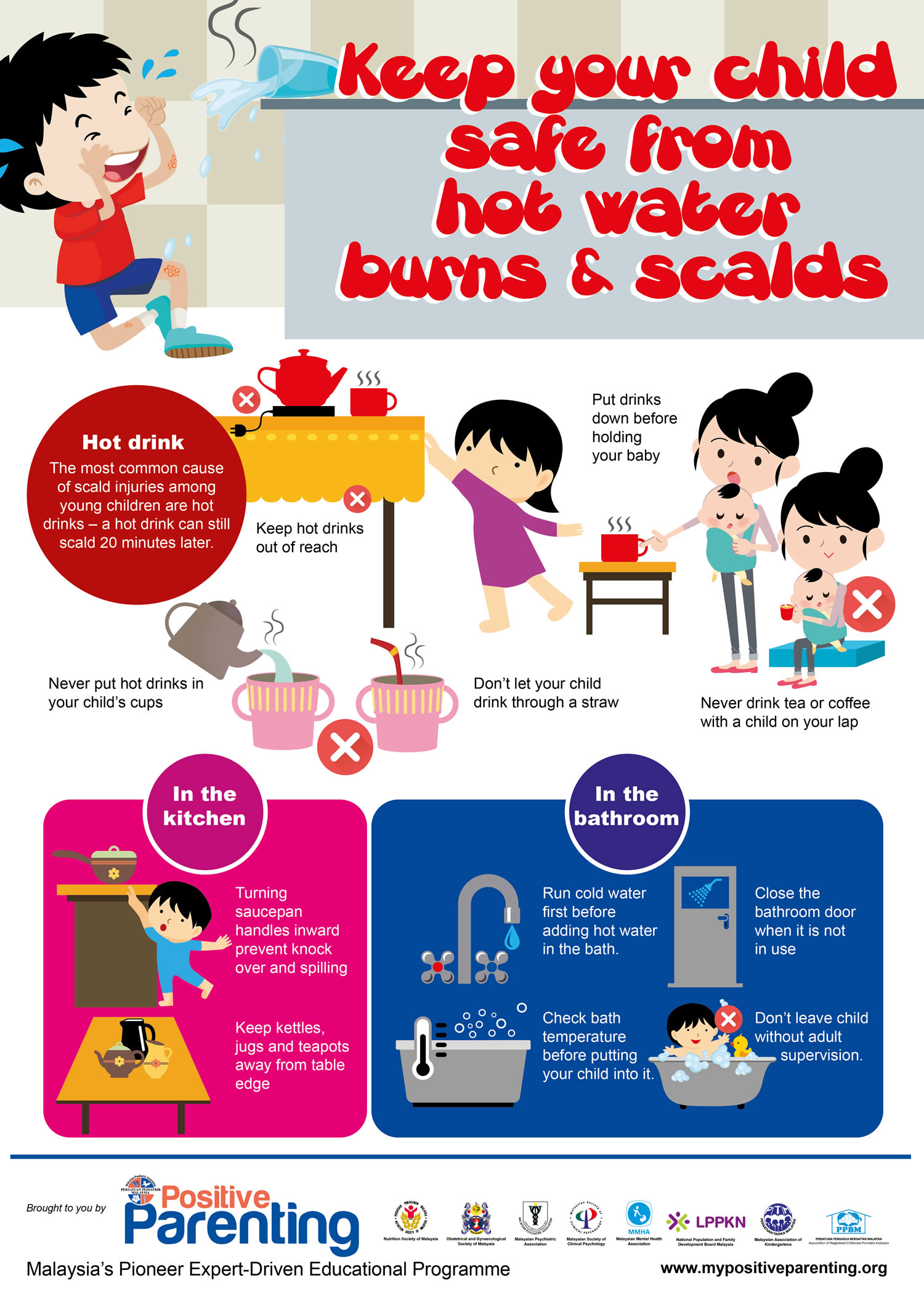
Hot water from coffee makers carries significant burn risks that many users underestimate. The 195-205°F temperature can cause third-degree burns in just 3 seconds of skin contact—much faster than boiling water from a kettle.
Essential Burn Prevention Techniques
- Always use oven mitts when handling containers immediately after dispensing
- Keep children at least 3 feet away during operation—curious hands reach quickly
- Never fill containers to the brim—hot water expands when heated
- Place the coffee maker on a stable surface away from counter edges
Electrical Safety Considerations
Ensure your coffee maker sits on a dry surface with the power cord positioned away from water sources. Critical warning: Never touch the power button or unplug the machine with wet hands—this creates serious electrocution risks. If your coffee maker shows any signs of electrical malfunction (burning smells, inconsistent heating, or visible damage), stop using it immediately.
Post-Use Safety Protocol
After dispensing hot water, leave the machine running for 2-3 minutes to complete its internal cooling cycle. The heating element remains dangerously hot for up to 15 minutes after use. Wipe any water spills immediately to prevent electrical hazards or slips.
Creative Uses for Coffee Maker Hot Water Beyond Beverages
Your coffee maker’s hot water capability serves numerous kitchen functions that many users never consider. These applications save time and maximize your appliance’s value beyond morning coffee routines.
Instant Food Preparation Shortcuts
- Rehydrate dried mushrooms or seaweed for soups and stews
- Bloom instant yeast for bread baking (water at 110-115°F is ideal)
- Soften hardened brown sugar by placing it in a heatproof bowl over steaming water
- Quickly melt chocolate or butter for recipes
Household Cleaning Applications
Hot water from your coffee maker effectively tackles stubborn messes:
– Loosen baked-on food in cookware by filling pans with hot water
– Clean greasy kitchen tools by soaking them in hot water with dish soap
– Unclog slow drains by pouring hot water down the sink (avoid this with PVC pipes)
– Sanitize kitchen sponges by soaking them in hot water for 2 minutes
Pro tip: For tougher cleaning jobs, add a tablespoon of baking soda to your container before dispensing hot water—this creates an effective cleaning solution.
Troubleshooting Common Hot Water Issues
When your coffee maker fails to produce adequately hot water, these solutions address the most frequent problems users encounter.
Water Temperature Too Low: Three Fixes
- Descaling solution: Run a 50/50 white vinegar-water mixture through a brew cycle, then two plain water cycles
- Check ambient temperature: Cold kitchen environments slow heating—place near heat source
- Pre-warm reservoir: Fill with warm tap water instead of cold for higher output temperature
Water Not Dispensing: Quick Checks
- Verify water reservoir has sufficient water (above minimum line)
- Clean clogged spray head with a paper clip or toothpick
- Ensure no coffee grounds block the filter basket area
- Reset the machine by unplugging for 30 seconds
Expert note: If your coffee maker consistently fails to heat water after descaling, the heating element likely needs professional replacement—often not cost-effective for budget models.
Maximize Your Coffee Maker’s Hot Water Efficiency
Regular maintenance and smart usage habits extend your coffee maker’s hot water capabilities while preventing common problems.
Monthly Maintenance Routine
- Descale with vinegar solution to prevent mineral buildup
- Clean spray head with a soft brush to maintain water flow
- Wipe exterior surfaces with damp cloth to prevent grime accumulation
- Replace worn carafe if cracks develop (glass can shatter with hot water)
Time-Saving Hot Water Strategies
- Keep your coffee maker plugged in for faster heating (modern models use minimal standby power)
- Use filtered water to reduce mineral deposits and improve taste
- Dispense water directly into recipe ingredients to save transfer steps
- For larger quantities, run multiple cycles back-to-back without waiting for cooldown
Your coffee maker provides reliable hot water for countless kitchen tasks when used properly. While it won’t replace a kettle for true boiling applications, the 195-205°F output handles most hot water needs efficiently. By following these safety protocols and usage techniques, you’ll transform your coffee maker into a versatile kitchen tool that serves you far beyond morning coffee. Remember to prioritize safety with hot water handling, maintain your machine regularly, and explore creative applications that save you time and counter space.