There’s nothing quite like the rich, full-bodied coffee that only a French press can deliver—no paper filters stealing precious oils, no complicated machinery, just pure coffee essence extracted through time-honored immersion brewing. The Bodum French press stands as the gold standard in this category, with its elegant design and reliable performance that has made it a kitchen essential for coffee lovers worldwide. Yet for all its simplicity, many users struggle to achieve consistently great results, often blaming the equipment when the real issue lies in technique. Whether you’re a first-time owner or someone who’s let their Bodum gather dust, mastering the proper method transforms your morning routine into a ritual that yields café-quality coffee with every press.
The beauty of the Bodum French press is its elegant simplicity: a heat-resistant glass carafe, stainless steel frame, fine mesh plunger, and lid work in harmony to extract maximum flavor. But this simplicity demands precision—get one element wrong and your coffee suffers. Too fine a grind creates gritty, bitter brew; incorrect water temperature produces sour or harsh results; improper plunging technique leaves sediment in your cup. This guide breaks down exactly how to use a Bodum French press coffee maker correctly, addressing common mistakes and providing actionable techniques that guarantee exceptional coffee. By the end, you’ll understand not just the steps but why each matters, transforming you from a casual user into a confident French press artisan.
Choose the Perfect Coarse Grind for Optimal Extraction

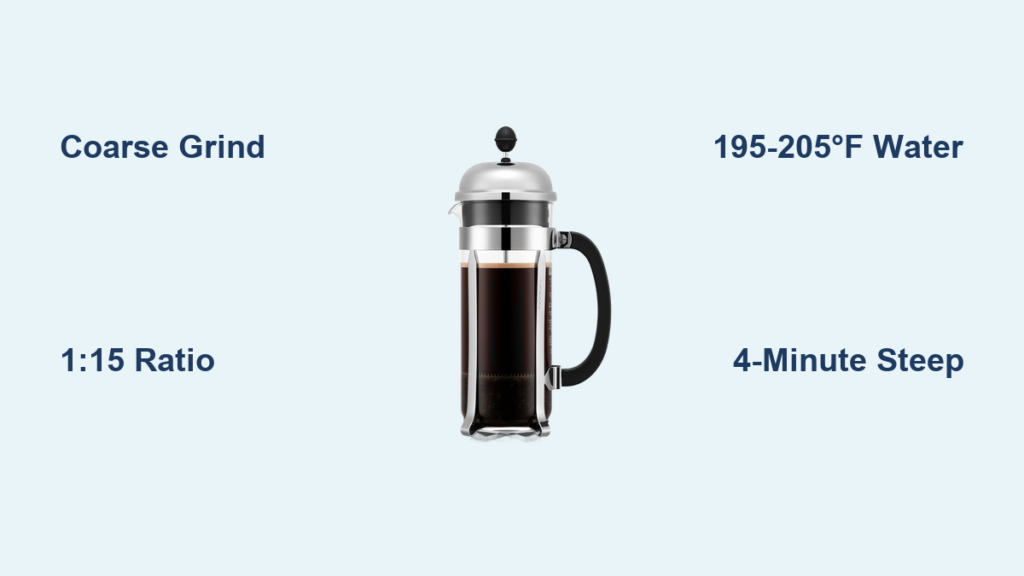
Your grinder settings make or break French press success—far more than most beginners realize. The mesh filter requires a coarse grind resembling sea salt or raw sugar crystals, creating space for water to flow while preventing fine particles from passing through. This specific texture allows proper extraction without creating the sludge that plagues so many first attempts.
What happens when grind size goes wrong? Too fine, and you’ll battle bitter, muddy coffee as tiny particles clog the filter and over-extract. Too coarse, and water rushes through without pulling sufficient flavor, leaving weak, disappointing coffee. The ideal grind forms a gentle crust on the surface during steeping—visible proof you’ve hit the sweet spot.
For consistent results, ditch your blade grinder in favor of a burr model. Blade grinders create uneven particle sizes—fine dust alongside chunky pieces—causing some grounds to over-extract while others under-extract. If you must use a blade grinder, pulse in short bursts while shaking the container to distribute grounds more evenly. Always grind immediately before brewing to preserve volatile flavor compounds that dissipate quickly after grinding.
Measure Coffee and Water with Precision
Guessing measurements guarantees inconsistent results—professional baristas measure by weight, and so should you. The foundational ratio for French press is 1:15 (coffee to water), meaning 1 gram of coffee per 15 grams of water. For an 8-cup Bodum press (holding about 34 ounces), this translates to 60-65 grams of coffee—approximately 4 to 4.5 tablespoons.
Why weigh instead of measure by volume? Coffee density varies dramatically by roast and bean type—light roasts are denser than dark roasts, meaning the same volume delivers different coffee mass. A $20 digital scale eliminates this variable, transforming your brewing consistency more than any other single upgrade. If you prefer volume measurements, note that darker roasts require slightly more tablespoons to achieve the same weight as lighter roasts.
Don’t overlook water quality—it impacts extraction nearly as much as coffee quantity. Chlorinated tap water masks delicate flavors, while distilled water lacks minerals that aid extraction. Filtered spring water typically delivers the cleanest flavor profile. If your tap water tastes strongly of chemicals, run it through a basic charcoal filter before brewing.
Heat Water to the Ideal 195-205°F Range

Water temperature dramatically affects extraction chemistry, yet most home brewers simply use boiling water. The optimal range for French press sits between 195°F and 205°F—hot enough to extract fully but not so hot that it scorches delicate compounds. Water at 212°F (full boil) extracts excessive bitterness, particularly from fine particles that slip through the mesh.
Here’s the practical approach: bring water to a full boil, then let it rest for 30-45 seconds before pouring. This brief pause drops the temperature perfectly into the ideal range while maintaining enough heat for the full steeping process. If you own a temperature-controlled kettle, set it to 200°F for most brews. Avoid using water straight from the tap—it won’t extract properly and produces noticeably sour coffee.
Assemble Your Press and Add Coffee Correctly
Before brewing, verify your Bodum is properly assembled: the filter screws securely to the plunger base, the plunger rod slides smoothly through the lid, and all components move without resistance. A poorly assembled press creates uneven pressure during plunging, compromising filtration.
Add coffee directly to the clean, dry carafe—never add grounds after water. For best results, pre-warm the carafe by rinsing with hot water first (then emptying it), preventing thermal shock that could crack the glass. The traditional method involves pouring all water at once in slow, circular motions starting from the center, ensuring complete saturation without dry pockets. Some advanced users perform a 30-second “bloom” pour first (using twice the coffee’s weight in water), stir gently, then add remaining water—but for most home brewers, a single pour delivers excellent results.
Steep for Exactly Four Minutes Before Plunging
Timing is non-negotiable in French press brewing—set a timer the moment your last drop of water hits the grounds. Four minutes represents the ideal steeping duration for balanced extraction with most coffees. Lighter roasts may benefit from 3:30, while darker roasts often shine at 4:30, but four minutes serves as the perfect starting point.
During steeping, resist the urge to stir or check progress—disturbing the brew creates uneven extraction. A crust will form on the surface as gases release from the grounds; this is normal. If you choose to stir (optional), do so gently after one minute with a non-scratching utensil to submerge floating grounds. The lid should remain in place throughout steeping to maintain temperature—lifting it causes significant heat loss that affects extraction.
Press Slowly and Serve Immediately for Clean Flavor
When the timer sounds, plunge with steady, even pressure—taking 15-30 seconds for the full descent. Rushing creates turbulence that forces sediment through the filter; going too slowly allows grounds to settle unevenly. You should feel consistent resistance—if pressing feels difficult, your grind is too fine; if it drops freely, your grind is too coarse.
The critical mistake many make? Leaving coffee sitting on the grounds after pressing. Immediately decant the entire brew into a separate carafe or cups—continued contact with grounds causes over-extraction that rapidly turns coffee bitter. The last ounce or two always contains concentrated sediment, so avoid pouring this final portion into cups. For the cleanest results, pour in one continuous motion rather than stopping and starting.
Clean Components Thoroughly After Each Use
Proper cleaning prevents oil buildup that ruins future brews and harbors bacteria. Disassemble immediately after use: unscrew the filter assembly, remove the lid, and separate all components. Rinse each part with warm water while they’re still warm (but not hot) to prevent coffee oils from solidifying.
The mesh filter requires special attention—rub it between your fingers under running water to dislodge trapped oils. For stubborn residue, soak in warm, soapy water before scrubbing with a soft brush. Never use abrasive pads that damage the fine mesh. While some Bodum models claim dishwasher safety, hand washing extends the life of your press significantly—dishwasher heat and detergents cloud glass and degrade plastic components over time.
For deep cleaning, monthly soak components in equal parts water and white vinegar to dissolve mineral deposits. Rinse thoroughly afterward to eliminate any vinegar taste. Store your press disassembled with the plunger raised to allow air circulation—storing it assembled traps moisture that encourages mold growth in the filter mechanism.
Mastering how to use a Bodum French press coffee maker transforms your daily routine into a rewarding ritual that delivers exceptional coffee without expensive equipment. By focusing on these seven critical steps—grind size, precise measurements, water temperature, proper assembly, exact timing, careful plunging, and thorough cleaning—you’ll consistently produce rich, full-bodied coffee that captures the true essence of your beans. Remember that small adjustments to grind size or steeping time can dramatically improve results, so don’t be afraid to experiment once you’ve mastered the fundamentals. With practice, you’ll develop the intuition to tweak variables for different roasts and discover why the Bodum French press has remained a coffee classic for generations.