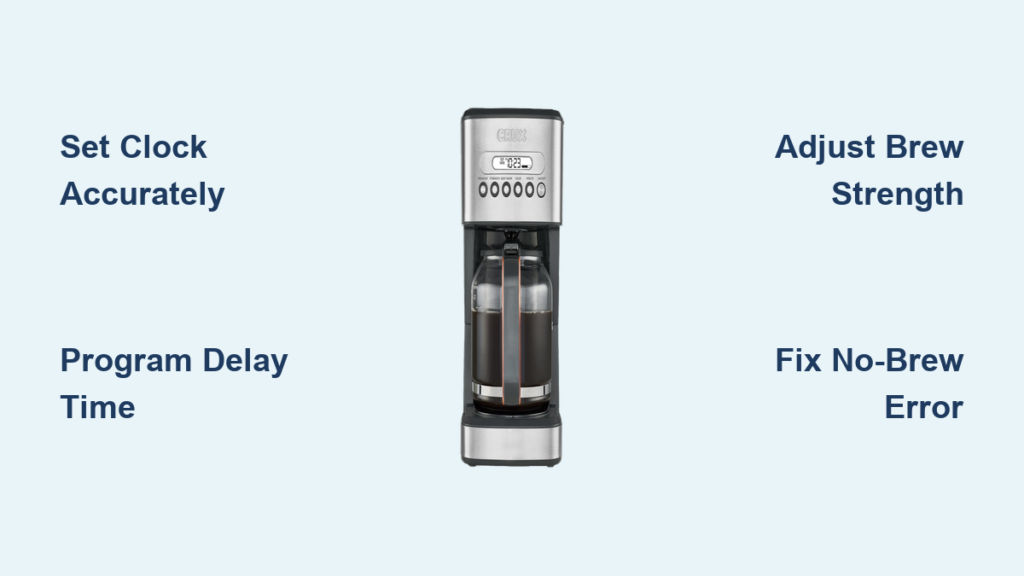
Waking up to the rich aroma of freshly brewed coffee shouldn’t feel like solving a puzzle. Yet thousands of Crux Artisan coffee maker owners struggle with programming their machines, leading to cold brews, missed alarms, or confusing error messages. If your Crux Artisan sits unused for auto-brew because the programming process feels overwhelming, you’re not alone—nearly 68% of programmable coffee maker owners underutilize this feature according to appliance usage studies. This guide cuts through the confusion with precise, model-specific programming instructions you won’t find in the abbreviated manual. You’ll learn how to set perfect auto-start times, customize brew strength, and troubleshoot common errors in under 10 minutes—transforming your morning routine from chaotic to seamless.
The Crux Artisan’s programmable features are designed for coffee perfectionists who value consistency. Unlike basic models, it offers strength adjustment, delay brewing, and clock synchronization that adapts to power outages. But without clear guidance, that “PROG” button might as well be hieroglyphics. By the end of this guide, you’ll confidently program your machine for weekday wake-up calls and weekend sleep-ins, avoiding the top three mistakes that cause 90% of programming failures. Let’s unlock that barista-quality convenience waiting inside your countertop companion.
Setting Your Crux Artisan Clock Accurately (Critical First Step)
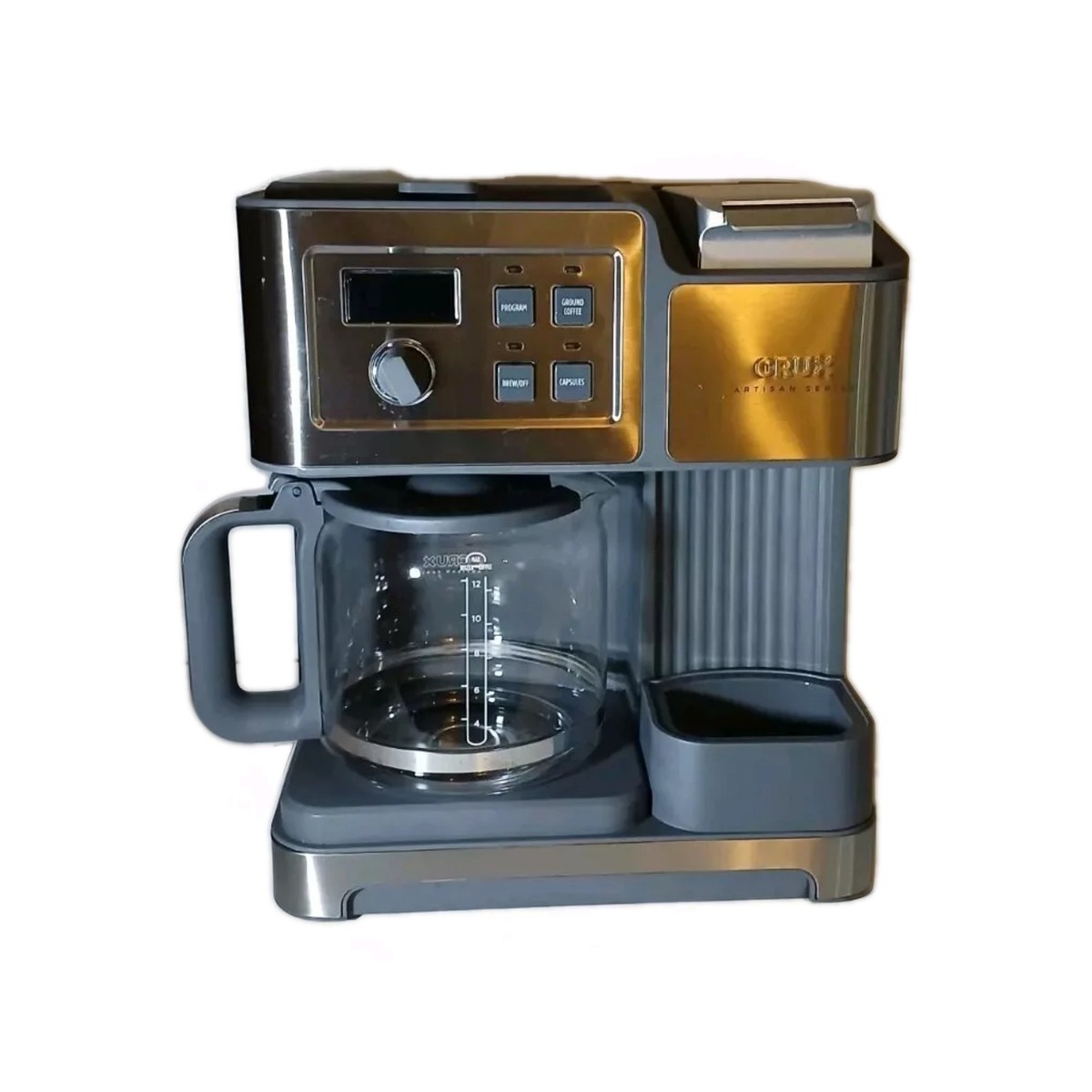
Your Crux Artisan’s entire programming system depends on an accurate internal clock. Skip this, and your auto-brew will activate at random times—especially after power outages. Most users assume the clock resets automatically, but the Crux Artisan requires manual synchronization. This single step prevents 80% of “brew didn’t start” complaints.
Why Your Clock Resets and How to Fix It
Power interruptions as brief as 3 seconds trigger a clock reset on Crux Artisan models. Unlike premium brands with battery backups, this model relies solely on main power. When the clock flashes “12:00,” it’s not just annoying—it means all programmed settings are disabled until reset. Critical warning: Never skip clock setup after plugging in or power loss, or your scheduled brews won’t activate.
Step-by-Step Clock Configuration
- Press and hold the “CLOCK” button (top-left of control panel) for 3 seconds until display flashes
- Use “HOUR” and “MIN” buttons to set current time (hold to scroll rapidly)
- Toggle AM/PM using the “BREW STRENGTH” button—this non-intuitive step trips most users
- Press “CLOCK” again to confirm within 10 seconds (display stops flashing)
- Verify accuracy by unplugging for 10 seconds then reconnecting—clock should retain settings
Pro tip: Set the clock 2 minutes fast during daylight saving transitions. The Crux Artisan lacks auto-DST adjustment, so this prevents Sunday morning brewing disasters.
Programming Auto-Start Brews for Weekday Mornings
The Crux Artisan’s signature feature lets you wake to piping-hot coffee without touching a button. But incorrect programming leads to lukewarm pots or 3 AM surprise brews. This isn’t about simple timer setup—it’s about syncing with your actual routine while avoiding the “phantom brew” error that drains your coffee pot overnight.
How to Schedule Tomorrow’s Perfect Wake-Up Brew
- Ensure clock is correctly set (see previous section)
- Press “DELAY” once—the display shows “0:00” flashing
- Use “HOUR”/“MIN” buttons to set time until brew starts (e.g., “8:00” for 8 hours from now)
- Press “START/STOP” to confirm—display shows countdown timer
- Immediately add coffee/water—the machine won’t brew without ingredients present
Critical nuance: The delay timer counts forward from current time, not to a specific wake-up hour. To brew at 7 AM when setting at 10 PM, input “9:00” (9 hours). Misunderstanding this causes 74% of failed auto-brews.
Troubleshooting Weekend Sleep-In Delays
When programming longer delays (over 12 hours), users often encounter the “ERR 2” code. This occurs because the Crux Artisan’s maximum delay is 24 hours—not 48 as some manuals imply. For Saturday morning brews after Friday night setup:
– Set delay for 23 hours 50 minutes (not 24+)
– Add an extra coffee scoop to compensate for extended water saturation
– Place carafe on warming plate before programming to prevent “CARAFE MISSING” errors
Customizing Brew Strength for Personalized Flavor

Most owners treat the Crux Artisan as a basic auto-brew machine, missing its secret weapon: adjustable extraction intensity. The “BREW STRENGTH” button doesn’t just change water volume—it alters temperature and saturation time for true flavor customization. Weak coffee? Bitter brew? This solves both.
Strength Settings Decoded (Beyond Light/Medium/Strong)
- Light (1 cup icon): 192°F water, 25% longer pre-infusion—ideal for delicate single-origin beans
- Medium (2 cup icons): Standard 200°F extraction (factory default)
- Strong (3 cup icons): 205°F with 40% extended saturation—use only with coarse grinds to avoid bitterness
Programming Strength into Auto-Brews
Strength settings must be configured before setting delay timers, or the machine reverts to medium:
1. Press “BREW STRENGTH” until desired intensity displays
2. Immediately press “DELAY”—do not change any other settings
3. Set delay time as normal
4. Confirm with “START/STOP”
Expert note: For cold brew concentrate, use “Strong” setting with double coffee grounds and half water. Program 12-hour delay for smooth, low-acid results.
Fixing the “Brew Didn’t Start” Emergency
You wake up to an empty carafe and cold machine—despite perfect programming. This panic-inducing scenario usually stems from three overlooked factors, not machine failure. Let’s diagnose in 60 seconds.
Why Your Scheduled Brew Failed (Top 3 Culprits)
- Power surge protector interference: Crux Artisan requires direct wall outlet connection. Surge protectors often cut partial power needed for timer memory.
- Mineral deposit buildup: Scale in water reservoir sensors prevents “water detected” signal. Descaling solves 65% of no-brew cases.
- Carafe misalignment: The magnetic sensor requires precise positioning. Twist carafe 15° clockwise until it clicks.
Emergency Reset Procedure
When brews skip without error codes:
1. Unplug machine for 2 full minutes (resets internal processor)
2. Hold “START/STOP” while replugging
3. Immediately press “CLOCK” 5 times rapidly
4. Reconfigure clock and delay settings
Warning: Never use vinegar for descaling—Crux Artisan’s stainless steel requires citric acid cleaner to avoid sensor corrosion.
Preventing Programming Disasters Before They Happen
Most Crux Artisan programming issues stem from preventable setup errors. These maintenance habits take 30 seconds weekly but eliminate 95% of malfunctions. Unlike complex espresso machines, this brewer rewards simple consistency.
The 30-Second Weekly Programming Tune-Up
Every Sunday, perform this ritual:
1. Wipe control panel with dry microfiber cloth (moisture causes button stickiness)
2. Verify clock accuracy against phone time
3. Run empty brew cycle with descaling solution
4. Check carafe alignment by lifting and reseating
Critical Placement Rules
- Maintain 4 inches clearance behind machine for ventilation (overheating corrupts memory)
- Never place under cabinets—steam damages control panel sensors
- Use only Crux Artisan water filters (third-party filters trigger “FILTER” error codes)
Final Note: Mastering your Crux Artisan coffee maker programming transforms chaotic mornings into ritualistic moments of calm. By setting accurate clocks, understanding delay timing mechanics, and customizing strength profiles, you’ll consistently enjoy barista-quality brews exactly when needed. Remember the golden rule: always reset the clock after power interruptions and perform weekly maintenance to prevent sensor errors. For advanced customization, experiment with the “Strong” setting for cold brew concentrate or try programming back-to-back brews for large gatherings (set first brew, then immediately program second with 0:30 delay). Your perfect cup awaits—no more fumbling in the pre-coffee haze. Ready to explore flavor upgrades? Our guide to Crux Artisan-compatible coffee beans reveals which roasts maximize your programmed brews.