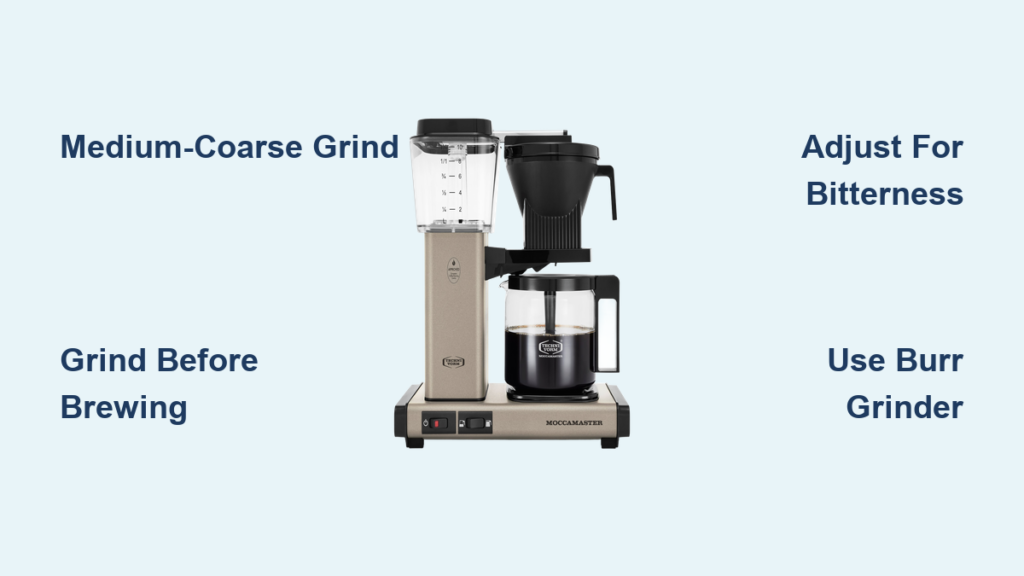
That perfect morning cup from your Moccamaster starts with one critical step most coffee drinkers overlook—grinding your beans correctly. When you understand how to grind coffee for Moccamaster, you unlock the machine’s full potential to produce café-quality coffee at home. The Moccamaster’s precision engineering delivers water at exactly 196-205°F and distributes it evenly over your grounds, but all that technology means nothing if your coffee is ground improperly. Getting the grind size wrong is the single most common reason why otherwise excellent beans produce disappointing results in these premium machines.
Picture this: you’ve invested in high-quality beans and a top-tier Moccamaster, but your coffee tastes either bitter and harsh or weak and sour. You might blame the machine or the beans when the real culprit is your grind size. The Moccamaster’s 3-4 minute brew cycle demands a specific particle size to achieve balanced extraction. Too fine, and your coffee over-extracts into bitterness; too coarse, and it under-extracts into sourness. This guide reveals exactly how to grind coffee for Moccamaster to consistently produce rich, flavorful cups that make you forget about coffee shops.
Why Grind Size Makes or Breaks Your Moccamaster Brew
Your Moccamaster’s precise brewing parameters require equally precise grind size to work properly. When hot water passes through coffee grounds, it extracts flavor compounds at different rates depending on particle size. Finer grounds expose more surface area to water, accelerating extraction, while coarser grounds slow it down. Since the Moccamaster consistently delivers water at the right temperature for 3-4 minutes, your grind size must match this timeframe.
If you’ve ever experienced coffee that tastes like burnt ash with an unpleasant aftertaste, your grounds were likely too fine. This creates resistance that slows water flow, causing over-extraction as water sits too long with the coffee. You might notice your machine taking longer than 4 minutes to brew a full carafe or even overflowing as water pools on top of the densely packed grounds. The solution? Immediately coarsen your grind setting.
Conversely, weak, sour coffee that lacks body usually means your grind is too coarse. Water rushes through the loosely packed grounds in under 3 minutes, failing to extract the full spectrum of flavors. You’ll see light brown, dry-looking grounds in the filter basket after brewing—properly extracted grounds should clump together like wet sand. Many frustrated Moccamaster owners mistakenly add more coffee to compensate, but the real fix is simply grinding finer.
How Inconsistent Grind Ruins Your Coffee Experience
Even if your average particle size is correct, inconsistent grinding creates extraction chaos. Cheap blade grinders chop beans into random sizes—some particles become dust that over-extracts, while others remain chunky and under-extract. The result? A muddy cup where bitter and sour notes clash instead of complementing each other. This inconsistency explains why upgrading to a quality burr grinder often improves coffee more than switching to expensive beans.
Finding Your Perfect Moccamaster Grind Setting

The ideal grind for Moccamaster sits firmly in the medium-coarse range—think the texture of sea salt or raw sugar. When you pour grounds into your hand, individual particles should be clearly visible and distinct, not powdery or clumped. Rub a small amount between your fingers: it should feel slightly gritty but not harsh. This size creates the perfect resistance for water to flow through at the Moccamaster’s designed rate.
Visual Clues for Perfect Grind Size
Don’t guess—use these visual benchmarks:
– Too fine: Resembles flour or powdered sugar, clumps when squeezed
– Just right: Looks like kosher salt or raw sugar, holds shape briefly when squeezed but crumbles easily
– Too coarse: Resembles breadcrumbs or small pebbles, won’t hold shape when squeezed
Your specific grinder setting varies based on model. Most conical burr grinders require settings between 15-22 on their scale (where 40 is finest), while flat burrs might use 8-12 on a 1-20 scale. Start at the midpoint of your grinder’s range and adjust based on results. Remember: one click makes a noticeable difference.
Seasonal Adjustments You Need to Make
Humidity changes affect how beans grind and how water flows through them. In summer’s high humidity, you might need to grind slightly coarser to compensate for beans absorbing moisture. During dry winter months, slightly finer settings may produce better extraction. Pay attention to seasonal changes in your coffee’s taste and adjust accordingly—this subtle tweak makes a surprising difference in consistency.
Choosing the Right Grinder for Moccamaster Success
Blade grinders simply cannot deliver the consistency your Moccamaster deserves. Their spinning blades create a random mix of fine powder and coarse chunks that leads to uneven extraction. Even high-end models produce inconsistent results because they chop beans rather than crush them evenly. If you’re serious about how to grind coffee for Moccamaster, invest in a burr grinder—it’s the single most impactful upgrade for home coffee brewing.
Burr Grinder Types Compared
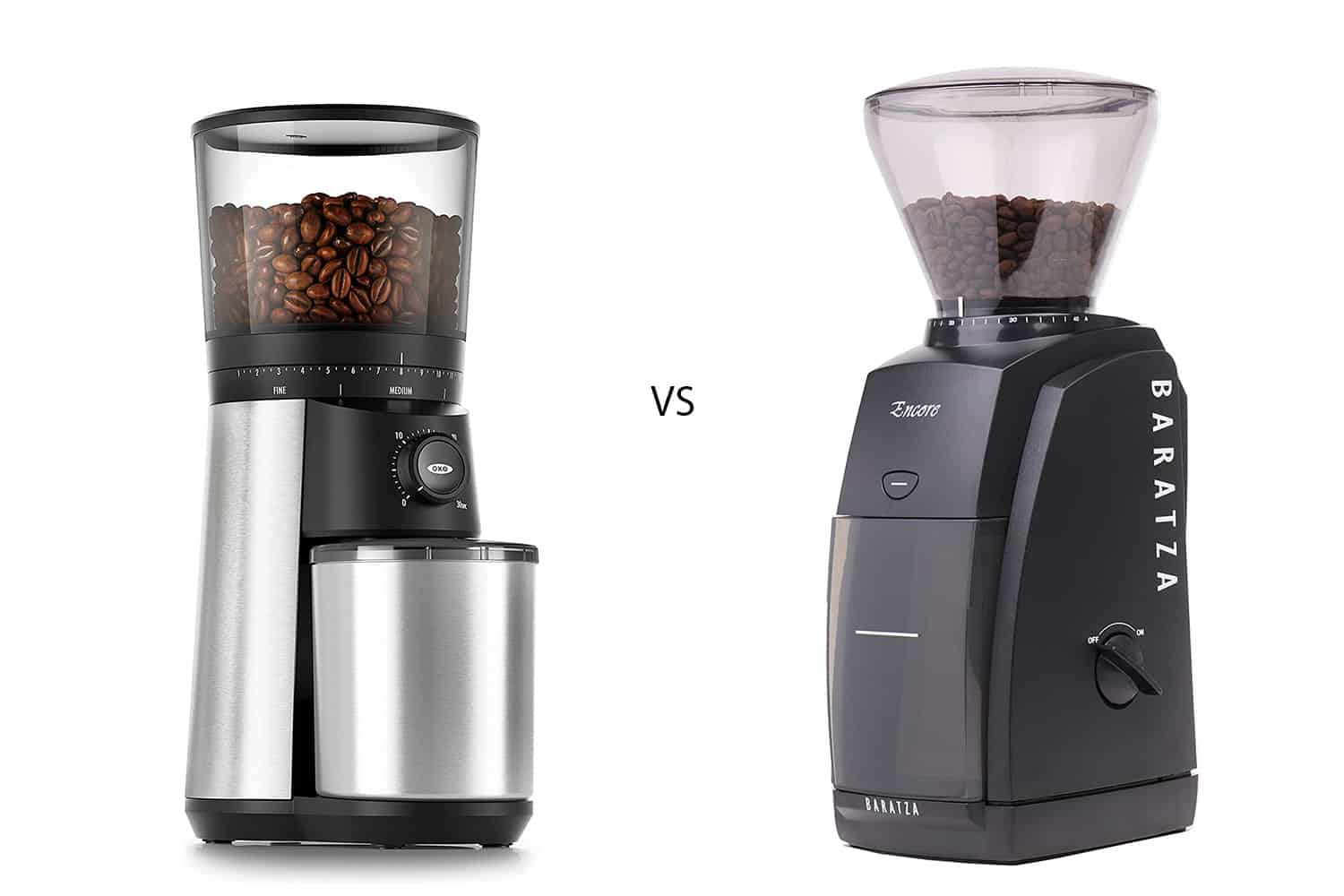
Conical burr grinders feature cone-shaped grinding surfaces that are generally quieter, produce less heat, and handle oily beans better. They’re ideal for home use where noise matters and typically cost less than flat burr models. Popular entry-level options like the Baratza Encore or OXO Brew deliver excellent consistency for Moccamaster at reasonable prices.
Flat burr grinders use two parallel rings with sharp teeth that produce extremely uniform particles. They offer more precise adjustment but tend to be louder and more expensive. Models like the Baratza Virtuoso+ provide professional-level consistency for serious home baristas willing to invest more.
Essential Grinder Features Checklist
When selecting your grinder, prioritize these Moccamaster-friendly features:
– Stepless adjustment: Allows micro-tuning between numbered settings
– Burr material: Ceramic lasts longer but steel produces more consistent results
– Hopper size: 8-12 oz capacity suits most home brewers
– Grind retention: Low retention models waste less coffee
– Cleaning access: Easy disassembly for regular maintenance
Step-by-Step Grinding Process for Moccamaster
Measure Before You Grind
Use a digital scale for accuracy—55-70 grams of whole beans makes a perfect 10-cup Moccamaster carafe (40-48 oz water). If you don’t have a scale, measure 2-2.5 tablespoons per cup. Consistent dosing ensures predictable results batch after batch. Never measure after grinding—air pockets in ground coffee make volume measurements unreliable.
Prep Beans for Optimal Grinding
Check beans for defects before grinding. Remove any discolored or damaged beans that could affect flavor. Ensure beans are properly degassed—wait 24-48 hours after roasting before grinding. Freshly roasted beans release CO2 that can cause uneven extraction and messy grinding. For best results, use beans within 2-4 weeks of roasting.
Grind Immediately Before Brewing
Coffee begins losing flavor within minutes of grinding as volatile compounds evaporate and oils oxidize. The difference between freshly ground and pre-ground coffee in your Moccamaster is dramatic—you’ll notice brighter acidity, more complex aromatics, and better mouthfeel. Make grinding the final step before brewing for maximum freshness.
Critical Grinding Mistakes Moccamaster Owners Make
Grinding Too Fine for the Machine
Many coffee drinkers mistakenly use espresso settings in their Moccamaster, creating painfully bitter coffee. Espresso requires extremely fine grounds because water passes through under high pressure in 25-30 seconds. Your Moccamaster uses gravity flow over 3-4 minutes—using espresso grind causes severe over-extraction. If your coffee tastes medicinal or ashy, coarsen your grind immediately.
Neglecting Regular Grinder Maintenance
Oils from coffee beans build up on burrs over time, causing inconsistent grinding and bitter flavors. Clean your grinder weekly with a dedicated brush, and perform deep cleaning with grinder cleaning tablets monthly. A poorly maintained grinder produces uneven particles that ruin extraction balance, no matter how perfect your settings seem.
Storing Ground Coffee Too Long
Ground coffee loses 60% of its flavor within 30 minutes of grinding. Even in an airtight container, pre-ground coffee for Moccamaster will taste noticeably flatter than freshly ground beans. If you must prepare in advance, grind no more than 15 minutes before brewing and store in an opaque, airtight container away from light.
Fine-Tuning Your Grind Like a Pro
After brewing, examine both your coffee and the spent grounds. Properly extracted coffee tastes balanced—sweet with pleasant acidity, full body, and clean finish. The used grounds should appear uniformly dark brown and clump together slightly when wet. If grounds look very dark and soupy, your grind is too fine; if they appear light and dry, it’s too coarse.
Adjust in tiny increments—one click on most grinders makes a significant difference. After each adjustment, brew a full carafe (not just a single cup) to properly evaluate changes. Keep a simple log of settings, bean type, and results—you’ll develop personalized knowledge that beats any generic chart.
Maximizing Freshness with Proper Storage
Store whole beans in an opaque, airtight container at room temperature—light, oxygen, and moisture are coffee’s three worst enemies. Avoid refrigeration (causes condensation) but consider freezing unopened bags for long-term storage. Never freeze already opened beans, as moisture from thawing destroys flavor compounds. For daily use, buy enough beans for 1-2 weeks to ensure peak freshness.
Quick Reference: Perfect Moccamaster Grind Cheat Sheet
- Texture: Kosher salt or raw sugar
- Grinder setting: Medium-coarse (varies by model)
- Measurement: 55-70g for full 10-cup carafe
- Grind time: Immediately before brewing
- Troubleshooting: Bitter? Coarsen grind. Weak? Finer grind.
Mastering how to grind coffee for Moccamaster transforms your daily coffee from routine to ritual. With the right grind size, your machine delivers the balanced, flavorful cup it was engineered to produce. Remember that perfect grind requires attention to detail but pays dividends in every sip—start with medium-coarse, adjust based on taste, and enjoy café-quality coffee without leaving home. The difference between good coffee and exceptional coffee often comes down to this one critical step.