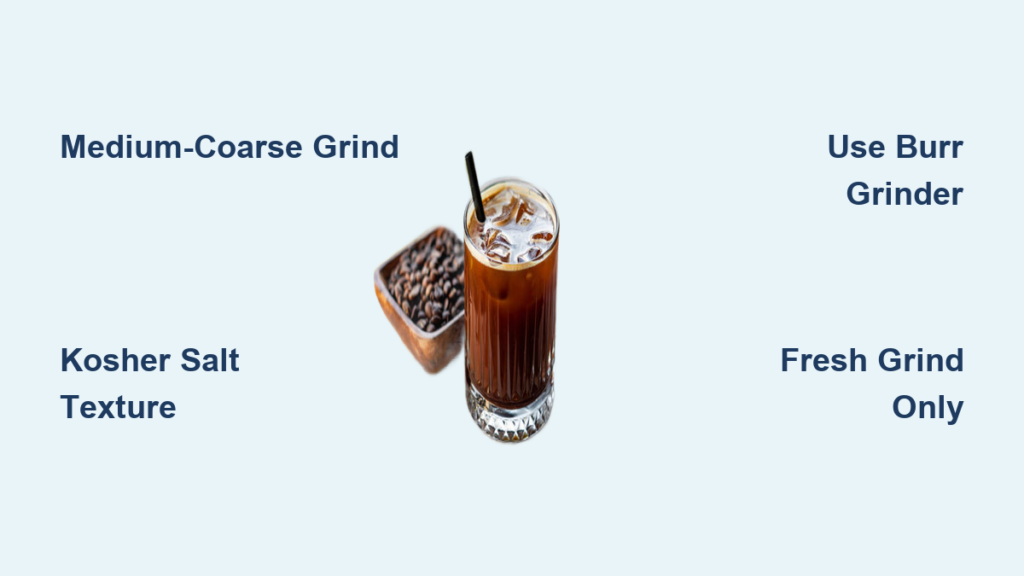
Cold brew coffee has become a beloved morning ritual for coffee enthusiasts seeking a smooth, low-acid alternative to traditional brewing methods. Unlike hot coffee extraction, cold brew relies on time rather than heat to pull flavors from coffee grounds—meaning your grind size plays an absolutely critical role in determining whether you end up with a rich, chocolatey concentrate or a weak, muddy mess. Getting the grind right the first time saves you wasted beans, frustrated trial-and-error, and disappointing batches that never quite hit the mark. This guide breaks down everything you need to know about achieving the perfect cold brew grind, from understanding why particle size matters so much in cold extraction to selecting the right equipment and avoiding the most common mistakes that derail home brewers.
Why Your Cold Brew Grind Size Makes or Breaks the Flavor
When coffee grounds are too fine, you create excessive surface area that leads to over-extraction in cold brew’s extended steeping environment. This doesn’t produce the bitter, harsh flavors you’d expect from hot coffee over-extraction, but rather a thick, muddy mouthfeel with astringent undertones that dominate the cup. Fine grounds also tend to clog filters, creating pressure buildup that can cause messy overflows and frustrating cleanup. On the flip side, grinding too coarse leaves insufficient surface area for proper extraction, resulting in a weak, watery concentrate that tastes more like tinted water than coffee. The sweet spot lies in finding that balance where water can slowly and evenly pull compounds from each particle without overwhelming the brew.
Grind size directly impacts clarity and sediment in your final cold brew. Medium-coarse to coarse grounds allow the sediment to settle naturally at the bottom of your vessel, making filtration straightforward and leaving your finished cup clean. Fine grounds create suspended particles that pass through even quality filters, creating a gritty texture that detracts from cold brew’s signature smoothness. This is why understanding your grind is less about following a rigid rule and more about understanding how particle size interacts with your specific brewing setup, preferred strength, and taste preferences.
How Particle Size Affects Cold Water Extraction Chemistry
The relationship between grind size and cold brew success is more profound than many home brewers realize. When you steep coffee in cold water for 12 to 24 hours, the extraction process happens slowly through osmosis rather than the rapid chemical reactions that hot water triggers. This means the surface area of your coffee grounds becomes your primary driver of flavor extraction—and surface area is directly controlled by how finely or coarsely you grind your beans.
Unlike hot brewing where water temperature provides energy for extraction, cold brew relies almost entirely on particle size to determine how much flavor gets pulled from the coffee. Too much surface area (fine grind) means extraction happens too quickly even in cold water, while too little surface area (coarse grind) means extraction never reaches optimal levels during the typical steeping window. This delicate balance explains why cold brew grind requirements differ significantly from other brewing methods.
Perfect Cold Brew Grind Texture: Kosher Salt to Raw Sugar

The ideal grind size for cold brew falls in a specific range that balances extraction efficiency with filtration ease. Most experts recommend a medium-coarse to coarse grind, similar in texture to raw sugar or kosher salt. This particle size creates enough surface area for effective cold water extraction while remaining porous enough that water flows freely through the grounds without channeling or compacting into an impermeable barrier.
How to Identify the Correct Grind Size Visually and Tactically
A medium-coarse grind for cold brew should feel slightly gritty when rubbed between your fingers, with visible individual particles that range roughly 0.5 to 1 millimeter in size. When you examine your grounds visually, you should be able to distinguish individual particles without them clumping together. The consistency should be uniform rather than containing a mix of fine powder and large chunks—that unevenness causes inconsistent extraction where some particles over-extract while others under-extract, creating an imbalanced flavor profile in your finished brew.
If you’re unsure whether your grind is correct, perform a simple water test before committing to a full batch. Place a spoonful of grounds in a glass of cold water and observe what happens over 30 seconds. Properly sized grounds will sink gradually while releasing visible oils. If the grounds sink immediately, your grind is too coarse; if they float or create a cloudy suspension, they’re too fine.
Burr Grinder vs. Blade Grinder: Critical Cold Brew Equipment Choice
:max_bytes(150000):strip_icc()/__opt__aboutcom__coeus__resources__content_migration__serious_eats__seriouseats.com__2019__02__20190206-coffee-grinder-vicky-wasik-grinds-comparison-1500x1125-b2d47dd44c0d408cabae9d91b262a533-72acbe342c714d41aa3febf61b65ad69.jpg)
The equipment you use to grind your coffee beans matters almost as much as the grind setting itself. Blade grinders, while affordable and convenient, create an uneven particle distribution that causes significant problems for cold brew. The spinning blade smashes beans rather than cutting them, producing a mix of fine powder, medium particles, and occasional chunks all in the same batch. This inconsistency leads to the exact extraction problems discussed earlier—some particles over-extract while others barely contribute flavor.
Why Conical Burr Grinders Dominate Cold Brew Results
Burr grinders work by crushing beans between two abrasive surfaces set at a precise distance apart, producing uniform particles that extract evenly. Entry-level conical burr grinders in the $100 to $150 range offer dramatically better results than premium blade grinders costing three times as much. The consistency you gain from a burr grinder translates directly to a cleaner, more balanced cold brew with predictable extraction. Look for grinders with clearly marked settings so you can replicate your successful grind size batch after batch, and choose a model with a grounds container that doesn’t generate static (static causes grounds to clump and makes measuring inconsistent).
For those who prefer whole bean convenience and minimal equipment investment, many quality roasters now offer pre-ground coffee specifically labeled for cold brew. This eliminates the grinder question entirely and ensures your grind size matches what cold brew experts recommend. The tradeoff is freshness—coffee begins losing optimal flavor compounds within minutes of grinding, so pre-ground coffee, even from excellent roasters, can’t match the quality of freshly ground beans.
1:8 Coffee-to-Water Ratio: The Cold Brew Sweet Spot
Grind size and coffee-to-water ratio work together to determine your final cold brew strength, and understanding this relationship helps you adjust your recipe with precision. The standard starting point for cold brew uses a 1:8 ratio of coffee to water by weight, producing a concentrate that can be diluted to taste with water, milk, or alt-milks. This ratio assumes a properly sized medium-coarse grind—if your grind is finer than ideal, you’ll need to reduce your coffee weight slightly to prevent over-extraction, while coarser grinds may require a slight increase to achieve comparable strength.
How to Adjust Ratio Based on Grind Size Results
A 12-ounce batch of cold brew concentrate, for example, requires 1.5 ounces (by weight) of coffee grounds steeped in 12 ounces of water. This produces approximately 10 ounces of concentrate after accounting for absorption by the grounds—plan your batch sizes accordingly and remember that you’ll lose some liquid to the coffee bed itself. If you find your cold brew tastes weak despite proper steeping time, your grind is likely too coarse. If it tastes overly bitter or has sediment floating throughout, you’ve probably ground too fine.
Testing different ratios with consistent grind settings helps you find your personal sweet spot. Start with the standard 1:8 ratio and brew a test batch, then dilute half of it 1:1 and drink the other half straight. Make notes about whether you wish it were stronger, more balanced, or smoother, then adjust your ratio or grind size slightly for your next batch. This methodical approach beats endless random attempts and helps you understand how each variable affects your final cup.
Avoid These 3 Critical Cold Brew Grinding Mistakes

Several recurring mistakes derail home brewers before they even begin the actual brewing process, and recognizing these pitfalls helps you sidestep frustration entirely. The first and most damaging mistake is grinding coffee too far in advance of brewing. As mentioned earlier, coffee begins degrading immediately after grinding—aromatic compounds evaporate, oils start oxidizing, and the surface area that makes fresh grounds so flavorful becomes a liability when that surface has been exposed to air for hours. Grind your beans no more than 15 to 30 minutes before starting your cold brew steep for optimal results.
Why Roast Level Affects Your Grind Size Decision
Failing to account for different bean densities creates another subtle but impactful mistake. Lighter roasts are denser than darker roasts and require slightly finer grinds to achieve comparable extraction levels. If you switch from a medium roast to a light roast using the same grind size, you’ll likely find your cold brew tastes weak and underdeveloped because the water struggles to penetrate the denser bean structure. Darker roasts, being less dense, extract more readily and may benefit from a slightly coarser grind to prevent over-extraction.
Inconsistent grind size from improper technique or equipment causes the second major category of problems. If using a burr grinder, inspect your grounds immediately after grinding and before brewing—if you see significant fine powder (often called “fines”) or noticeably large chunks, your grinder may need adjustment, or you may be overfilling the hopper and causing uneven grinding. Never grind more beans than your burrs can handle efficiently, and allow the grinder to reach full speed before feeding beans through.
Professional Cold Brew Grind Enhancements You Need
Experienced cold brew masters have developed techniques that elevate their results beyond basic recipe following, and incorporating these pro tips can transform your home brewing practice. First, consider the water temperature during grinding and initial mixing—even though cold brew steeps at refrigerator temperatures, beginning with water that’s slightly cool (around 60 to 65°F) rather than ice-cold helps kickstart the extraction process without introducing the off-flavors that very cold water can sometimes create.
The Cold Brew Blooming Technique Most People Skip
Blooming your grounds before the long steep provides another performance boost. Add just enough cold water to saturate all the grounds (about twice the weight of your coffee), stir thoroughly to ensure every particle gets wet, and let it sit for 2 to 3 minutes before adding the remaining water. This blooming process releases trapped gases that can impede water penetration and creates a more uniform extraction environment. While blooming is more commonly discussed in hot coffee brewing, its benefits transfer to cold brew, particularly with freshly roasted beans that still contain significant carbon dioxide.
The agitation method during the initial mixing phase also affects your results. Rather than simply adding water and walking away, spend 30 to 60 seconds vigorously stirring the coffee-water mixture to ensure even saturation and break up any dry pockets that would otherwise create weak spots in your extraction. After this initial agitation, resist the urge to stir again during the steep—each disturbance releases sediment into the liquid and can introduce oxygen that accelerates oxidation of delicate flavor compounds.
Final Cold Brew Grind Adjustments for Perfect Results
Mastering the grind for cold brew requires understanding the fundamental relationship between particle size, extraction rate, and filtration efficiency. The medium-coarse grind that resembles kosher salt provides the starting point for most brewing methods, but your specific equipment, preferred strength, and bean choices may require subtle adjustments. Investing in a quality burr grinder, grinding fresh, and maintaining consistency between batches transforms cold brew from an occasional experiment into a reliable daily ritual.
Remember that the perfect grind exists on a spectrum rather than at a single point—the goal is finding where that spectrum aligns with your personal taste preferences and brewing setup. Start with the standard recommendations, take notes on your results, and adjust methodically until you discover the grind that produces cold brew you’ll crave every morning. Once you dial in your ideal grind size, document it precisely so you can replicate your success batch after batch, turning your cold brew from a hit-or-miss experiment into a consistently delicious morning ritual.