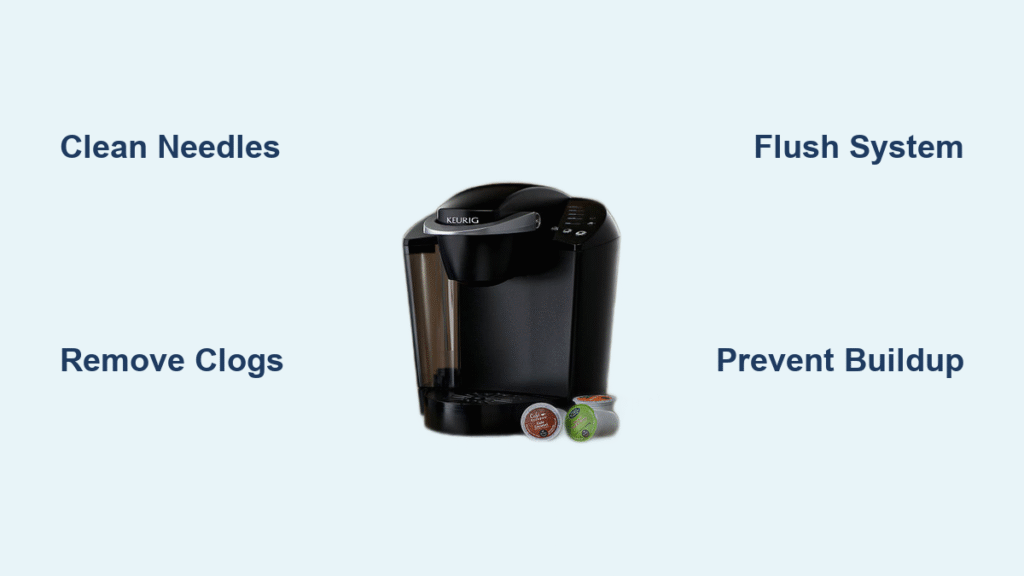
Your Keurig suddenly stops brewing mid-cycle, leaving water trapped under pressure and your coffee dreams dashed. This frustrating scenario affects thousands of users when tiny coffee grounds or mineral deposits clog the puncture needles—the sharp metal components that pierce your K-Cup. When these critical parts get blocked, your machine can’t build or release pressure properly, causing brewing failures whether a K-Cup is present or not.
The good news? A simple 10-minute cleaning procedure can restore your brewer’s performance without professional repair costs. Based on a solution shared by user “oldturkey03” in 2017 that’s helped over 30,000 Keurig owners, this guide walks you through the exact steps to clean your Keurig’s needles safely and effectively. By the time you finish reading, you’ll know how to diagnose needle blockages, clear them properly, and prevent future clogs that ruin your morning coffee routine.
Why Your Keurig Stops Brewing Mid-Cycle
Recognizing Needle Blockage Warning Signs
When your Keurig fails to complete a brew cycle, needle blockage is often the culprit. Complete brewing failure regardless of K-Cup presence should immediately raise suspicion about your needles. If you notice water remains trapped in the system after a failed attempt—evident when you open the chamber to find standing water—you’re dealing with pressure issues directly related to clogged puncture needles.
Another telltale sign is incomplete K-Cup puncture where the foil remains partially intact after brewing. This happens when coffee grounds or mineral deposits prevent the needle from fully penetrating the pod. Unusual hissing sounds during operation indicate pressure buildup trying to escape through restricted pathways. If you press the brew button and experience no water flow despite a full reservoir, your needles need immediate attention before permanent damage occurs.
Quick Visual Inspection Before Cleaning
Before diving into the cleaning process, perform this essential visual check: remove the K-Cup holder and examine both the top and bottom needles under good lighting. Look for visible coffee grounds stuck in the needle openings—these microscopic particles accumulate over time from K-Cup breaches. White mineral deposits around needle bases signal hard water buildup that restricts movement. Bent or damaged needle tips compromise proper puncturing, while coffee residue coating needle surfaces creates gradual performance decline. A flashlight helps reveal these issues clearly before you begin cleaning.
Essential Tools for Effective Needle Maintenance
Must-Have Cleaning Implements for Precision Work
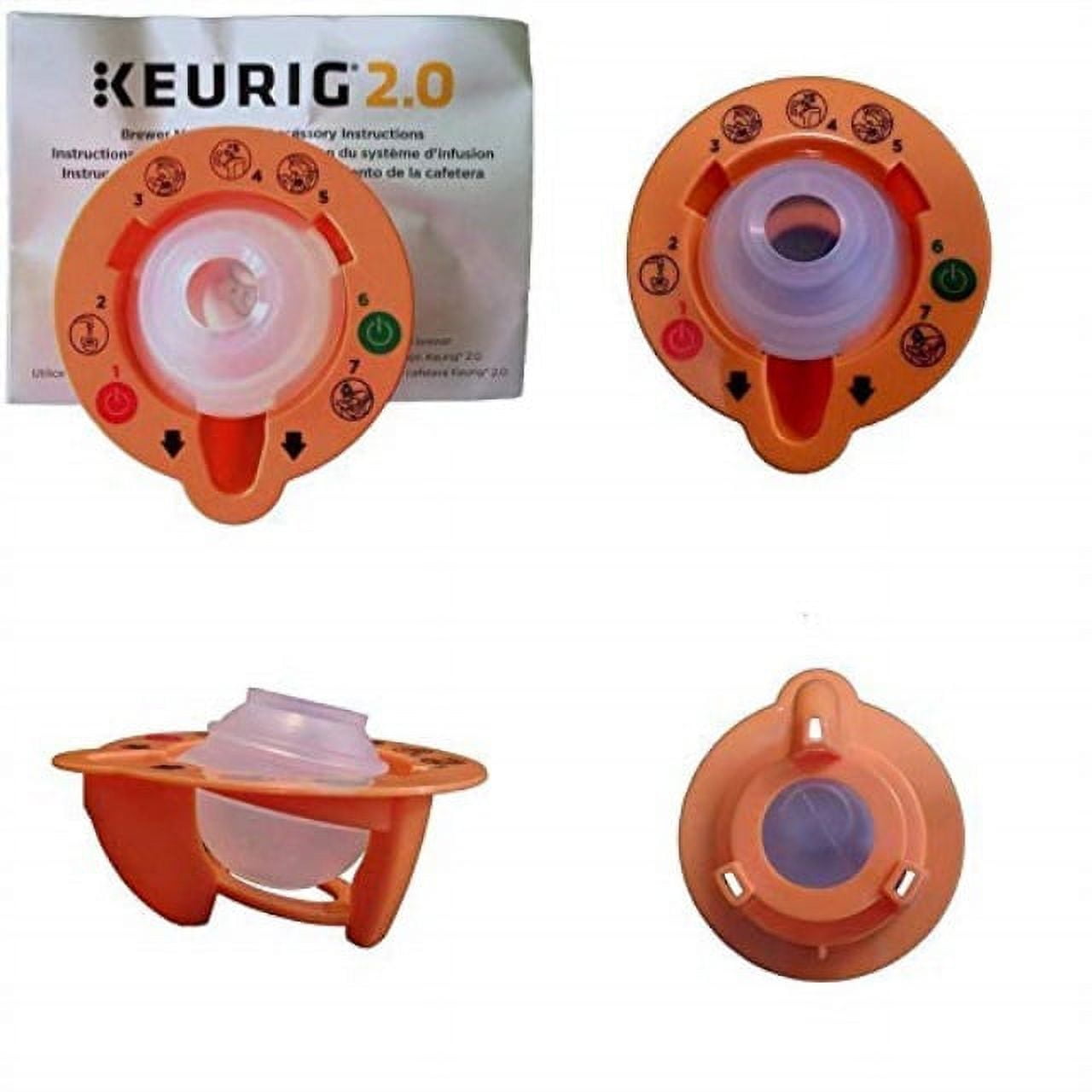
You don’t need specialized equipment to clean Keurig needles properly—just these simple household items. A small straight pin (standard sewing needle size) works perfectly for dislodging debris from narrow openings without damaging the delicate mechanisms. If you prefer an official solution, the Keurig needle cleaning tool provides optimal fit and safety, though many users find it unnecessary when a pin works equally well. In a pinch, a straightened paperclip serves as an effective alternative, though its thicker gauge requires more careful handling.
Never skip the flashlight—proper illumination prevents accidental needle damage during cleaning. Keep several damp paper towels nearby to wipe away dislodged debris immediately, preventing it from resettling elsewhere in the system. These basic tools transform what seems like a complex repair into a simple 10-minute maintenance task you can perform monthly to keep your brewer in peak condition.
Critical Safety Precautions Before Starting
Unplug the machine before beginning any cleaning procedure—this prevents accidental activation during maintenance. If your Keurig recently attempted brewing, allow pressure to dissipate completely before opening components; forcing access while pressurized risks hot water spray. Handle needles carefully as they’re extremely sharp and can cause injury if mishandled during cleaning. Work in good lighting not just for visibility but to avoid accidental slips that could damage internal components. Skipping these safety steps might save 30 seconds but risks machine damage or personal injury that could cost you a replacement machine.
Step-by-Step Needle Cleaning Process That Works
Prepare Your Brewer for Safe Maintenance
- Remove water reservoir completely and set aside to prevent accidental spills during cleaning
- Open brew chamber fully to access both needle assemblies without obstruction
- Remove K-Cup holder assembly by pulling straight up—don’t twist or force it
- Empty any remaining water from the system by gently shaking the holder over sink
This preparation ensures you’re working with a dry, safe machine where components move freely during cleaning. Rushing this step leads to water spills that complicate the cleaning process and potentially damage electrical components.
Clean Top Needle Assembly Without Damage
- Locate the top needle—it’s the metal tube with three small holes that punctures the K-Cup lid
- Insert cleaning tool gently into each hole, applying minimal pressure to avoid bending
- Twist slightly and withdraw to dislodge debris without forcing it deeper
- Check needle movement—press gently to ensure it depresses and springs back smoothly
- Wipe needle surface with damp paper towel to remove residual coffee oils
The top needle requires delicate handling because it’s spring-loaded. Forcing your cleaning tool can bend the needle mechanism, causing permanent damage that requires part replacement. If resistance feels excessive, stop and try a different angle rather than applying more pressure.
Clean Bottom Needle in Holder Thoroughly
- Examine the bottom of the K-Cup holder where the needle protrudes
- Find the metal needle in the center—this punctures the K-Cup bottom
- Clear the hollow tube using your cleaning tool with gentle back-and-forth motion
- Remove ground buildup from around the needle base where coffee accumulates
- Rinse holder thoroughly under warm water to flush dislodged particles
This bottom needle often collects more coffee grounds since it’s positioned where brewed coffee exits. Pay special attention to the hollow tube—it must be completely clear for proper drainage. A common mistake is cleaning only the visible tip while ignoring the internal channel where most blockages occur.
Post-Cleaning System Flush to Ensure Complete Clearance

Water-Only Rinse Cycles for Residue Removal
- Reassemble all components correctly, ensuring K-Cup holder clicks into place
- Fill reservoir with fresh, cold water (no K-Cups)
- Run 3-5 brew cycles using the largest cup size setting
- Discard hot water after each cycle to verify clear flow
- Check for consistent stream without sputtering or hesitation
These rinse cycles flush loosened debris from internal pathways that hand cleaning can’t reach. Skipping this step means dislodged particles could re-clog needles during your next brew. If water flow remains inconsistent after three cycles, repeat the needle cleaning process—you likely missed a stubborn blockage.
Optional Descaling Treatment for Mineral Buildup
If you live in a hard water area or notice white deposits during your inspection, follow up with descaling: Use Keurig-approved descaling solution according to package directions, complete full descaling cycle as recommended, then run additional water cycles to eliminate any residual taste. This two-step approach—mechanical cleaning followed by chemical descaling—addresses both organic and mineral blockages for comprehensive maintenance.
Verify Your Keurig’s Full Recovery Before Daily Use
Test Brew Procedure for Confidence
- Insert fresh K-Cup (avoid using old or damaged pods for testing)
- Close chamber firmly until it clicks securely
- Select regular cup size (not smallest or largest setting)
- Start brew cycle while observing water flow
- Monitor for proper pressure release at cycle completion
This test brew confirms both needles function correctly. Proper top needle operation ensures water enters the K-Cup, while functional bottom needle allows brewed coffee to exit. If either fails, recheck that specific needle assembly before assuming complete system failure.
Success Indicators That Cleaning Worked
Listen for normal brewing sounds returning—no unusual gurgling or hissing. Watch for consistent water flow throughout the entire cycle without interruptions. Verify proper K-Cup puncture by checking both top and bottom foil after brewing—they should show clean, complete holes. Most importantly, confirm complete brew cycle without stopping and no residual pressure when opening the chamber afterward. These indicators prove your needle cleaning was successful and your Keurig is ready for regular use.
Prevent Future Needle Problems with Smart Maintenance
Simple Habits That Extend Your Keurig’s Life
Weekly: Perform quick visual needle inspection during routine cleaning—this catches minor buildup before it becomes problematic. Monthly: Rinse K-Cup holder thoroughly under running water to prevent coffee ground accumulation. Quarterly: Complete full descaling cycle even if no symptoms appear, especially with hard water usage. As needed: Clean needles immediately when you notice slower than normal brewing or sputtering water flow—don’t wait for complete failure.
Using filtered water reduces mineral deposits significantly, while avoiding overfilled K-Cups prevents coffee bursts that clog needles. Clean up spills immediately around the needle area to stop residue from hardening, and store your machine properly away from kitchen grease and dust that accelerate buildup. These simple habits mean most users need formal needle cleaning only once or twice yearly instead of monthly emergencies.
Troubleshooting When Cleaning Doesn’t Solve the Problem
Next Steps for Persistent Brewing Failures
If needle cleaning fails to resolve your issue, check these often-overlooked factors: Verify water reservoir is properly seated—many “broken” Keurigs simply have reservoirs slightly misaligned. Confirm power supply by testing the outlet with another device—surge protectors sometimes cut power partially. Examine air pump operation for proper pressure generation, as pump failures mimic needle blockage symptoms. Only after ruling out these simpler issues should you consider professional service for internal blockages beyond user repair capability.
Advanced Techniques for Stubborn Blockages
When standard cleaning fails, try using compressed air to blow out stubborn clogs from both needle directions. Soak removable parts in warm, soapy water for 15 minutes to loosen hardened deposits before reattempting cleaning. If needles appear visibly bent or damaged, replace K-Cup holder—it’s often cheaper than full machine replacement. For newer models still under warranty, contact Keurig support before attempting extensive repairs that might void coverage.
A clean needle system ensures your Keurig delivers consistent, pressure-perfect cups every time. This simple maintenance procedure takes just minutes but can save hours of frustration and the cost of premature machine replacement. Keep your cleaning tool handy—most users find they need this fix only once or twice yearly when following good maintenance practices. By addressing needle issues promptly, you’ll extend your Keurig’s lifespan significantly while enjoying perfect coffee with every brew.