That sharp, tongue-tingling zing in your morning coffee shouldn’t feel like swallowing battery acid. If you’ve ever winced at your brew’s aggressive bite or experienced stomach discomfort after your cup, you’ve likely heard the kitchen hack: adding salt to coffee makes it less acidic. But does this pantry trick actually work, or is it just culinary folklore? The truth might surprise you—it’s not about changing chemistry but rewiring your taste buds. After decades of barista debates and kitchen experiments, science confirms salt can transform acidic coffee into a smoother sip, but only if you understand the delicate balance between perception and reality. In this guide, you’ll discover exactly how salt alters coffee’s flavor profile, the precise measurements that prevent a briny disaster, and why this trick works wonders for some brews but fails for others.
Why Salt Neutralizes Bitterness Without Changing pH Levels
Salt doesn’t magically lower coffee’s actual acidity—it targets your perception. When sodium ions hit your tongue, they temporarily block bitter taste receptors while amplifying sweet compounds. This neurological sleight of hand makes high-acid light roasts taste rounded and mellow, even though the pH remains unchanged. Think of it like noise-canceling headphones for your taste buds: the harsh frequencies (bitterness/acidity) get suppressed, letting smoother notes shine through. Crucially, this effect works best on coffees with inherent sweetness that gets masked by sharpness—like bright Ethiopian Yirgacheffes or under-extracted light roasts. If your coffee tastes sour due to under-brewing, salt won’t fix extraction errors; it only masks the symptom.
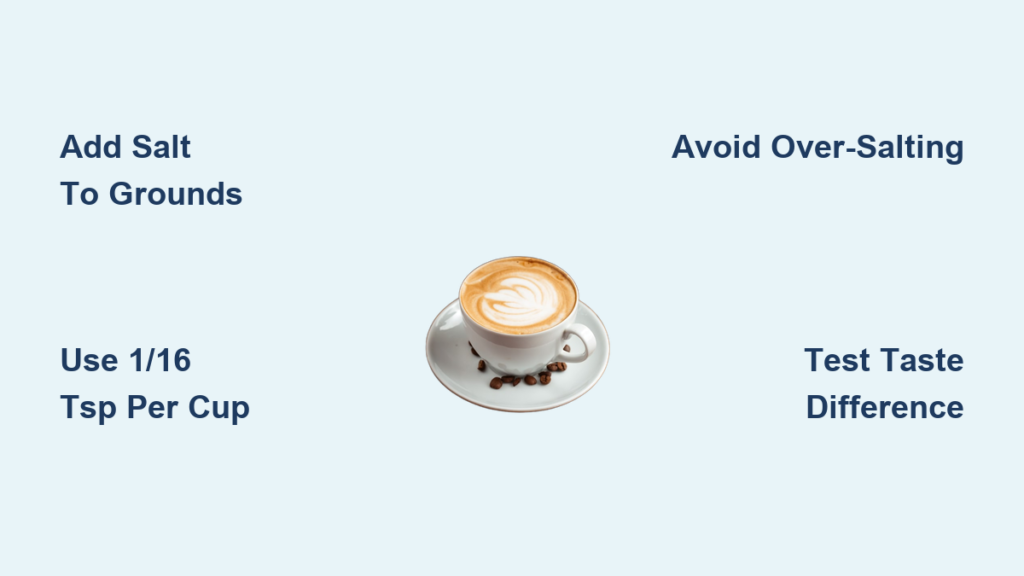
How Much Salt Actually Works Per Cup
Over-salting ruins coffee faster than burnt beans. Follow this foolproof ratio:
– For standard 8oz cups: 1/16 teaspoon (a pinch you can barely see on your fingertip)
– For French press (32oz): 1/8 teaspoon max
– For cold brew concentrate: Skip salt—it’s already low-acid
Always add salt before brewing. Stirring it into grounds ensures even distribution during extraction. If you add it post-brew, you’ll get salty pockets. Pro tip: Use finely ground sea salt—it dissolves instantly versus coarse kosher salt that leaves gritty residue. One barista trick: Mix salt with coffee grounds the night before; the minerals bind overnight for seamless integration.
When Salt Backfires: 3 Critical Mistakes to Avoid
Even correct measurements fail if you ignore these pitfalls:
1. Using dark roasts: Their natural bitterness needs sugar/milk, not salt—which amplifies burnt notes
2. Adding after brewing: Creates uneven “salty hotspots” that overwhelm subtle flavors
3. Overcompensating for bad beans: Stale or low-quality coffee lacks underlying sweetness for salt to enhance
If your coffee still tastes metallic after salting, you’ve exceeded 0.5% salt concentration. Flush the batch and restart—no amount of milk fixes oversalted coffee.
Step-by-Step Fix for Acidic Pour-Over and Drip Coffee
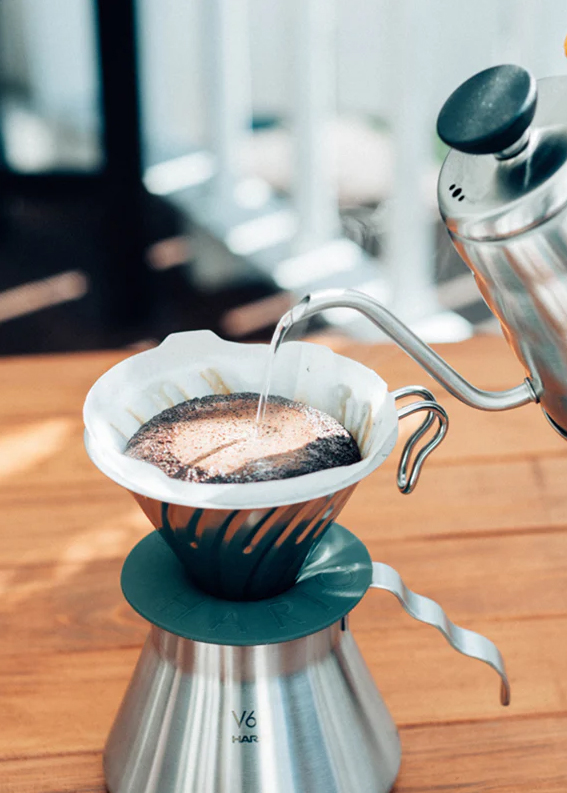
Perfecting V60 or Chemex Brews
Light-roast pour-overs often highlight acidic notes that salt tames elegantly. Here’s how:
1. Measure 22g coffee grounds into filter
2. Sprinkle 1/16 tsp fine sea salt over grounds (not the carafe!)
3. Bloom with 50g hot water as usual—salt dissolves instantly
4. Complete pour-over; expect noticeably rounder body
Visual cue: Watch for reduced “sour steam” rising during brewing—a sign volatile acids are less pronounced. Takes 30 seconds with no extra tools.
Rescuing Bitter Drip Machine Coffee
Cheap drip machines often over-extract acidic compounds. Salt counters this:
– For 12-cup pots: Add 1/4 tsp salt to the empty water reservoir before filling
– Why reservoir? Water dissolves salt evenly during heating, avoiding clumps
– Critical: Never exceed 1/4 tsp—drip coffee’s longer brew time extracts more salt
Time estimate: 10 seconds during morning prep. Most users report immediate improvement in stomach comfort.
Why Salt Beats Milk for Acidic Sensitivity Issues

Dairy masks acidity but adds calories and alters texture. Salt solves the core problem differently:
– Milk coats your tongue, muting all flavors (including coffee’s good notes)
– Salt selectively suppresses bitterness while enhancing fruity/floral notes in light roasts
– Science proof: A 2013 Journal of Food Science study found 0.1% salt solutions reduced perceived bitterness by 27% without affecting sweetness perception
This makes salt ideal for:
– Keto/low-carb dieters avoiding milk sugars
– People with lactose intolerance
– Those who want brighter coffee notes without sourness
Pro tip: Try salt first with single-origin African coffees—their natural blueberry/citrus notes emerge beautifully when harsh acidity fades.
When Salt Won’t Fix Your Acidic Coffee (And What To Do Instead)
Salt isn’t a universal fix. If these apply, skip salt and address the root cause:
Using Stale or Poor-Quality Beans
Old beans develop harsh, rancid acids salt can’t mask. Fix: Buy freshly roasted beans (look for roast dates <21 days old), store in opaque airtight containers, and grind 30 seconds before brewing. Visual cue: Fresh beans smell floral/fruity; stale ones smell papery or cardboard-like.
Over-Extraction from Wrong Grind Size
Too-fine grinds leach excessive acids. Fix: For drip coffee, use medium-coarse grind (like sea salt crystals). For espresso, adjust grinder 1-2 clicks coarser. Time estimate: 2 minutes to recalibrate most grinders. Brew time should be 4-5 minutes for pour-over.
Hard Water Mineral Imbalance
Calcium/magnesium in tap water amplifies perceived acidity. Fix: Use filtered water with balanced minerals (like Third Wave Water packets). Cost: $0.10 per cup—cheaper than daily antacids.
The Salt Test: How to Know If It Works for Your Palate
Not all taste buds react equally. Run this 60-second experiment:
1. Brew two identical cups of acidic coffee (e.g., light roast)
2. Add 1/16 tsp salt to one cup; leave the other plain
3. Sip the plain cup first, then the salted one
4. Success signs: Reduced “prickly” sensation on tongue sides, smoother finish, enhanced sweetness
If it tastes salty: You used too much or have salt-sensitive taste receptors. Try halving the amount next time. Most converts see results within 3 tries—baristas call it the “aha moment” when coffee suddenly tastes expensive.
Long-Term Solutions Beyond the Salt Shaker
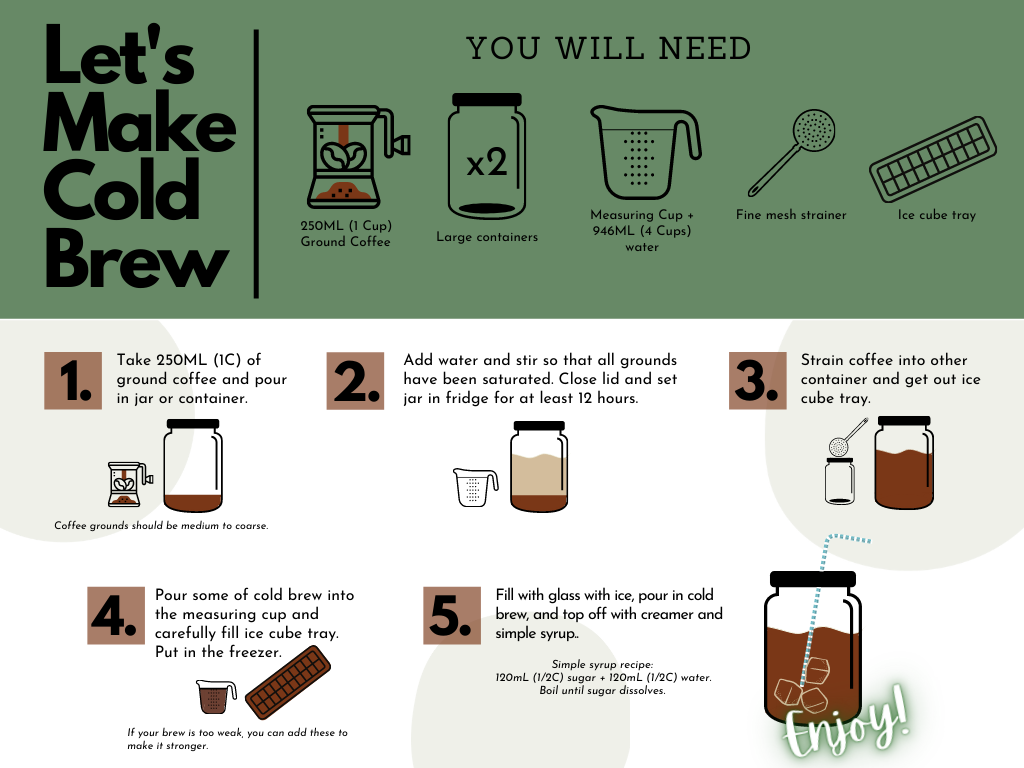
While salt offers quick relief, sustainable fixes prevent acidity issues:
– Brew colder: Cold brew uses room-temp water for 12-24 hours, reducing acidity by 70%
– Choose naturally low-acid beans: Brazilian or Sumatran dark roasts have pH ~5.3 vs. Kenyan light roasts at ~4.9
– Adjust your water: Add a pinch of baking soda to the water reservoir (not grounds) for severe cases—use sparingly!
Prevention tip: Always rinse paper filters with hot water first; residual bleach can amplify sourness.
Final Verdict: Should You Salt Your Coffee?
Yes—if your coffee is too acidic due to bean origin or under-extraction, and you use microscopic amounts. Salt won’t transform bad coffee, but it’s a brilliant sensory hack for bright, high-quality light roasts that taste uncomfortably sharp. For stomach sensitivity, it’s often more effective than milk since it doesn’t dilute flavor. Start with 1/16 tsp per cup added to grounds, and adjust in tiny increments. If your cup tastes cleaner and sweeter within 3 brews, you’ve found your acidity solution. But if problems persist, investigate beans, water, or grind size first—salt is a band-aid, not a cure. For true low-acid coffee, seek naturally processed Brazilian beans or dedicated low-acid brands like Puroast. Your perfect smooth cup is closer than you think, one precise pinch at a time.