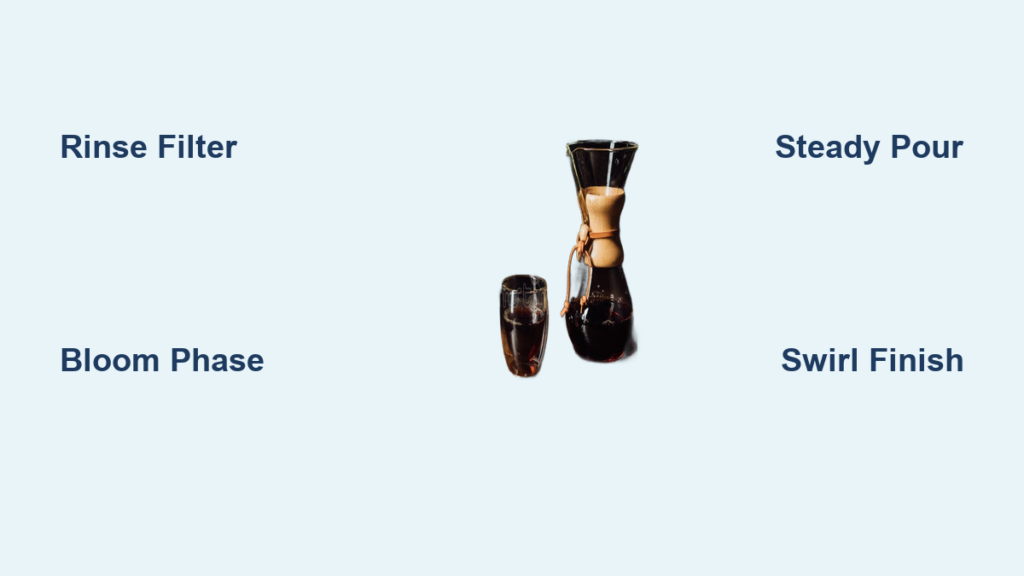
There’s a quiet magic in watching hot water bloom coffee grounds through Chemex’s elegant glass hourglass—a ritual that transforms simple ingredients into two vibrant cups of clarity-focused coffee. If you’ve ever stood with your gooseneck kettle wondering how long does it take to make Chemex coffee, you’re not alone. Timing is the invisible hand guiding your brew from sour under-extraction to bitter over-extraction. The critical brewing phase itself consistently clocks in at 4½ to 6 minutes after rinsing, but when you factor in setup and finishing touches, plan for 6 to 8 minutes total from first pour to first sip. This narrow window isn’t arbitrary—it’s the sweet spot where water, coffee, and time align to deliver Chemex’s signature bright acidity and paper-filtered purity. In this guide, you’ll discover exactly where every minute goes, why deviations ruin your cup, and how to nail perfect timing every single brew.
Why Chemex Brew Time Stays Fixed at 4½–6 Minutes
The Chemex’s thick bonded filters and precise hourglass geometry create a self-regulating flow rate that locks brewing into a 4½–6 minute range regardless of size. Unlike pour-over methods with thinner filters, these specialized papers resist channeling and maintain consistent water pressure as they swell during brewing. When you hit this window, you extract the optimal balance of acids, sugars, and oils—yielding what coffee experts call “vibrant extraction.” Go under 4½ minutes, and your cup turns sour and thin as water rushes through without dissolving enough compounds. Exceed 6 minutes, and bitterness creeps in as over-extraction pulls harsh tannins from exhausted grounds.
This timing stability is why the Chemex delivers such reliable results once you master the rhythm. The filter’s triple-layered side facing the spout (a detail beginners often miss) creates structural integrity that prevents collapse during longer pours. Meanwhile, the single-layer side opposite the spout allows controlled drainage without gurgling. It’s engineering you don’t see but taste in every cup—and why how long does it take to make Chemex coffee always circles back to that golden 4½–6 minute rule.
What Happens If Your Brew Time Drifts Outside the Range
Under 4½ minutes: Water exits too quickly because your grind is too coarse or pours are too aggressive. You’ll taste sharp, vegetal notes as acids dominate without balancing sweetness. Fix this by adjusting your grinder finer (aim for coarse salt texture) or slowing your pour rate to extend contact time.
Over 6 minutes: Water lingers too long due to overly fine grounds or clogged filters, leaching woody bitterness. The final drops often taste medicinal—a dead giveaway of over-extraction. Counter this by coarsening your grind or ensuring your filter’s triple-layer side faces the spout to prevent drainage obstruction.
The Rinse Phase: Why That Extra Minute Makes or Breaks Your Cup
Before coffee touches your Chemex, spend exactly one minute rinsing the filter with 200g of boiling water. This isn’t optional prep—it’s foundational to hitting your target brew time. As you pour, watch for two critical signs: steam rising from the preheated glass (indicating proper thermal stability) and the filter conforming tightly to the carafe’s walls. Skip this, and you’ll face two timing disasters:
- Paper taste contamination: Unrinsed filters release papery compounds into your first sips, muting the clean profile Chemex is famous for. You’ll instinctively pour faster to “wash it out,” shortening brew time and worsening under-extraction.
- Thermal shock: A cold glass carafe drops water temperature by 15–20°F during brewing. Cooler water extracts slower, forcing you to extend pours beyond 6 minutes to compensate—guaranteeing bitterness.
Pro Tip: Discard rinse water immediately but keep the damp filter in place. The residual heat maintains 195–205°F brewing temps—the range where extraction chemistry works optimally. This minute of patience ensures your actual coffee brewing stays locked in that 4½–6 minute sweet spot.
Critical Filter Orientation Mistakes That Wreck Timing
- ❌ Triple layers facing away from spout: Causes filter collapse mid-brew, slowing drainage and pushing time past 6 minutes.
- ✅ Triple layers toward spout (as shown in resource): Creates structural support for steady flow. Visually confirm alignment before adding coffee—this takes 5 seconds but prevents 2 minutes of troubleshooting.
Pouring Sequence: How Every Drop Affects Your Total Brew Time
Your pour technique directly controls whether you land at 4½ or 6 minutes. The resource specifies using 30g of coffee ground to coarse salt consistency (17 on Virtuoso+) with 500g brewing water after rinse—here’s how to deploy it within the time window:
The Non-Negotiable Bloom Phase (0:00–0:45)
Start your timer as you pour 60g of water (twice your coffee weight) in slow concentric circles. This saturates every ground, releasing CO2 that would otherwise block extraction. When bubbles subside (about 45 seconds), use a chopstick to gently stir the crust—this critical step ensures even saturation. Rushing this phase by skipping the stir creates dry pockets that drain faster, shortening total brew time and causing sourness.
Continuous Pour Technique (0:45–4:30)
With your gooseneck kettle, maintain a steady 5–6 inch height above the bed. Pour in tight, outward spirals keeping water level ½ inch below the filter’s rim. Your flow rate should deliver 440g of water over 3–4 minutes:
– Too fast (>100g/sec): Water channels through weak spots, finishing in <4 minutes with under-extracted sourness.
– Too slow (<50g/sec): Grounds over-saturate, extending brew past 6 minutes into bitter territory.
Watch for: A consistent “drip rhythm” of 2–3 drops per second from the spout—this visual cue confirms ideal flow.
Total Time Breakdown: From Empty Counter to First Sip
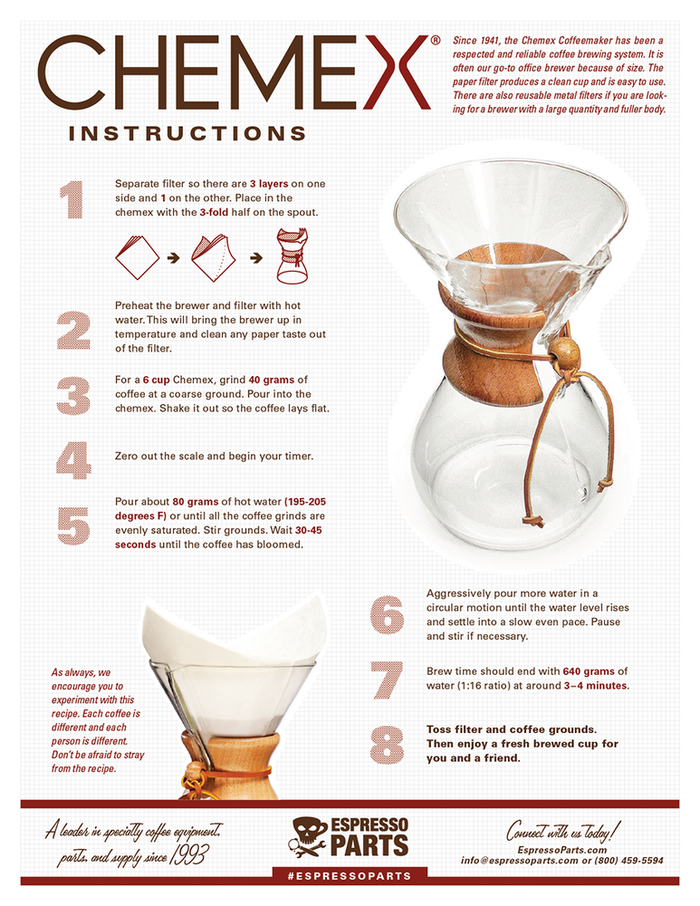
When someone asks how long does it take to make Chemex coffee, they rarely account for the full ritual. Here’s the real-world timeline for two generous cups:
| Phase | Time | What to Do |
|---|---|---|
| Setup & Prep | 0:00–1:00 | Measure 30g coffee, place filter (triple layers to spout), boil water |
| Rinse & Preheat | 1:00–2:00 | Pour 200g water through filter, discard, add coffee |
| Bloom & Stir | 2:00–2:45 | Pour 60g water, wait for bubbles, stir with chopstick |
| Main Pour | 2:45–6:30 | Pour remaining 440g in steady spirals (total brew time: 4½ min) |
| Swirl & Drain | 6:30–7:00 | Grip wooden collar, swirl gently for even extraction |
| TOTAL | 7:00 | Pour coffee immediately to avoid residual dripping |
Why the 7-minute mark matters: Letting coffee sit past 7 minutes in the filter causes “drip stagnation”—the last 10% of water extracts harsh compounds as grounds cool. Your timer stops when the last drop falls, not when pouring ends.
4 Timing Tweaks for Perfect Chemex Results Every Time

Grind Size: Your Primary Time Control Dial
The resource’s “coarse salt” grind (17 on Virtuoso+) is non-negotiable for 4½–6 minute brews. Adjust only when timing fails:
– Brew >6 min? Coarsen grind by 1–2 settings. Water moves faster through larger particles.
– Brew <4½ min? Fine-tune finer by 1 setting. Smaller particles increase resistance.
Never skip this: Pre-ground coffee often varies by 30% in particle size—always grind fresh.
Water Temperature: The Hidden Accelerator
Boiling water (200–205°F) maintains extraction speed. If your kettle sits 30 seconds off-boil:
– 195°F water → Brew time increases by 45+ seconds (risking over-extraction)
– Solution: Re-boil between batches. Thermal carafes help but aren’t substitutes for initial heat.
The Swirl: Why 5 Seconds Saves 2 Minutes
After your final pour, grip the wooden collar and swirl 3 times clockwise. This redistributes grounds for even drainage, preventing:
– “Channeling” (water finding one path) → extends brew time by 1–2 minutes
– Dry spots → causes uneven extraction in <4 minutes
Do this gently—aggressive swirling fractures the coffee bed.
Scale Discipline: How 5g of Water Changes Everything
The resource specifies 700g total water (200g rinse + 500g brew). Exceeding 500g brewing water:
– Adds 10–15 seconds per 10g overage
– Dilutes concentration while extending time
Pro move: Zero scale after adding coffee, then pour directly to 500g mark.
Troubleshooting Timing Disasters Before They Ruin Your Cup

Problem: Coffee finishes at 5:15 but tastes sour
Fix: Your bloom was insufficient. Next brew, stir more thoroughly after initial pour to eliminate dry islands.
Problem: Brew hits 6:20 with bitter notes
Fix: Filter likely collapsed. Ensure triple layers face spout and avoid pouring directly onto filter walls.
Problem: First drips take >1 minute to appear
Fix: Grind is too fine. Coarsen immediately—this batch is already over-extracted. Discard and restart.
Why 6–8 Minutes Is Worth Every Second
When you nail the 4½–6 minute brew within a 6–8 minute total ritual, you unlock what the resource describes as “vibrant extraction”—two cups of coffee with tea-like clarity, sparkling acidity, and zero bitterness. Compare this to auto-drip machines:
– Chemex: 7 minutes for 16oz of nuanced, aromatic coffee
– Drip machine: 8+ minutes for 32oz of flat, over-extracted brew
The time investment pays off in quality per minute. And unlike single-cup methods, Chemex’s two-cup yield means your per-ounce brew time is unbeatable. For those worried how long does it take to make Chemex coffee versus other methods, remember: you’re trading 90 seconds of active attention for exponentially better flavor.
Final Tip: Brew time consistency beats speed. Master the 4½–6 minute window first, then shave seconds only when flavors stay balanced. Your perfect cup isn’t the fastest—it’s the one where time and coffee move in harmony. Now fire up that kettle and own every minute of your ritual.