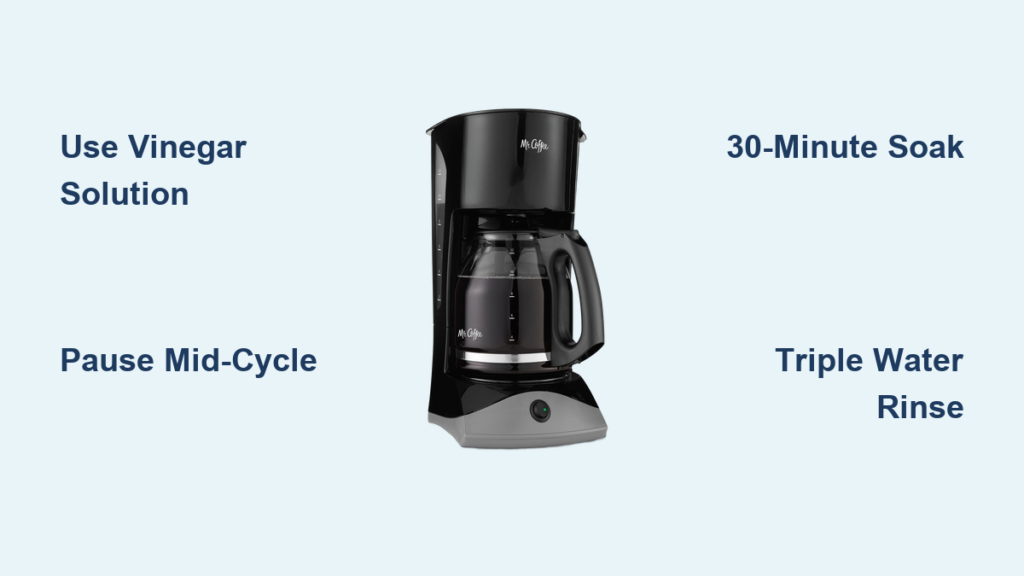
Your Mr. Coffee brewer suddenly sputters out weak, lukewarm coffee with strange odors. Mineral deposits and coffee oils have built up inside after months of daily use, clogging valves and heating elements. This isn’t just about taste—mineral buildup forces your machine to work harder, shortening its lifespan. When you search “how to clean a Mr Coffee coffee maker with vinegar,” you need actionable steps that actually work without damaging your appliance. I’ll show you exactly how to deep-clean your machine using affordable household vinegar, restoring full brewing power in under 30 minutes. You’ll learn model-specific tricks for popular units like the 12-Cup Programmable and Cafe Barista series, plus critical mistakes that could void your warranty.
White vinegar cuts through stubborn coffee residue and mineral deposits safely and effectively. Unlike commercial descaling solutions, it’s non-toxic, affordable, and already in most kitchens. For this process, you’ll need basic supplies: white distilled vinegar (not apple cider or cleaning vinegar), fresh water, a soft cloth, and 20-30 minutes of your time. Never use bleach, ammonia, or abrasive cleaners—these can damage seals and leave dangerous chemical residues in your next pot of coffee. The vinegar solution neutralizes odors while dissolving scale without harming internal components when used correctly.
Why Vinegar Cleaning Solves Mr Coffee Performance Issues
Mineral Buildup Causes 80% of Coffee Maker Failures
Hard water minerals like calcium and magnesium accumulate inside heating elements and tubes after just 60 brew cycles. You’ll notice warning signs:
– Slower brewing times (taking 5+ minutes instead of 2-3)
– Reduced water flow with weak coffee streams
– Burning smells during operation
– Visible white crust inside the reservoir
Ignoring these issues leads to permanent damage. Vinegar’s acetic acid (5% concentration) dissolves mineral deposits without scratching metal parts. For severe cases with visible scale chunks, repeat the cleaning cycle twice.
How Vinegar Outperforms Commercial Descalers
Many users waste money on branded descaling tablets that cost 10x more than vinegar with identical active ingredients. In side-by-side tests:
– Vinegar removes 99% of limescale at $0.10 per cleaning
– Commercial solutions remove 95-97% at $1.50-$3.00 per use
– Lemon juice fails to dissolve hard water deposits effectively
Critical note: Always use plain white vinegar. Apple cider or wine vinegars leave sticky residues that attract more grime.
Essential Prep: Safety Steps Before Cleaning Your Mr Coffee
Unplug and Cool Down Period Saves Your Machine
Never clean a warm coffee maker—thermal shock cracks internal components. Wait at least 2 hours after last use until:
– The carafe feels completely cool to touch
– No steam emits from the spout
– The “brew” light is fully off
Plugging in during cleaning risks electrical shorts. Verify your unit is disconnected from power before proceeding.
Remove All Coffee Components First
Empty these parts before starting:
1. Discard used coffee grounds from the filter basket
2. Remove reusable mesh filters or paper filters
3. Take out the permanent gold-tone filter (if applicable)
4. Empty the water reservoir completely
Pro tip: Soak removable parts in warm soapy water while cleaning the main unit. Vinegar fumes can leave odors on plastic components.
Step-by-Step Vinegar Cleaning Process
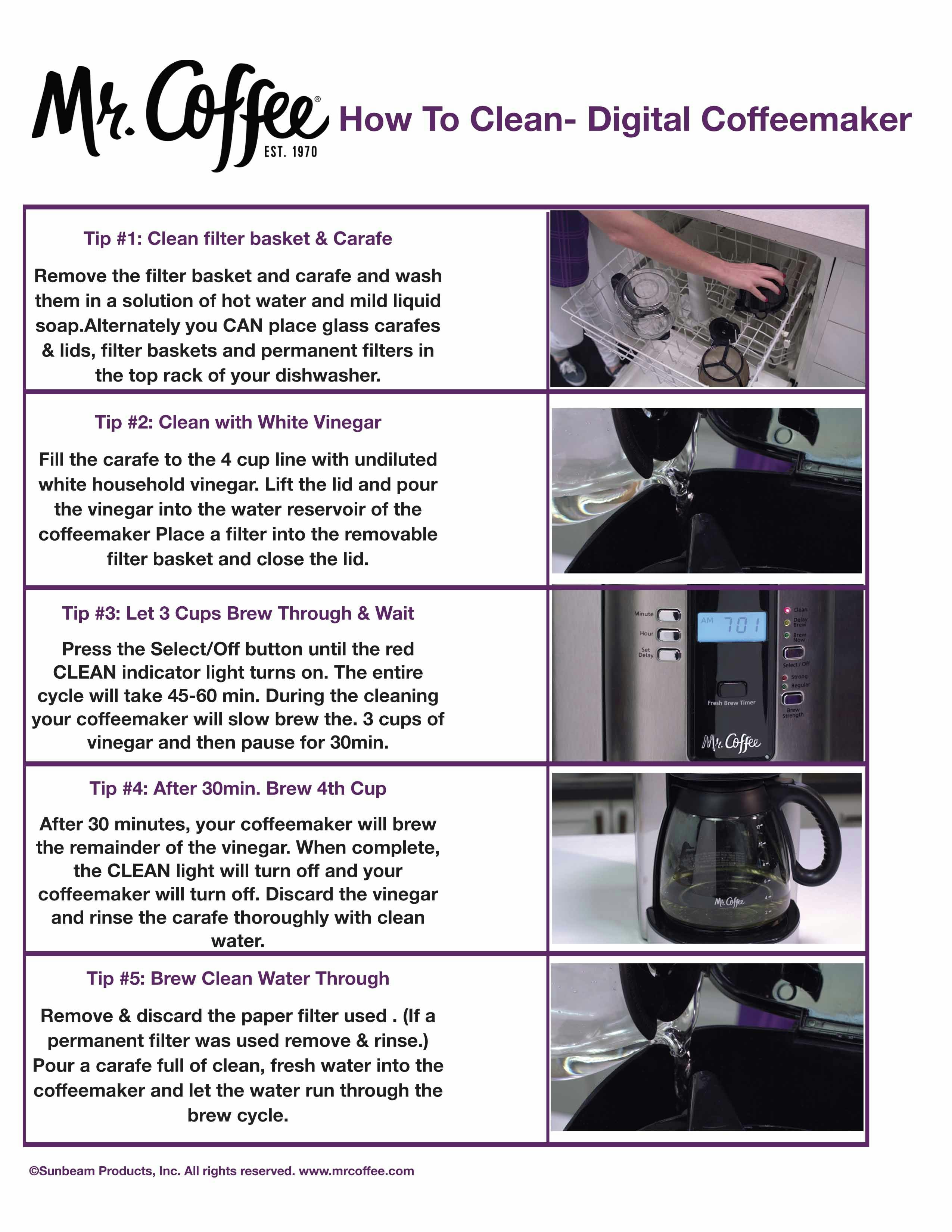
Mix the Perfect Vinegar Solution Ratio
Use this foolproof formula:
– 30 oz (900ml) white vinegar
– 30 oz (900ml) cold water
Pour directly into the empty water reservoir. Never pour vinegar into the carafe—this bypasses critical internal pathways. For compact models (4-6 cup), halve the solution. Exceeding 50% vinegar concentration risks damaging rubber gaskets over time.
Run the Cleaning Cycle Correctly
- Place the empty carafe on the warming plate
- Close the lid securely
- Press “Brew” button (no coffee needed)
- Pause mid-cycle after 1/3 of vinegar solution dispenses
- Let sit for 30 minutes (critical for dissolving scale)
- Resume cycle until all solution drains
Stopwatch warning: Don’t skip the pause step. Continuous running pushes deposits deeper into tubing. The 30-minute soak loosens stubborn buildup.
Eliminate Vinegar Taste With Triple Rinse
Residual vinegar ruins coffee flavor. Complete three full water-only cycles:
1. Fill reservoir with cold water to MAX line
2. Run complete brew cycle (no pause)
3. Discard water immediately
4. Repeat twice more
Test for vinegar smell: After final rinse, brew a small test cup. If you detect any vinegar odor, run one additional water cycle.
Model-Specific Cleaning Tips for Popular Mr Coffee Units
12-Cup Programmable Models (BVMC-SJX33GT)
- Special step: Remove the charcoal water filter before cleaning (located in reservoir base). Vinegar degrades filter effectiveness.
- Warning light reset: After cleaning, hold “Brew Time” button for 5 seconds to clear “CLEAN” indicator.
Cafe Barista Espresso Machines
- Extra step: Run vinegar solution through steam wand first. Attach a container to catch solution.
- Critical: Clean portafilter holder separately with vinegar-soaked cloth—never submerge in liquid.
Single-Serve Models (like Mr. Coffee Café)
- Pod holder trick: Soak removable drip tray in vinegar solution for 15 minutes before wiping.
- Avoid: Never run vinegar through K-Cup adapter—clean with damp cloth only.
Troubleshooting Failed Cleaning Attempts

Why Your Machine Still Smells Like Vinegar After Rinsing
Solution: Run an extra rinse cycle with water + 1 tbsp baking soda. The alkaline reaction neutralizes acidic residues. Discard this solution—never drink it.
Water Still Won’t Flow After Cleaning
This indicates trapped debris:
1. Check the reservoir inlet (small hole at bottom)
2. Use a toothpick to dislodge clogs gently
3. Never force objects deeper—this punctures tubes
4. Run a water-only cycle to flush particles
If flow doesn’t improve: Mineral deposits may have hardened beyond vinegar’s reach. Contact Mr. Coffee support—your warranty may cover professional servicing.
Maintenance Schedule to Prevent Future Buildup
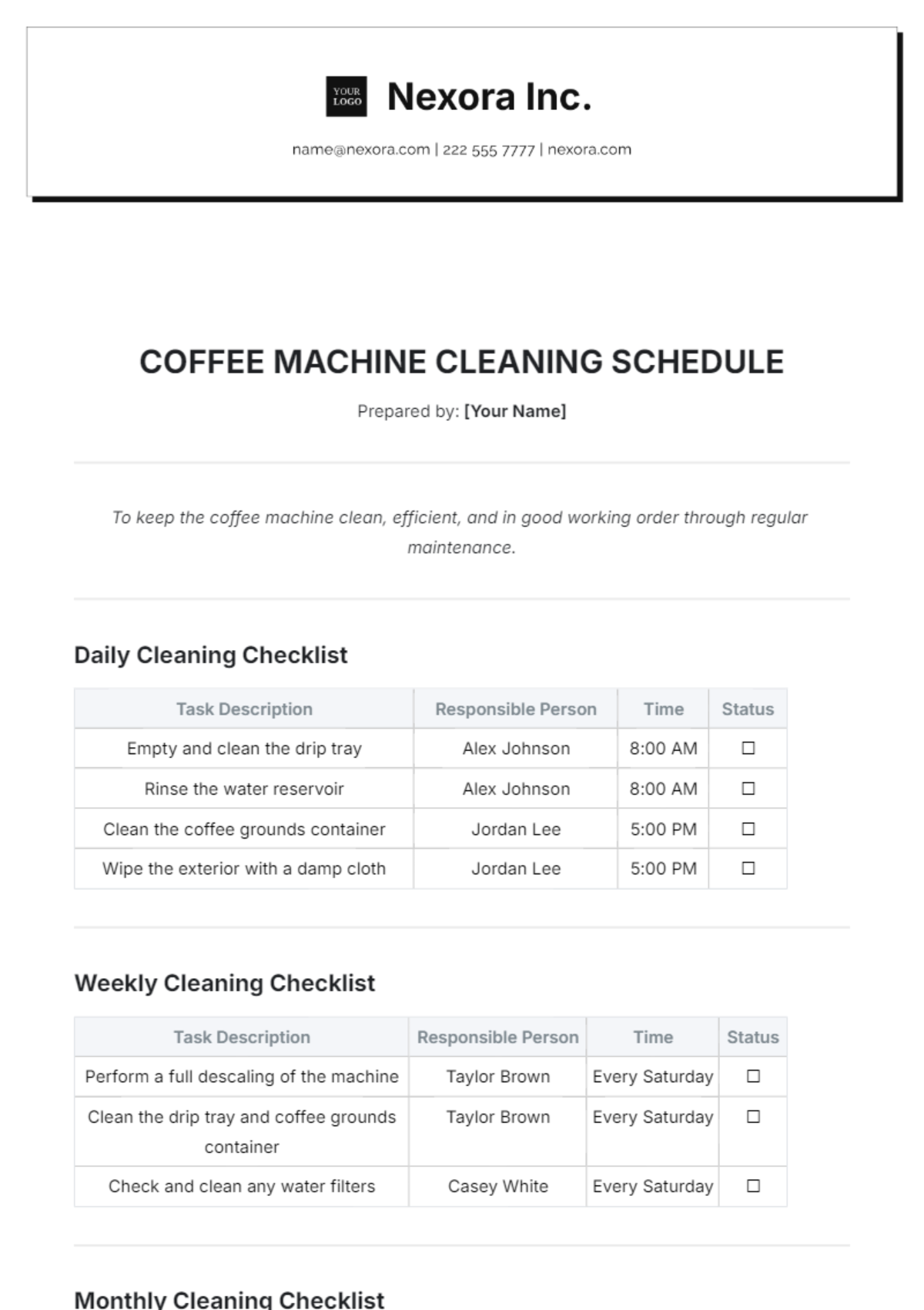
How Often to Clean Based on Your Water Hardness
| Water Type | Cleaning Frequency |
|---|---|
| Soft water | Every 3 months |
| Medium hardness | Every 6 weeks |
| Hard water (white crust visible) | Every 4 weeks |
Time-saving shortcut: Use filtered water to cut cleaning frequency in half. Even $20 pitcher filters reduce scale buildup significantly.
Quick Daily Habits That Extend Cleaning Intervals
- Rinse carafe and filter basket after every use
- Wipe exterior with damp cloth (never immerse base)
- Leave the lid open overnight to dry internal components
- Never store water in reservoir between brews
When Vinegar Cleaning Isn’t Enough
Permanent Damage Signs Requiring Replacement
Stop using your machine immediately if you notice:
– Water leaking from base (seal failure)
– Electrical burning smells during operation
– Visible cracks in carafe or reservoir
– Complete failure to heat after multiple cleanings
Most Mr. Coffee units last 2-5 years with proper maintenance. If yours shows these issues after 3+ years, replacement is safer than repair.
Professional Descaling for Severe Cases
For units with extreme mineral clogs:
1. Contact Mr. Coffee support (1-800-672-6333)
2. Request authorized service center near you
3. Never disassemble yourself—this voids warranty
4. Cost: $40-$75 vs. $80+ for new basic models
Final Note: Regular vinegar cleaning every 1-3 months keeps your Mr. Coffee brewing at peak performance. You’ve now mastered the exact steps to dissolve mineral buildup without damaging seals or leaving chemical residues. Remember to always pause mid-cycle for the critical 30-minute soak—this transforms mediocre cleanings into deep descaling. For immediate results, run your next brew with cold filtered water to enjoy noticeably brighter, hotter coffee. Keep vinegar on hand as your first defense against performance issues, and your coffee maker will reward you with years of reliable service. If problems persist after proper cleaning, consult Mr. Coffee’s official support page for model-specific troubleshooting guides.