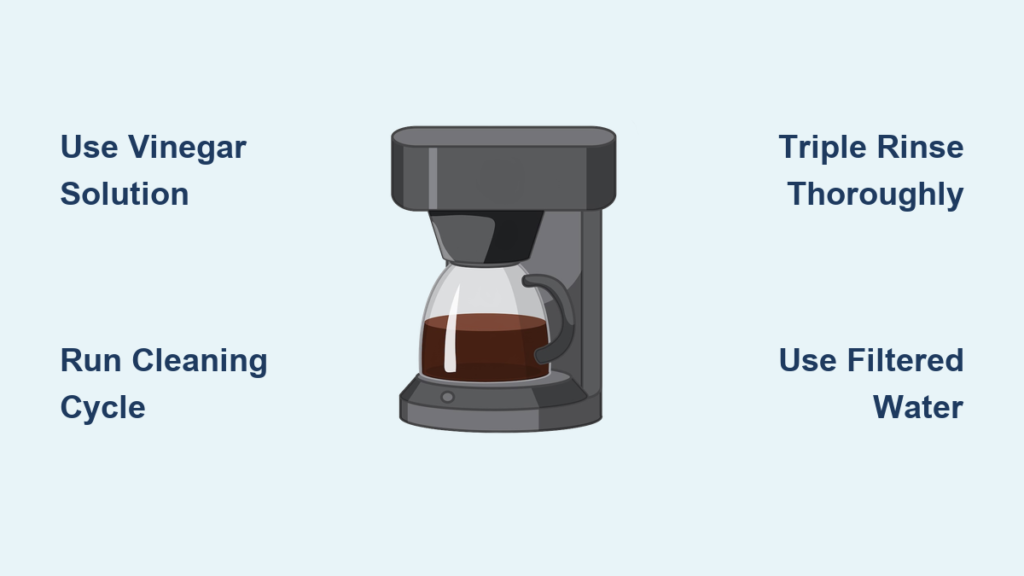
Your morning coffee tastes bitter. The machine gurgles strangely during brewing. Water takes forever to drip through. These frustrating signs all point to the same culprit: mineral buildup in your coffee maker. When hard water flows through your machine daily, calcium and magnesium deposits accumulate in the heating element and internal tubing. This 10-minute vinegar cleaning method restores proper function to most standard drip coffee makers without harsh chemicals. You’ll eliminate bitter flavors, prevent overheating issues, and extend your machine’s lifespan—all using a solution already in your pantry.
Ignoring mineral buildup creates serious problems. Coffee makers with clogged tubing brew weaker coffee as water can’t properly saturate grounds. More dangerously, scale buildup forces heating elements to work harder, potentially causing premature failure. The good news? White distilled vinegar dissolves these mineral deposits naturally through its mild acetic acid content. This guide walks you through the exact vinegar cleaning process that removes stubborn buildup in standard 8-12 cup drip coffee makers. You’ll learn the proper vinegar ratio, how to handle persistent buildup, and crucial safety steps to protect both your machine and yourself during cleaning.
Why Vinegar Cleaning Solves Most Coffee Maker Problems
Mineral deposits from tap water create the majority of coffee maker malfunctions. As water heats repeatedly, dissolved minerals solidify on heating elements and narrow internal pathways. This scaling reduces water flow by up to 50% in severe cases, directly impacting brew quality and machine performance. Vinegar’s acetic acid safely dissolves these calcium carbonate deposits without damaging plastic or metal components when used correctly. Unlike commercial descaling solutions, vinegar leaves no chemical residue that could taint your coffee flavor after rinsing.
What Happens When You Run Vinegar Through Your Machine
During the cleaning cycle, vinegar solution travels through every water pathway in your coffee maker. The acetic acid reacts with mineral deposits, breaking them into soluble particles that flush out with the liquid. You’ll notice visible improvement immediately—water flows faster through previously clogged tubing, and the machine operates more quietly as pumps don’t struggle against blockages. Proper vinegar concentration is critical: too weak won’t remove buildup effectively, while undiluted vinegar may damage rubber seals over time.
How Often You Should Perform Vinegar Maintenance
Most manufacturers recommend vinegar cleaning every 1-3 months depending on usage and water hardness. Homes with hard water (measured above 7 grains per gallon) need monthly cleaning, while soft water areas can stretch to quarterly maintenance. Watch for these warning signs that indicate immediate cleaning is needed:
– Brewing cycle takes noticeably longer than usual
– Coffee tastes unusually bitter or flat
– Visible white crust around water reservoir or drip area
– Machine shuts off prematurely during brewing
Step-by-Step Vinegar Cleaning Process for Drip Coffee Makers
:max_bytes(150000):strip_icc()/clean-coffee-maker-with-vinegar-1907384_FINAL-3af08744866e446da1d71fb372e8270c.png)
This method works for standard 8-12 cup drip coffee makers from major brands like Keurig, Mr. Coffee, Cuisinart, and Hamilton Beach. Always unplug your machine and let it cool completely before starting. Never use apple cider vinegar or other types—only white distilled vinegar works effectively for descaling without leaving flavors.
Preparing the Vinegar Solution
Combine equal parts white distilled vinegar and cold water in your coffee maker’s reservoir. For standard 10-cup machines, this means 30 ounces vinegar plus 30 ounces water. Do not add coffee grounds or filters during this process. The 1:1 ratio provides sufficient acidity to dissolve buildup while protecting internal components. Using full-strength vinegar may damage rubber gaskets in some models, while weaker solutions won’t effectively remove stubborn deposits.
Running the Cleaning Cycle
Place an empty carafe on the warming plate and start a normal brew cycle. When the solution reaches halfway through brewing (about 25% complete), pause the machine and let it sit for 30-60 minutes. This dwell time allows vinegar to soften hardened mineral deposits. Resume the cycle to complete the vinegar flush. You’ll notice bubbling or foaming during this process—this is the vinegar reacting with mineral deposits and is completely normal.
Essential Triple Rinse Procedure
Vinegar residue will ruin your next pot of coffee if not thoroughly removed. Run three complete water-only cycles using fresh cold water each time. For the final rinse cycle, add one tablespoon of baking soda to the reservoir to neutralize any remaining vinegar taste. Discard each rinse cycle—do not drink this water. The machine is ready for regular use when the last rinse water has no vinegar smell and tastes completely neutral.
Troubleshooting Common Vinegar Cleaning Issues
Sometimes mineral buildup proves stubborn or the cleaning process reveals other problems. These solutions address the most frequent complications home users encounter.
When Water Flow Remains Slow After Cleaning
If water still drips slowly after your vinegar treatment, mineral deposits have likely hardened in narrow tubing. Repeat the cleaning process but increase vinegar concentration to 2:1 (two parts vinegar to one part water). During the dwell period, gently massage the tubing near the reservoir with your fingers to help dislodge particles. For severe cases, use a turkey baster to force vinegar solution backward through the spray head.
Dealing with Persistent Vinegar Taste After Rinsing
Vinegar smell lingering after multiple rinses indicates residual acidity trapped in absorbent components. Run two additional rinse cycles using only cold water—hot water can bake remaining vinegar into plastic parts. Place activated charcoal tablets in the carafe during the final rinse to absorb lingering odors. Never use bleach or other cleaners to counteract vinegar taste, as this creates dangerous chemical reactions.
Preventing Future Buildup Between Cleanings
Proactive maintenance reduces how often you’ll need deep vinegar cleaning. These simple habits protect your machine between full descaling sessions.
Using Filtered Water for Daily Brewing
Switching to filtered water cuts mineral intake by 90% compared to standard tap water. A basic activated carbon pitcher filter removes chlorine and sediment while reducing hardness. For extremely hard water areas, consider a dedicated reverse osmosis system. Filtered water not only extends time between cleanings but also improves coffee flavor by eliminating chemical aftertastes.
Quick Daily Maintenance Habits
Rinse the carafe and filter basket immediately after each use to prevent coffee oils from hardening. Wipe the warming plate with a damp cloth while still warm to avoid baked-on stains. Once weekly, remove and hand-wash the water reservoir to eliminate surface deposits before they harden. These five-minute habits prevent minor buildup from becoming major clogs requiring intensive cleaning.
When Vinegar Cleaning Isn’t Enough
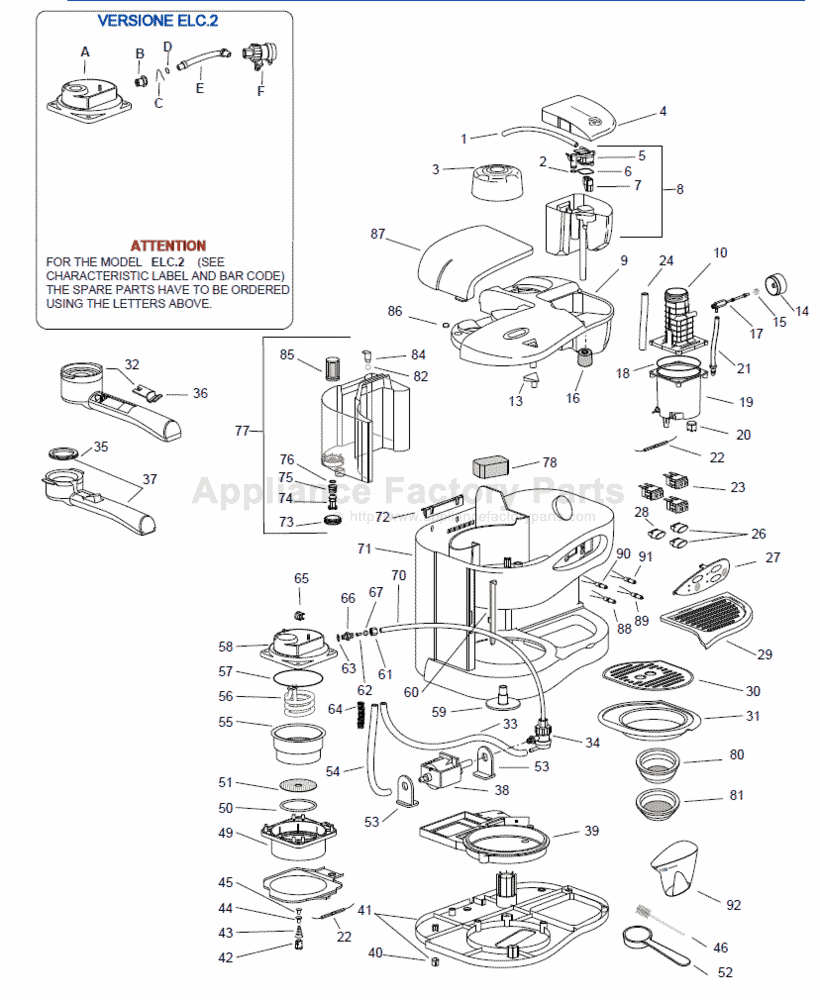
Vinegar solves most mineral-related issues, but some problems require different approaches. If your machine still malfunctions after proper vinegar cleaning:
- Electrical issues (no power, error codes): Unplug and check outlet functionality—vinegar won’t fix electrical problems
- Persistent leaks: Inspect for cracked components—mineral deposits don’t cause physical damage
- Complete brewing failure: May indicate pump failure unrelated to scaling
For machines over three years old with recurring problems, replacement may be more cost-effective than continued repairs. Most coffee makers have a 2-3 year lifespan with proper maintenance.
Regular vinegar cleaning every 1-3 months keeps your coffee tasting fresh and your machine running efficiently. The simple 1:1 vinegar-water solution dissolves mineral buildup that causes slow brewing, bitter coffee, and potential machine damage. Remember to always follow with three complete water rinses to eliminate vinegar taste, and consider using filtered water daily to extend time between cleanings. This natural method costs pennies per cleaning compared to commercial descaling products, making it the smart choice for maintaining your coffee maker’s performance. Your next pot of coffee will taste noticeably better—clean equipment means pure coffee flavor without mineral interference. Start this quick maintenance routine today to protect your morning ritual from scaling-related failures.