Nothing ruins a morning coffee ritual faster than discovering your dedicated coffee grinder has stopped working. When you’re craving that fresh-brewed cup but lack the proper equipment, your food processor becomes an unexpected hero in the kitchen. While coffee enthusiasts often swear by burr grinders for their precision, knowing how to grind coffee in a food processor effectively delivers surprisingly good results when done correctly. This method preserves more flavor compounds than pre-ground coffee sitting on supermarket shelves for weeks. You’ll discover that with the right technique, your standard kitchen appliance can produce grounds suitable for various brewing methods—from French press to pour-over—without requiring an immediate trip to buy new equipment. Let’s explore exactly how to transform your food processor into a reliable coffee grinding solution that saves your morning brew.
Prepare Your Food Processor for Coffee Grinding
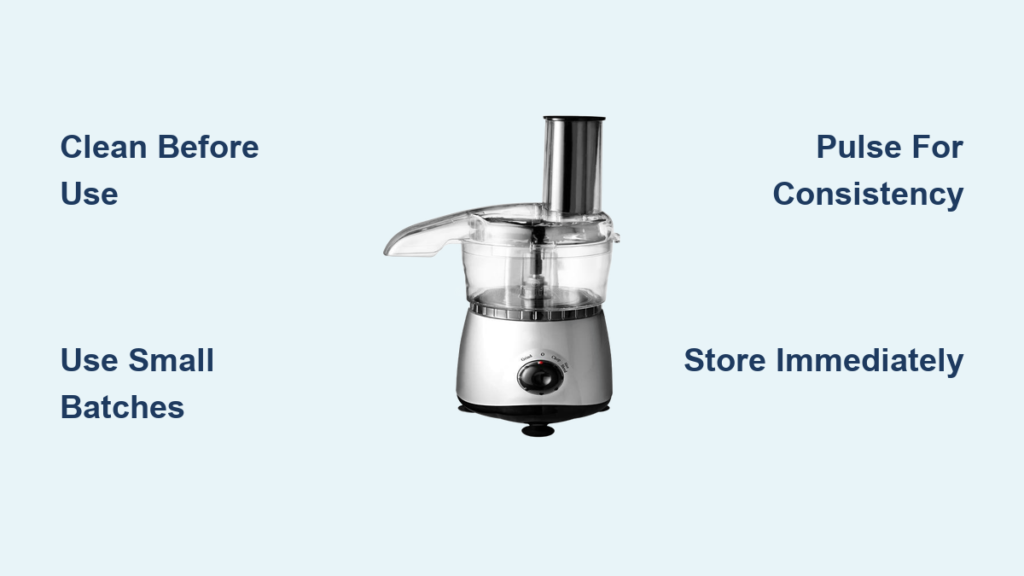
Before introducing coffee beans to your food processor, thorough preparation prevents flavor contamination and ensures optimal grinding performance. Start by disassembling and washing all components that will contact the beans—bowl, lid, and blade assembly—with hot, soapy water, then dry completely with a clean towel. Any residual moisture will cause coffee grounds to clump and become uneven, while leftover food particles from previous uses can impart unwanted flavors to your brew. Pay special attention to the blade’s crevices where oils and debris accumulate.
Ensure your food processor uses the standard S-blade configuration rather than specialty attachments like shredding discs or dough blades, as the S-blade creates the necessary chopping action for effective bean breakdown. Verify the blade is securely fastened to prevent wobbling during operation, which causes inconsistent grinding. Place the processor on a stable, non-slip surface away from countertop edges—you’ll need both hands free to operate the lid safely during pulsing. Have your empty coffee container ready nearby to transfer grounds immediately after processing, minimizing oxidation that degrades flavor.
Critical mistake to avoid: Never skip the cleaning step. Even trace amounts of onion, garlic, or citrus from previous uses will transfer to your coffee, creating an unpleasant drinking experience. If your processor has handled strong-smelling ingredients recently, run it empty with a few drops of vinegar or baking soda to neutralize odors before grinding coffee.
Select and Measure Coffee Beans for Food Processor Grinding
The foundation of great coffee starts with quality beans and precise measurements, especially when using non-specialized equipment. Choose medium-roast beans for the most forgiving grinding experience in a food processor, as their balanced oil content and firmness respond better to chopping action than extremely light or dark roasts. Purchase whole beans roasted within the past two weeks for maximum freshness—check the roast date on the bag rather than the expiration date. Avoid pre-ground coffee sections entirely, as you’re aiming for peak freshness that only comes from immediate grinding.
Measure beans using a kitchen scale for accuracy instead of volume measurements, targeting a 1:15 to 1:17 coffee-to-water ratio depending on your preferred strength. For standard drip coffee, weigh 28-30 grams of whole beans per 16 ounces of water. When processing in your food processor, never fill the bowl more than one-third full—overcrowding prevents proper bean circulation and causes uneven grinding. For a 12-cup pot, process 50-60 grams of beans at a time in multiple batches rather than attempting a single large batch. Remember that ground coffee takes up more volume than whole beans, so expect about 1.5 times the volume after processing.
Pro tip: Freeze your beans for 10-15 minutes before grinding. Chilled beans fracture more cleanly during processing, reducing the heat transfer that can prematurely extract bitter compounds. Just be sure to use them immediately after removing from the freezer to prevent condensation.
Achieve Consistent Grind Sizes Through Pulsing Technique

Unlike dedicated grinders with adjustable settings, your food processor requires precise timing to achieve different grind coarseness levels. Master these pulse techniques for specific brewing methods:
- French Press (coarse grind): Pulse 4-5 times for 2 seconds each, pausing 5 seconds between pulses to shake the bowl and redistribute beans. Ideal texture resembles sea salt with visible bean fragments.
- Drip Coffee (medium grind): Pulse 8-10 times for 1.5 seconds each with 3-second pauses. Look for consistency similar to ordinary sand with minimal fines (powdery particles).
- Pour-Over (medium-fine): Pulse 12-15 times for 1 second each with minimal pauses. Grind should resemble granulated sugar with uniform particle size.
- Espresso (fine grind): Not recommended for food processors as they typically produce inconsistent results with excessive fines that clog filters.
Monitor both sound and visual cues during processing—the distinct cracking sound of beans breaking gives way to a finer chopping noise as particles reduce in size. Stop immediately if you detect a burning smell, indicating excessive friction heat. After each pulse sequence, remove the lid and stir the contents with a dry spoon to expose unprocessed beans to the blade. For best results, process in multiple short sessions rather than one continuous grind, allowing heat to dissipate between pulses.
Troubleshooting tip: If your grounds contain both large chunks and fine powder, you’ve processed too long without redistributing beans. Next time, increase the number of shorter pulses with more frequent manual stirring between cycles.
Process Coffee in Strategic Batches for Uniform Results
The single most effective technique for improving food processor coffee grinding is processing in small, controlled batches. Divide your total bean quantity into portions no larger than ½ cup each for standard 8-11 cup processors. Larger batches overwhelm the blade’s capacity, causing uneven grinding where some beans become powder while others remain nearly whole. Each batch should process for no more than 20-30 seconds total processing time (including all pulses) to prevent heat buildup that alters coffee chemistry.
After completing each batch, immediately transfer grounds to your storage container before starting the next portion. This prevents previously processed coffee from continuing to grind during subsequent batches. If grinding for multiple brewing methods, process coarse grinds first, then medium, saving fine grinds for last to avoid contamination from residual fine particles. For consistent results across batches, weigh each portion rather than measuring by volume—beans vary in density based on roast level.
Time estimate: Grinding enough coffee for a 12-cup pot takes approximately 3-4 minutes when processed in three ¼-cup batches with proper technique, compared to 30 seconds in a dedicated grinder but significantly better results than using pre-ground coffee.
Store Freshly Ground Coffee to Preserve Flavor

Maximize the benefits of your freshly ground coffee by implementing proper storage immediately after processing. Transfer grounds to an opaque, airtight container within 60 seconds of grinding to minimize oxygen exposure that rapidly degrades volatile flavor compounds. Ceramic or vacuum-sealed containers work best—avoid clear glass as light accelerates staling. Fill containers as full as possible to reduce headspace, then label with the grinding date using masking tape.
Store coffee at room temperature in a dark cabinet away from heat sources like ovens or dishwashers. Contrary to popular belief, refrigeration or freezing ground coffee introduces moisture that damages flavor—temperature fluctuations cause condensation inside containers. For optimal taste, use ground coffee within 24 hours, though acceptable flavor persists for up to 5 days under ideal storage conditions. If you notice diminished aroma or flat taste, your coffee has oxidized beyond redemption—discard and grind fresh.
Flavor preservation hack: Place a folded paper towel in the bottom of your coffee container to absorb any residual moisture from the grinding process, extending freshness by several hours.
Upgrade Your Coffee Grinding Experience Without New Equipment
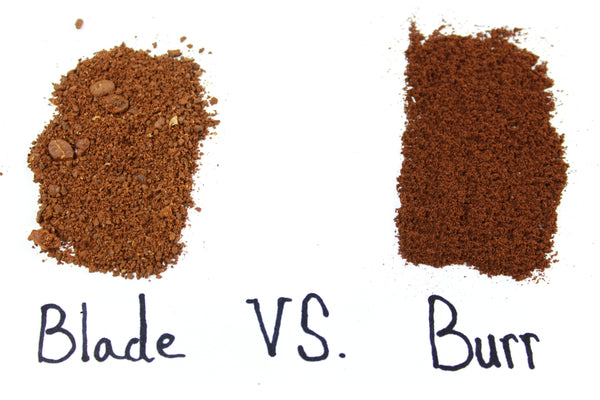
While mastering how to grind coffee in a food processor solves immediate needs, understanding its limitations helps set realistic expectations for your brew quality. Food processors create heterogeneous particle sizes that lead to uneven extraction—some grounds over-extract (bitter) while others under-extract (sour). To compensate, adjust your brewing technique: use slightly cooler water (195-200°F instead of 205°F) and extend brew time by 15-20 seconds to balance extraction.
When your budget allows, invest in a hand-crank burr grinder ($25-50) for consistent results without electricity. These compact units produce uniform grounds while preserving delicate flavor compounds better than any blade-based system. Until then, designate your food processor exclusively for coffee to prevent flavor contamination—this single-purpose approach yields noticeably better results than multi-use equipment. Remember that fresh beans and proper technique matter more than perfect equipment: even with a food processor, starting with quality ingredients creates a superior cup compared to pre-ground coffee in a fancy grinder.
Mastering how to grind coffee in a food processor bridges the gap between convenience and quality when dedicated equipment isn’t available. While it won’t replace a burr grinder for serious coffee enthusiasts, this technique produces significantly better results than stale pre-ground coffee when executed properly. The key lies in understanding your processor’s limitations and adapting your technique—small batches, precise pulsing, and immediate use deliver the most satisfying results. By following these specific steps for preparation, processing, and storage, you’ll consistently create grounds suitable for your preferred brewing method without compromising flavor. Next time your regular grinder fails or you’re setting up a temporary kitchen, remember that your versatile food processor stands ready to save your morning ritual with just a few careful pulses. The difference between coffee ground minutes before brewing versus weeks ago makes this technique worth mastering, transforming an ordinary kitchen appliance into an unexpected coffee ally.