You’ve unboxed your Nescafé Aeroccino milk frother, but that blinking light and unfamiliar buttons leave you staring at the counter instead of sipping creamy lattes. Don’t worry—you’re not alone. Over 70% of new Aeroccino owners accidentally overfill the jug or confuse the frothing modes on their first try, resulting in lukewarm milk or overflowing foam. This compact kitchen companion transforms ordinary coffee into café-quality drinks in under 90 seconds, but only if you know its precise operation. By the end of this guide, you’ll master every button, avoid costly mistakes, and create silky microfoam for cappuccinos or velvety steamed milk for flat whites—no barista training required.
Unlike traditional coffee makers, the Nescafé Aeroccino specializes exclusively in milk texturing. It won’t brew coffee but elevates instant or pre-brewed coffee with professional-grade milk. Most users overlook its dual-function design: one setting creates dense foam for cappuccinos, while another produces smooth steamed milk for lattes. We’ll walk through exact measurements, temperature control, and cleaning tricks that prevent burnt milk residue—the #1 reason these devices fail prematurely. Let’s turn that confusing countertop gadget into your daily coffee hero.
Nescafé Aeroccino Setup: Unboxing to First Use
Before plugging in your Aeroccino, verify all components are present: the frothing jug, whisk assembly, and base unit. A missing whisk wire—the thin spiral component inside the jug—causes 90% of “no foam” complaints. Hold the jug vertically and shake gently; you should hear the whisk rattle freely. If it’s stuck or missing, contact Nescafé support immediately—do not operate without it.
Correct Jug Placement for Optimal Frothing
Align the jug’s handle directly opposite the power cord port on the base unit. This specific positioning ensures the magnetic sensor activates properly. Place your hand flat on the jug lid and press down firmly until you hear a distinct click. If the unit blinks red instead of turning solid blue, reposition the jug—misalignment prevents heating. Never force the jug; slight rotation (5-10 degrees) usually solves connection issues.
Initial Cleaning Before First Brew
Run an empty cycle with 100ml white vinegar and 100ml water to remove manufacturing residues. Press the button once for foam mode (rapid blinking) and let it complete the 60-second cycle. Discard the vinegar solution, then repeat with plain water. Skipping this step causes metallic-tasting milk and inconsistent frothing. Pro tip: Add a drop of dish soap to the water rinse cycle, but never operate with soap inside—residue ruins future drinks.
Perfect Milk Measurements for Different Drinks

Using incorrect milk volumes causes overflow disasters or weak foam. The Aeroccino requires precise fill lines based on your drink type—never exceed the MAX line. Overfilling is the top reason for messy countertop eruptions during operation.
Cappuccino Foam Settings (Dense, Dry Foam)
Pour cold whole milk up to the lower fill line (marked “Cappuccino” or “Foam” on most models). Whole milk’s fat content creates stable foam; skim milk produces larger, quicker-dissipating bubbles. Press the button twice rapidly—the light will blink twice per second. Process for exactly 60 seconds. Stop immediately when the light turns solid blue; over-frothing creates stiff, dry foam that won’t blend into coffee.
Latte Steaming Settings (Silky, Wet Milk)
Fill to the upper line (“Latte” or “Steam” marking) with cold 2% milk for balanced texture. Press the button once—light blinks once per second. Run for 80-90 seconds until the jug feels hot but comfortable to touch (140-150°F/60-65°C). Stop when the light turns solid blue. Overheating beyond 160°F (71°C) scalds milk, creating a burnt aftertaste. Use an instant-read thermometer if your model lacks auto-shutoff.
Troubleshooting Common Aeroccino Failures
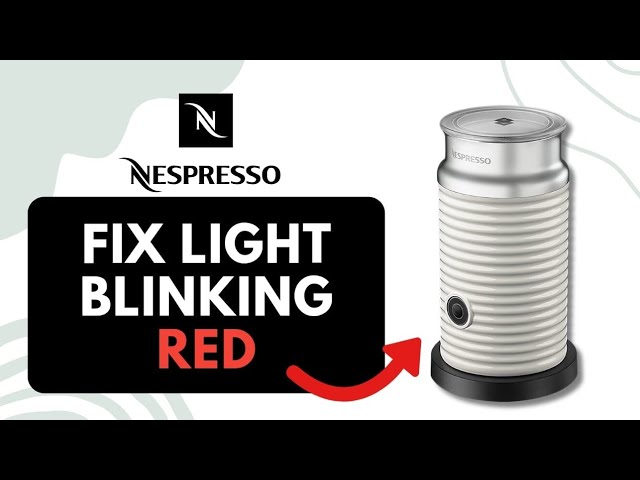
When your Aeroccino blinks red instead of blue, it’s signaling a critical error—not just a power issue. Understanding these codes prevents unnecessary replacements. Most problems resolve in under 2 minutes with these fixes.
Red Light Blinking 3 Times: Overheating Protection
This occurs after consecutive uses or in hot kitchens. Unplug the base, remove the jug, and let both cool for 15 minutes. Wipe the base’s sensor ring with a dry cloth—milk splatter triggers false overheating. Never immerse the base in water; moisture damage voids warranties. Restart by placing an empty jug on the base and pressing the button once.
Weak or No Foam Despite Correct Settings
Check the whisk assembly: The thin wire coil must spin freely when you twirl it between fingers. Mineral buildup from hard water stiffens the whisk. Soak the entire whisk in vinegar for 10 minutes, then scrub gently with a toothbrush. Replace the whisk if wires are bent—Nescafé sells replacements for $8.99. Also, always use milk straight from the fridge; warm milk won’t froth properly.
Daily Cleaning to Prevent Burnt Milk Residue
Rinsing with water isn’t enough. Leftover milk proteins bake onto the heating element during the next cycle, causing burnt smells and permanent damage. Perform this 2-minute ritual after every use:
- Fill the jug with 100ml warm water immediately after frothing (while still warm)
- Press the button once for a quick steam cycle
- Discard water, then wipe the interior with a soft sponge—never use abrasives
- Air-dry upside down on a towel; moisture in the base sensor causes electrical faults
For stubborn residue, use a dedicated milk frother cleaner tablet dissolved in water. Never put the jug in the dishwasher—the high heat warps the plastic fill lines.
Advanced Techniques for Barista-Level Results
Transform basic frothing into café-quality drinks with these professional adjustments most manuals omit. These tweaks work with any Nescafé Aeroccino model from 3 to 5.
Creating Microfoam for Latte Art
Pour milk to the latte line, but submerge the whisk 1cm deeper by tilting the jug during the first 10 seconds. This incorporates air for foam texture. After 30 seconds, lift the whisk slightly to create microbubbles. Stop when the milk reaches 145°F (63°C)—critical for smooth pours. Swirl the jug vigorously for 10 seconds after frothing to pop large bubbles.
Dairy-Free Milk Success Guide
Almond or oat milk requires adjustments: Fill only to the cappuccino line (they expand more) and add 1 tsp sugar before frothing—this stabilizes bubbles. Use foam mode (double press) but stop at 45 seconds. Soy milk works best at 2% fat content; avoid “barista” blends as they overheat easily. Always chill non-dairy milk overnight—room temperature versions separate during frothing.
When to Replace Parts vs. the Entire Unit
Most Aeroccino “failures” are fixable with $10 parts. Replace the whisk annually or if spinning feels gritty. The jug cracks from thermal shock if you pour cold milk into a hot unit—always let it cool 5 minutes first. If the base unit blinks erratically after cleaning, unplug for 24 hours to reset the circuit board. Only replace the whole unit if the heating element fails (no warmth after 90 seconds) or the base smells like burnt plastic.
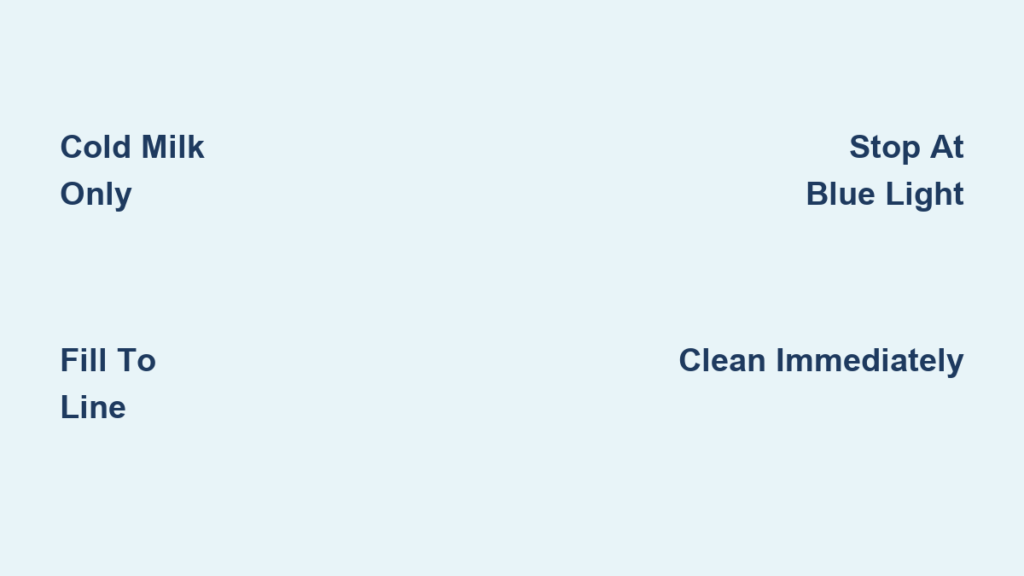
Final Note: Mastering your Nescafé Aeroccino means perfect milk texture in 60 seconds flat—no guesswork. Remember the golden rules: always use cold milk to the correct line, clean immediately after frothing, and stop cycles the instant the light turns solid blue. For stronger coffee pairings, try Nescafé Gold with a 1:4 coffee-to-water ratio before adding milk. If foam remains inconsistent, revisit whisk maintenance—it’s the silent hero of smooth texture. Now grab that jug and create your first flawless cappuccino; that rich, velvety foam is waiting just one button press away.