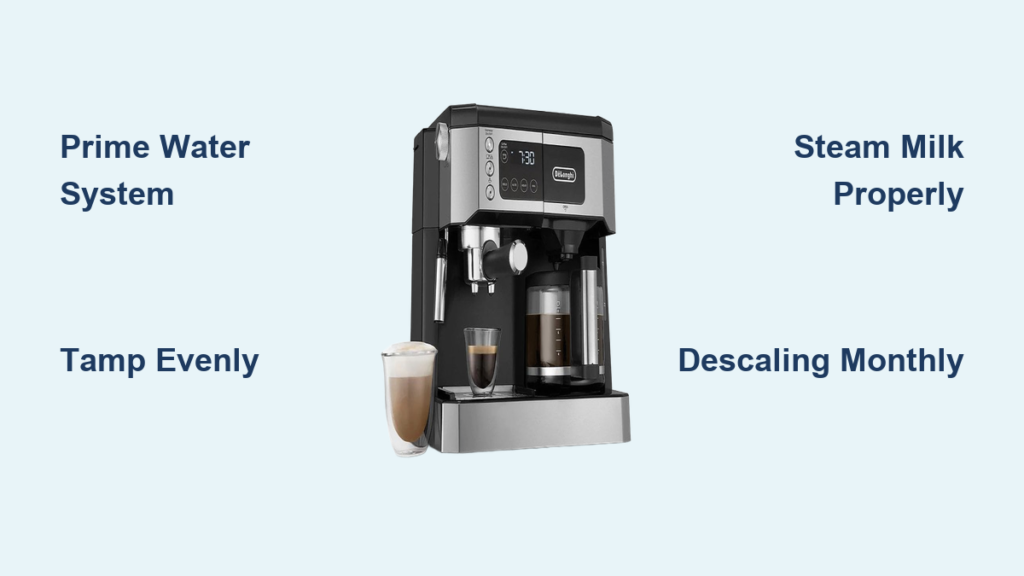
Your DeLonghi coffee maker sits on the counter, promising café-quality beverages but delivering confusing results instead. You’ve pressed buttons, adjusted settings, and still end up with bitter espresso or weak lattes that don’t match what you’ve paid for. This frustration is completely normal—DeLonghi machines combine sophisticated engineering with numerous customizable features that require proper understanding to master. By the end of this guide, you’ll confidently operate your DeLonghi coffee maker to produce consistently excellent espresso, perfectly textured milk, and customized beverages that rival your favorite coffee shop.
DeLonghi’s reputation for quality Italian engineering means these machines deliver professional results when used correctly. Whether you own a compact EC series pump espresso machine or a high-end Magnifica super-automatic model, understanding the specific workflow transforms confusing buttons into intuitive controls. The key lies in mastering four critical areas: proper setup, precise brewing technique, milk texturing fundamentals, and consistent maintenance routines. Let’s transform your daily coffee experience from hit-or-miss to reliably exceptional.
Prepare Your DeLonghi Coffee Maker Properly
Skipping proper preparation leads to disappointing first brews and potential damage to your investment. Many users make the critical mistake of brewing immediately after unboxing, not realizing new machines require specific startup procedures to remove manufacturing residues and ensure optimal water flow through all internal components.
Initial Water Tank Setup and Priming
Begin by removing all protective films and packaging materials from your DeLonghi coffee maker, paying special attention to the water tank compartment. Rinse the water tank thoroughly with clean, cold water—never use hot water initially as it can damage plastic components. Fill the tank only with filtered or bottled water; DeLonghi specifically warns against using hard tap water which accelerates scale buildup in the heating element. Insert the tank firmly until you hear the secure click, ensuring the water intake tube remains fully submerged to prevent airlocks during operation.
For first-time use, prime the system by running 100ml of water through the hot water spout. This critical step clears manufacturing oils and ensures proper water circulation. Place a large container under the spout, turn on the machine, and wait for the heating indicator to signal readiness (typically 3-5 minutes). Then activate the hot water function until approximately 100ml has flowed through. This initial flush prevents unwanted flavors in your first espresso shots.
Perfect Your Espresso Brewing Technique

The difference between bitter, burnt espresso and balanced, aromatic shots comes down to precise execution of four critical steps. Most home users struggle with inconsistent extraction because they overlook subtle but crucial details in the brewing process that DeLonghi machines require for optimal performance.
Measure, Distribute, and Tamp Grounds Correctly
For manual and semi-automatic DeLonghi models (like the EC155 or ECP3420), use the included dosing scoop to measure fresh coffee—typically one level scoop (7-8 grams) per single shot. Never pack the grounds tightly before tamping; instead, distribute them evenly across the filter basket using your finger or a distribution tool. Apply 30 pounds of consistent downward pressure with the tamper, creating a level surface that ensures even water distribution during extraction. The professional barista trick? Tap the portafilter lightly on the counter after distribution to settle grounds before tamping—this prevents channeling where water finds paths of least resistance.
Program Precise Brew Parameters
DeLonghi’s programmable cup features (found on models like the Dedica EC685) require careful setup for ideal extraction. Select your desired cup size using the dedicated buttons—espresso (1 oz) versus lungo (2-3 oz)—then adjust strength settings if available. Higher-end models allow you to program exact shot volumes by holding the espresso button until your preferred amount dispenses. For best results, aim for 25-30 seconds of extraction time for a single shot (about 1 oz of liquid). If your shot runs too fast (under 20 seconds), your grind is too coarse; if it takes longer than 35 seconds, your grind is too fine. Record your successful settings in a coffee journal for consistent results.
Create Café-Quality Milk-Based Drinks
Most DeLonghi owners struggle with milk texturing because they don’t understand the steam wand’s dual functions: aeration (adding air) and texturing (creating microfoam). Proper technique transforms cold milk into velvety microfoam with microscopic bubbles that integrate seamlessly with espresso.
Master the Steam Wand Technique
Fill a stainless steel pitcher one-third full with cold whole milk (the fat content creates superior texture). Submerge the steam wand tip just below the milk surface and turn the steam valve fully open. Position the pitcher to create a gentle vortex—this incorporates air for the first 5-8 seconds until the milk reaches body temperature (about 100°F). Then lower the pitcher slightly to submerge the wand deeper, continuing to spin the milk until it reaches 150-155°F. The entire process should take 20-25 seconds. Stop immediately when the pitcher becomes too hot to touch comfortably. Wipe the wand with a damp cloth and purge it for 2 seconds after each use to prevent milk clogs.
Build Professional-Style Drinks
For authentic cappuccinos, pour equal parts espresso, steamed milk, and foam (about 1.5 oz each). Start with the espresso in your preheated cup, then add steamed milk while holding back foam with a spoon. Finish with a spoonful of foam on top. Lattes require more steamed milk (6-8 oz) with just a thin foam layer (about 1 cm). The key to latte art? Pour the milk from higher up initially, then bring the pitcher close to the surface as you finish, using quick wrist movements to create patterns. Practice with water first to master the pouring technique before using espresso.
Implement Essential Maintenance Routines

Neglected maintenance causes 75% of DeLonghi coffee maker failures according to service technicians. Daily cleaning prevents coffee oils from turning rancid inside the brew group, while regular descaling preserves heating element efficiency. Most users don’t realize that skipping just two descaling cycles can permanently damage their machine’s heating system.
Execute Daily Cleaning Protocol
After each use, purge the steam wand by activating steam for 2-3 seconds, then wipe it immediately with a damp cloth. Empty and rinse the drip tray and coffee pucks container daily—residual moisture promotes mold growth. Remove the portafilter and clean the filter basket under running water, using the included cleaning brush to dislodge stubborn grounds. For models with automatic cleaning cycles (like the Magnifica ESAM3300), run this function at least once weekly to flush coffee oils from internal pathways.
Perform Monthly Descaling
DeLonghi recommends descaling every 2-3 months based on water hardness. Use only DeLonghi-approved descaling solution—vinegar damages internal components. Fill the water tank with the recommended solution-to-water ratio (typically 1:4), place a large container under the group head and steam wand, then follow your model’s specific descaling procedure. Most machines require running solution through both brewing and steam functions, followed by multiple rinse cycles with fresh water. Never skip this step; scale buildup reduces heating efficiency by up to 40% and eventually causes permanent damage.
Troubleshoot Common Operational Issues
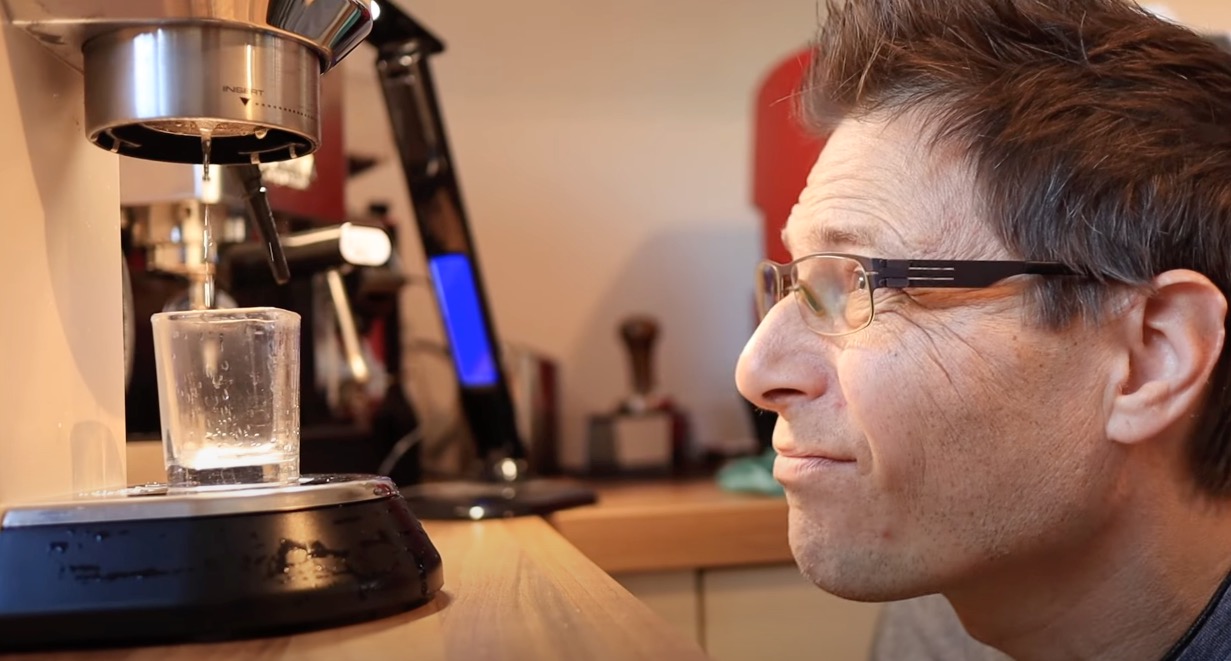
When your DeLonghi machine produces watery espresso or fails to heat properly, systematic troubleshooting saves costly service calls. Most issues stem from simple user errors rather than mechanical failures, especially when problems occur immediately after cleaning or maintenance.
Fix Weak Espresso Extraction
If your espresso tastes sour or watery, check these four factors in order: 1) Coffee freshness (beans should be used within 2 weeks of roasting), 2) Grind size (adjust finer for stronger extraction), 3) Tamping pressure (increase to 30+ pounds), and 4) Brew temperature (verify machine has fully heated for 25+ minutes). Many users don’t realize that cold portafilters dramatically reduce extraction temperature—run a blank shot (without coffee) to preheat components before brewing your actual espresso.
Resolve Steam Wand Problems
When your steam wand produces weak steam or spits water, first check for milk clogs by removing the tip and inspecting the small holes. Soak the tip in warm water with DeLonghi cleaning solution for 15 minutes, then use the included pin tool to clear blockages. If steam pressure remains weak, your machine likely needs descaling—mineral deposits restrict steam flow through the heating system. Always purge the wand for 2 seconds before and after texturing milk to prevent clogs.
Optimize Your Coffee Quality Consistently
True coffee mastery comes from understanding how small adjustments create significant flavor differences. DeLonghi machines offer remarkable customization potential when you know which variables to tweak for your personal taste preferences.
Refine Your Extraction Parameters
Experiment systematically with grind size, dose, and extraction time to discover your perfect balance. Try these professional adjustments: 1) For brighter, more acidic espresso, use slightly coarser grind and shorter extraction (20-25 seconds), 2) For sweeter, fuller-bodied shots, use finer grind with longer extraction (30-35 seconds), 3) When using darker roasts, reduce dose by 0.5g to prevent over-extraction bitterness. Keep a coffee journal tracking your adjustments and tasting notes—this builds your personal recipe database for consistent results.
Store Beans and Equipment Properly
Protect your investment by storing coffee beans in an airtight container away from light and heat—never in the refrigerator where moisture damages flavor compounds. Clean your grinder monthly to prevent old grounds from contaminating fresh beans. For super-automatic models (like the PrimaDonna Soul), run the included cleaning cartridges after every 200 cups to maintain optimal performance. Wipe exterior surfaces daily with a microfiber cloth to prevent coffee oil buildup that attracts dust.
Mastering your DeLonghi coffee maker transforms morning routines into opportunities for café-quality enjoyment. By following these precise setup procedures, perfecting your brewing technique, creating professional milk textures, implementing essential maintenance, and troubleshooting common issues, you’ll consistently enjoy exceptional coffee at home. Remember that great espresso begins with fresh beans and proper technique—your DeLonghi machine is merely the tool that brings your coffee vision to life. Implement these strategies consistently, and you’ll never settle for mediocre coffee again.